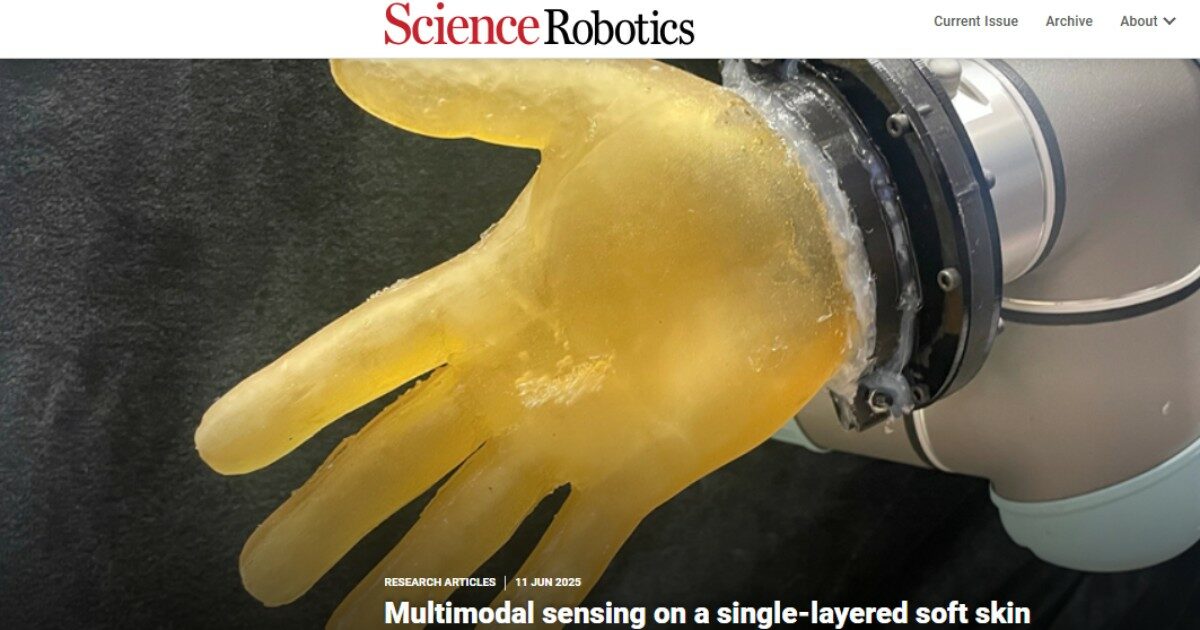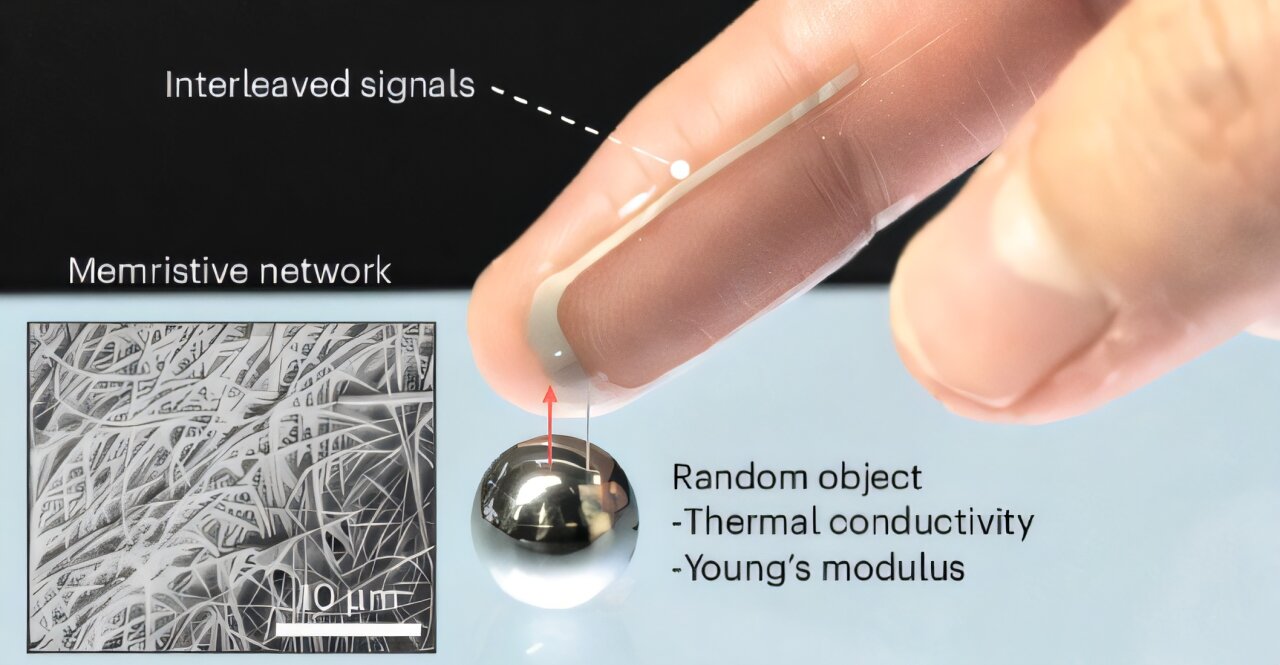
Multimodal receptor, conformally attached to the skin, captures the inherent thermal and mechanical properties of random objects. Inset: memristive nanowire network on a skin replica with a magnified view via scanning electron microscopy. Credit: Nature Materials (2025). DOI: 10.1038/s41563-025-02373-w
A research team led by Prof. Seung Hwan Ko of Seoul National University College of Engineering's Department of Mechanical Engineering has developed an artificial skin technology that enables robots to sense temperature and pressure simultaneously, similar to human skin.
The team created a novel multimodal tactile sensor capable of detecting both thermal and mechanical stimuli within a single ultrathin device. Inspired by the way human skin processes sensory information, the sensor is designed to efficiently extract temperature and pressure data from a single integrated platform.
Using a single attachable sensor combined with a wireless switching board and artificial intelligence, the researchers demonstrated the ability to identify 20 everyday objects with high accuracy comparable to human tactile perception.
The study, published in Nature Materials, further confirmed that the technology can be extended to achieve high-resolution sensing at levels comparable to human touch. As such, the technology is expected to serve as a key enabler for emerging Physical AI systems.