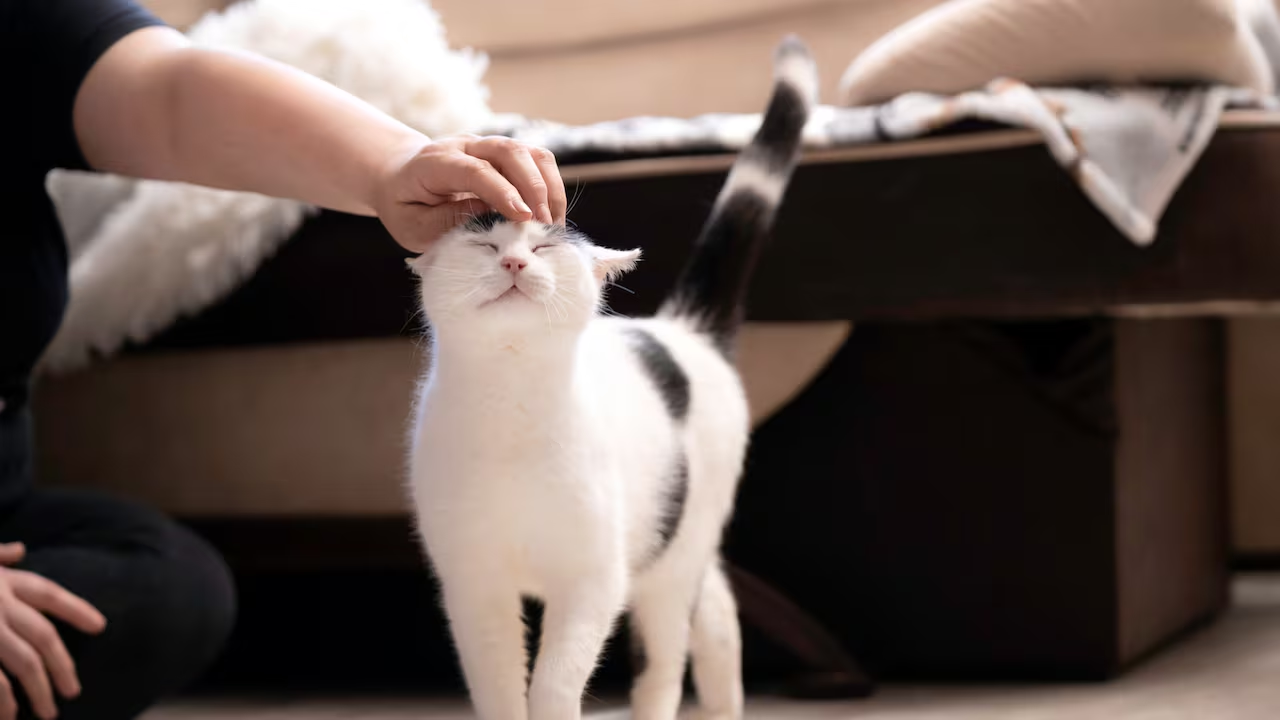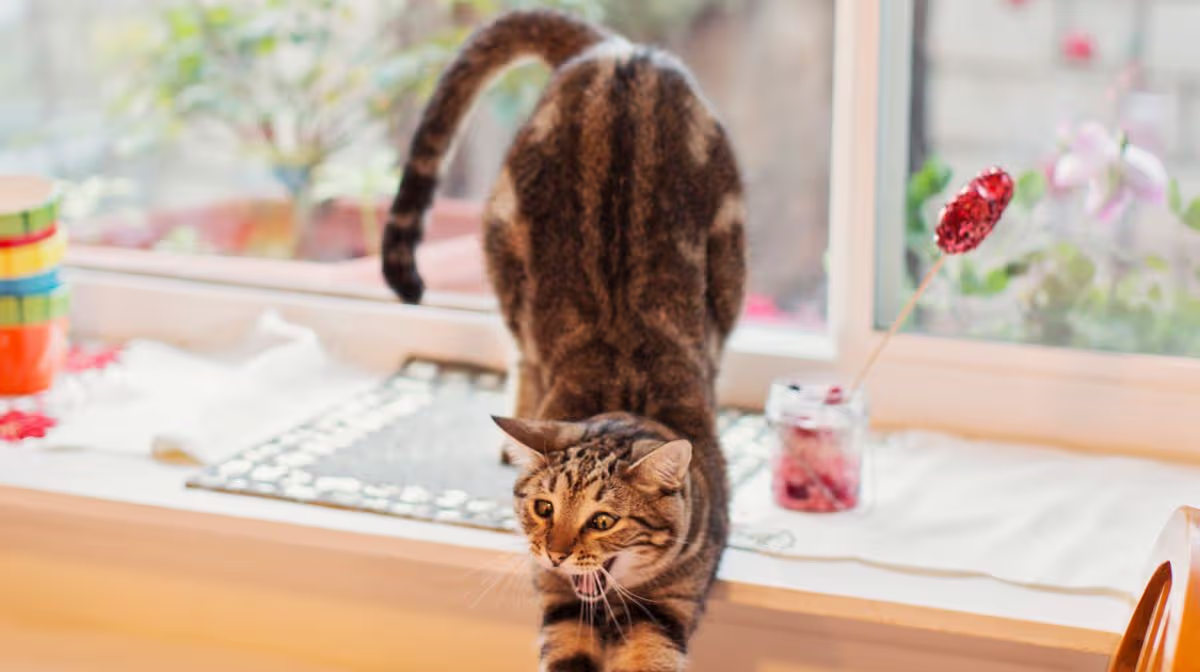
Cat owners have shared that they had 'no idea' what it meant when their cats' tails vibrate, but it turns out that it's for a really good reason, and it's not usually because they're afraid08:04, 27 Jun 2026Updated 08:04, 27 Jun 2026If you're a cat owner, you've probably noticed that from time to time their tails vibrate, and you may have wondered what it means. In fact, you may have even jumped to the wrong conclusion about the behaviour, assuming that it meant that they'd seen something they didn't like, or were afraid of, in your home.While we all know what it means when a dog wags its tail, cats' tails are a bit more mysterious. It's a common feline interaction, but most of us are interpreting it in the completely wrong way, assuming our cats are distressed when they do this, when it actually means the complete opposite of our assumption.In fact, it's their way of communicating excitement. Someone shared a video of their cat, captioning it: "I can't be the only one who didn't know this is what it meant! Tell me if your cat does this too."The account, @winnieandgeorge2019, explained: "When a cat is extremely excited, the tip of its tail may quiver or vibrate. So next time your cat's tail vibrates, they are saying 'Yay! You're home'!"Adopt A Pet explains: "Cats' tails may vibrate as a sign of excitement, anticipation, or arousal, often seen during greetings or when using urine to mark their territories."Content cannot be displayed without consentIf your cat has not been neutered and is shaking its tail, it may be marking its territory with its scent.Intact cats often quiver their tails when they are in heat as well, or when they're highly motivated by the presence of a mate.Cats may also do a quick tail quiver when greeting their favourite humans or when they're about to be fed, as they're excited, though this is usually accompanied by purring.To distinguish between a territorial spray and pure excitement, look for context: if the cat is backing up to a wall or vertical object with a stiff, vibrating tail, they are likely marking.They may also be 'phantom spraying' which is where they mimic the behaviour of scenting, but they're not actually doing anything to mark their territory.They share that this is how cats show their "emotions", and it's important that you think about the context of the situation before interpreting the way your cats' tail is moving.Article continues belowApparently, "the higher up a cat’s tail is, the more confident and friendly they are," but if their tail is "wrapped around them or low to the ground," they "might be feeling insecure or anxious".If their tail is "thumping or twitching back and forth," the cat "is probably feeling irritated, so proceed with caution".But if you have a good relationship with your cat, "tail vibrations are high praise and say many positive things about how your cat feels about you, so take that shaky tail as a huge compliment".
Cats' tails vibrate for reason - not because they're afraid
Cat owners have shared that they had 'no idea' what it meant when their cats' tails vibrate, but it turns out that it's for a really good reason, and it's not usually because they're afraid
501 words~2 min read