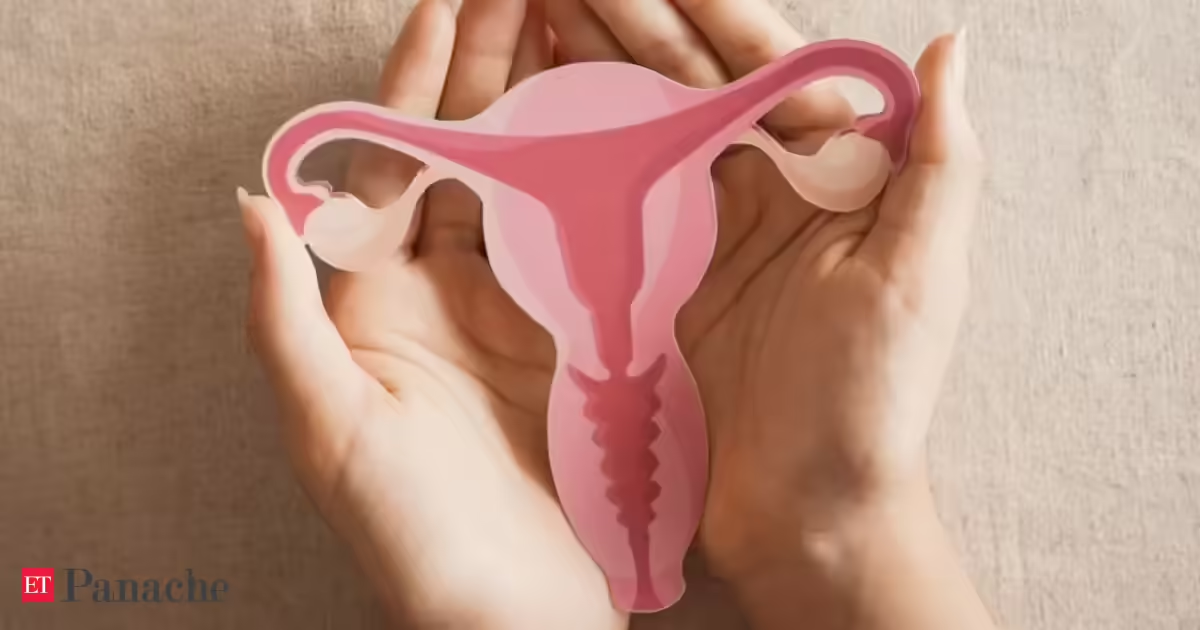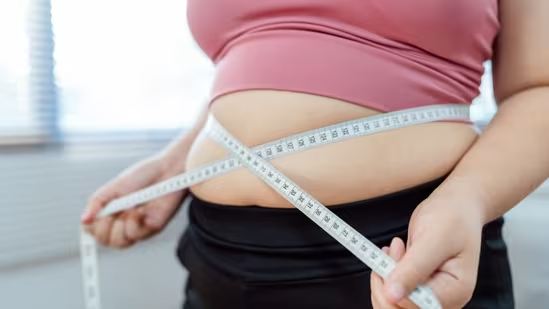
Struggling to lose weight with PCOS? Know why you need to change the understanding of the condition to succeed. PCOS or Polycystic Ovary Syndrome, now renamed Polyendocrine Metabolic Ovarian Syndrome or PMOS, is an endocrine-metabolic condition that affects many women worldwide. As per the World Health Organization, PCOS is estimated to affect around 8-13 % of women of reproductive age, while up to 70% of affected women remain undiagnosed. This shows that the condition is quite common, but there is a significant gap in awareness and diagnosis.ALSO READ: Girls entering puberty earlier than before? Gynecologist explains why periods may begin before age 10Women with PCOS gain weight. (Picture credit: Shutterstock)Taking one step at a time to drive awareness, let's address one of the most frustrating worries many women with PCOS face: Does weight gain come first, or does PCOS? The distress comes from failing to understand the vicious cycle between the two. Weight gain can be one of the factors that worsens PCOS, while PCOS itself can make weight loss difficult. One wonders what the way forward is, because it seems like an impasse.Answering this doubt, Dr Neha Shah, weight loss specialist and co-founder of TheGoodWeight.com, told HT Lifestyle in an interview that the answer to this common worry may actually lie in the recent landmark renaming of the condition.Common problems seen in clinicsTo understand why the renaming was needed, it is important to look at the problem from the clinical point of view. Dr Shah shared a pattern she often observed among her patients. She said, "70 percent of my patients are females, and almost every day, at least one woman says some version of the same thing to me: 'I'm doing everything right. Why can't I lose weight?' She's usually been practising ‘eat less, move more as a solution to achieve optimal weight for years."According to the doctor, many women are actually unaware that their bodies may be ‘operating differently’ because of the condition, which makes weight loss hard.This is where the renaming of PCOS and PMOS becomes significant. The doctor clarified, asserting that the real damage was done by the older name, and it made the condition sound like it was limited to the ovaries and reproductive health, meanwhile the metabolic side of the disorder remained overlooked.PCOS is not solely limited to gynaecological problems like irregular periods. It also comprises endocrinological problems, (Picture credit: Shutterstock)Why is the rename significant?The terminology determined the treatment. How? The doctor elaborated, “The term ‘Polycystic ovary’ made patients, and many healthcare practitioners, think this was only a gynaecological condition limited to cysts in the ovary and associated reproductive issues. While metabolic disease quietly took hold in the background.”This is groundbreaking, as with PMOS, you actually acknowledge the condition to be a full-body hormonal and metabolic disorder.How does the renaming answer PCOS-weight gain problem?The dynamic between weight gain and PCOS is demystified with this renaming. As per the expert, the relationship works both ways. PMOS can disrupt insulin function, making the body more likely to store fat, especially around the abdomen. Since the condition was earlier viewed mainly from a gynaecological lens, the endocrine-metabolic was not examined closely. Similarly, excess weight, especially the visceral fat, can worsen insulin resistance and hormonal imbalance, further worsening the condition."Weigh and PMOS act like a loop, aggravating each other. The renaming from PCOS to PMOS has shifted the conversation in the right direction.The next step Dr Shah recommended is to ask your healthcare experts to look into insulin resistance and fasting insulin levels, as a pelvic scan or the presence of cysts alone does not give the complete picture. Note to readers: This article is for informational purposes only and not a substitute for professional medical advice. Always seek the advice of your doctor with any questions about a medical condition. Adrija Dey’s proclivity for observation fuels her storytelling instinct. As a lifestyle journalist, she crafts compelling, relatable narratives across diverse touchpoints of the human experience, including wellness, mental health, relationships, interior design, home decor, food, travel, and fashion that gently nudge readers toward living a little better. For her, stories exist in flesh and bones, carried by human vessels and shaped through everyday endeavours. It is the small stories we live and share that make us human. After all, humans and their lores are the most natural and raw repositories of stories, and uncovering them, for her, is akin to peeling an orange under a winter afternoon sun. Always up for a chat, she believes the best stories come from unfiltered yapping, where "too much information" is kind of the point. A graduate of Indraprastha College for Women, University of Delhi, and an alumna of the Indian Institute of Mass Communication (IIMC), Delhi, Adrija spends her idle hours cocooned with herbal tea and a gripping thriller, scribbling inner monologues she loosely calls poetic pieces, often with her succulents in attendance. On lazier days, she can be found binge-watching, for the nth time, one from her comfort-show holy trinity: The Office (US), Brooklyn Nine-Nine, or Modern Family. Dancing by herself to her peppy playlists, however, is an everyday ritual she swears by religiously.Read MoreHealthCatch every big hit, every wicket with Crick-it, a one stop destination for Live Scores, Match Stats, Quizzes, Polls & much more. Explore now!.Catch your daily dose of Fashion, Taylor Swift, Health, Festivals, Travel, Relationship, Recipe and all the other Latest Lifestyle News on Hindustan Times Website and APPs.See Less
PCOS and weight gain: Which comes first? Doctor says the answer lies in renaming PCOS to PMOS
Struggling to lose weight with PCOS? Know why you need to change the understanding of the condition to succeed. | Health
906 words~4 min read