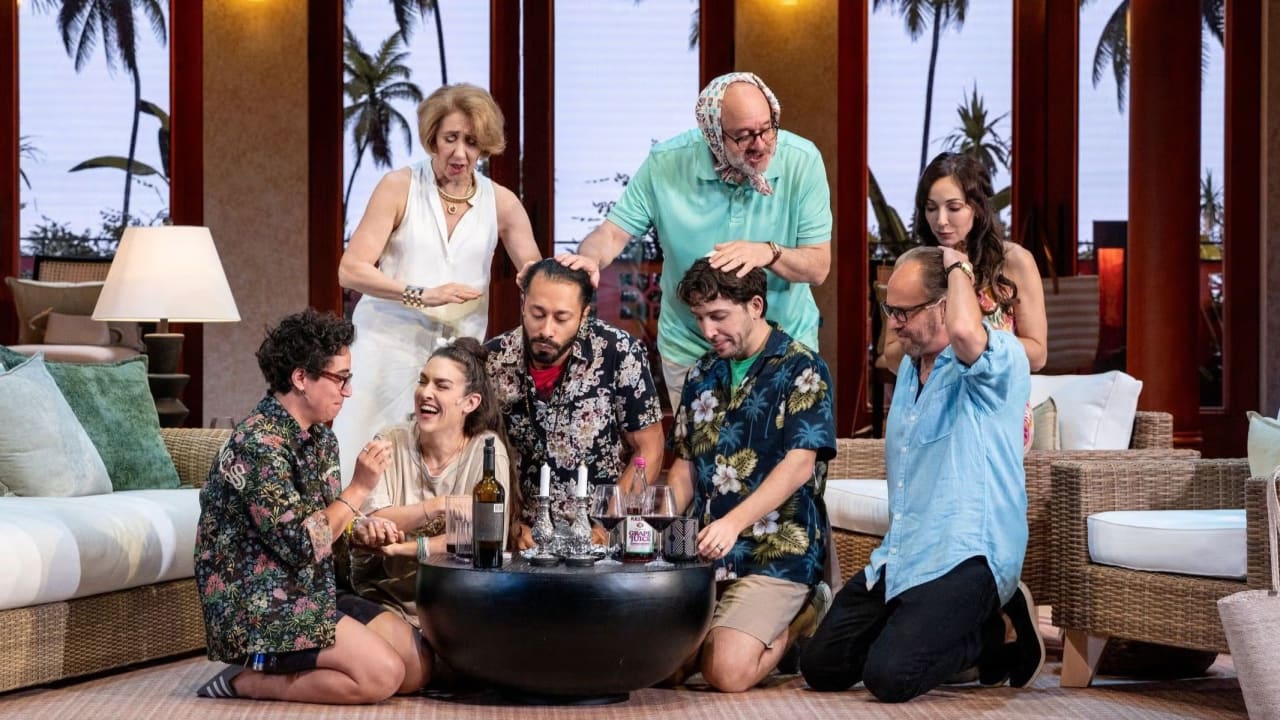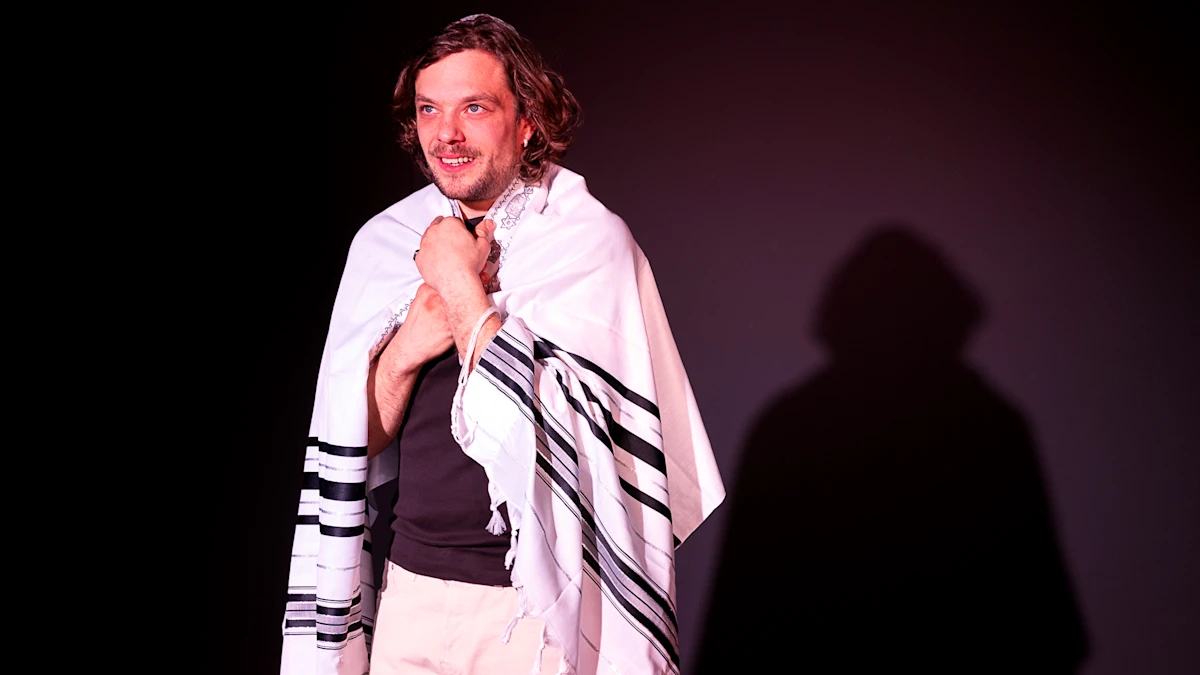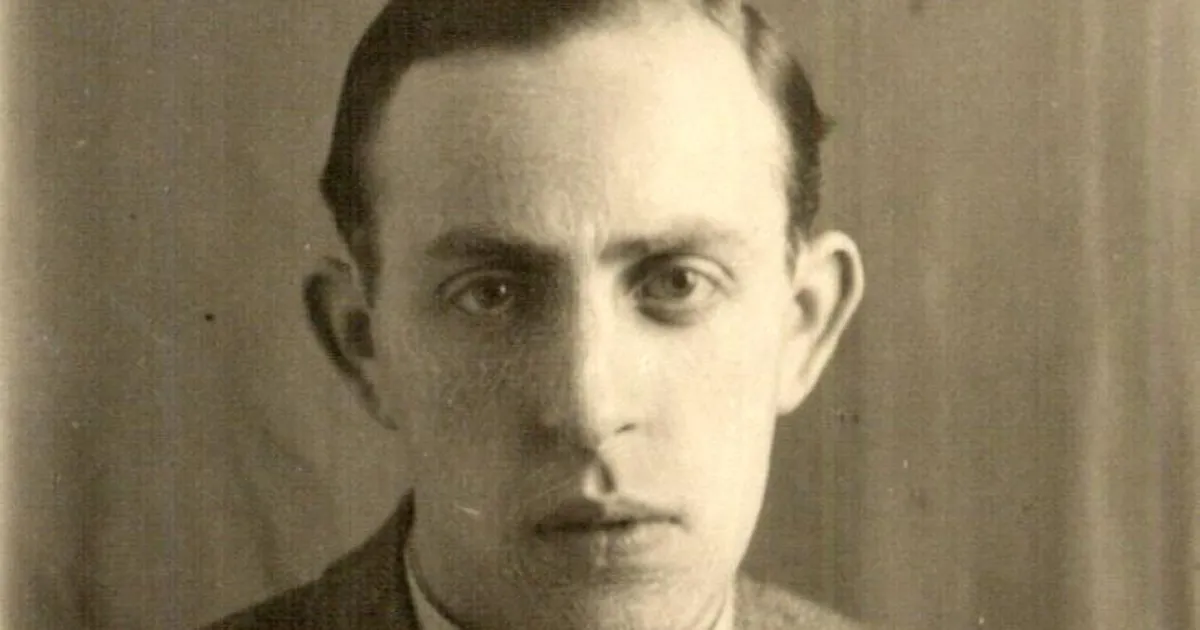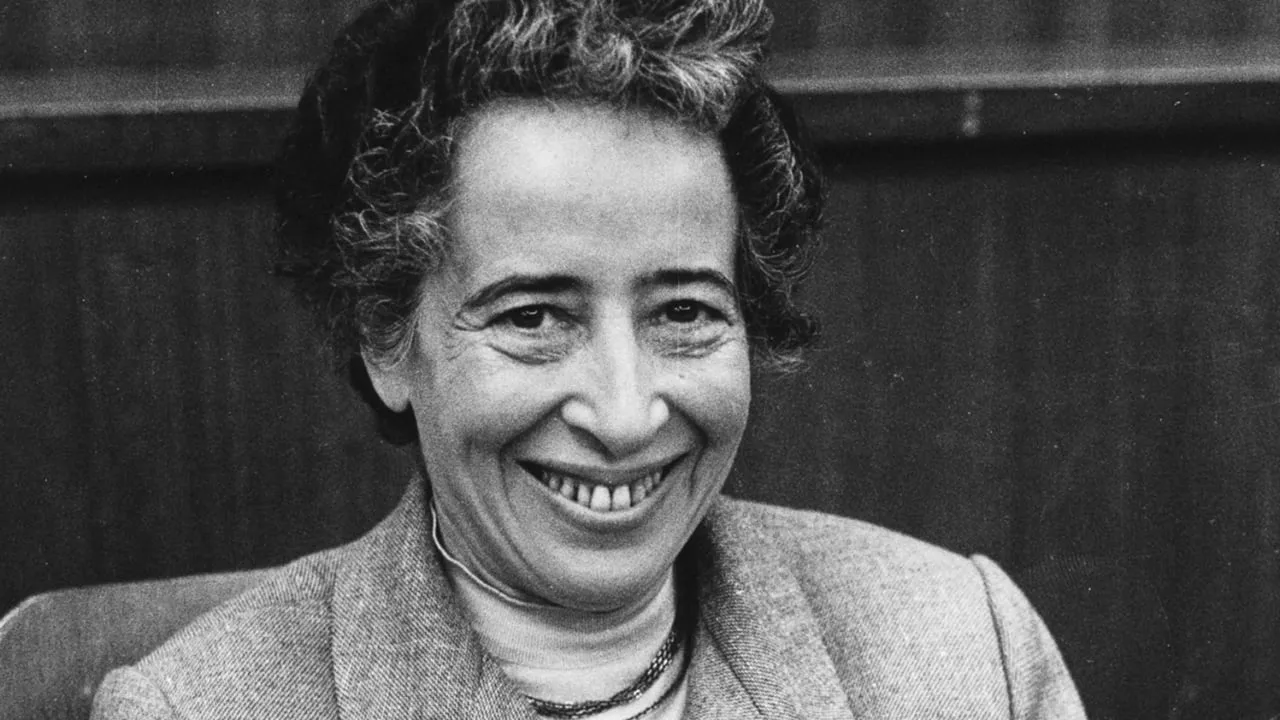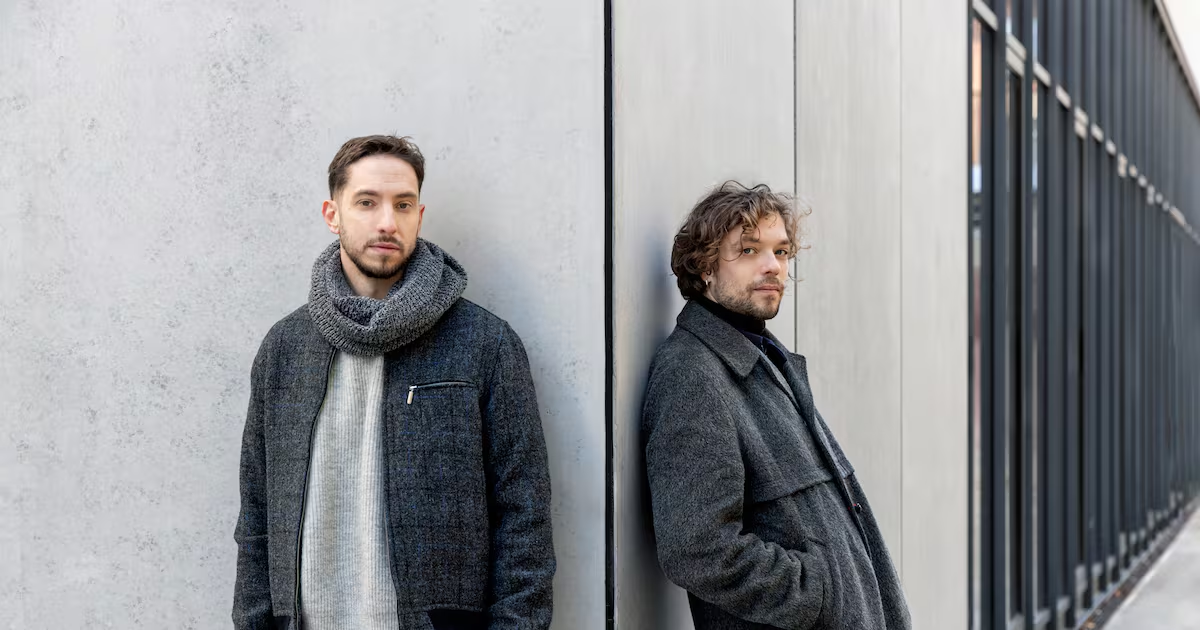
On a summer afternoon seven years ago, I was on my way to visit a friend in Bavaria when I got a tip-off about an explosive story in the next edition of Der Spiegel magazine. It was about how Marie Sophie Hingst, a German historian and Intel employee in Ireland, had claimed for years in an online blog that she was Jewish. Her grandmother had survived Auschwitz, she wrote, though many other relatives had not been so lucky. None of this was true and Spiegel journalist Martin Doerry, whose own grandmother was murdered in Auschwitz, exposed Hingst as a fraud.“Anyone who invents Holocaust victims,” he wrote, “mocks retrospectively all those who really were tortured and killed by the Nazis”. When I reached Hingst by phone later that afternoon, she denied Doeery’s claims and threatened legal action. Reading her blog after I hung up, however, I noticed it disappearing offline before my eyes, entry by entry.It was a bizarre situation, watched with curiosity by the friend I was visiting, Alexandra Senfft. She is a writer, granddaughter of a Nazi war criminal and a pioneer in pressing her fellow Germans to explore their families’ Nazi-era perpetrator past.Yet here I was, camped out in her guest bedroom, talking to someone who claimed to be a descendant of the people Senfft’s grandfather helped dehumanise and murder. Over many glasses of red wine that weekend, Alex and I grappled with this very German vertigo: where the interest in Nazi victims stands in inverse proportion to interest in one’s own likely perpetrator forebears. If it all becomes too much, you can always switch sides.A week later Hingst and I met in Berlin for a long and intense talk, by coincidence near the lakeside villa where the Holocaust was planned. I never saw her again as Hingst took her own life in Dublin five weeks later. That news triggered a heated debate in Germany over how Der Spiegel confronted her, and my Irish Times follow-up.Bizarre and troubling as it was, though, the tragedy of Sophie Hingst was by no means unique. That much is clear from a new Berlin play with an attention-grabbing name. “Fake Jews” is an intense one-man show at the Deutsches Theater, written and directed by Noam Brusilowsky. Born in Israel in 1989 and living in Berlin since 2012, Brusilowsky is an award-winning director whose theatre and radio plays tackle the cracks of modern German life.Marie Sophie Hingst: The German historian and blogger died in Dublin in 2019. Photograph: Paul Sharp/Sharppix When we meet, Brusilowsky says he was interested in exploring an extreme version of a widespread cultural phenomenon of our times, where identity is tradable currency and only those with a standout identity – real or imagined – will thrive.“Jewish identity is very interesting in Germany,” said the 37 year-old, “because you can, simultaneously, play victim and hero.”The play explores what is called Wilkomirski Syndrome, named after the grandfather of the fake Jew phenomenon two decades ago.In 1995 Binjamin Wilkomirski, a Latvian Jewish orphan who survived two concentration camps, published a harrowing memoir that became a bestseller and was translated into 12 languages.Three years later Wilkomirski was exposed as Bruno Dössekker, a Swiss clarinettist who knew concentration camps only as a tourist.Another prominent case, also exposed by Der Spiegel, began in 2003 in Pinneberg, a small town in northern Germany near Hamburg, when Wolfgang Seibert became head of the local Jewish community. His “pious Jew” grandparents included a grandmother who survived Auschwitz, he said, while a grandfather fought in the Spanish civil war.None of this was true, according to a 2018 Spiegel exposé, showing his parents were Protestant and his grandparents Nazi party members. After Seibert resigned, it was revealed he had previously claimed to have roots in the Roma community, another oppressed minority.Fake Jews: A scene from the play. Photograph: Jasmin Schuller A subsequent trial revealed he had used the community, and public funds it received, as a personal petty cash box to finance soccer and car club membership.Depending on how you count, Germany has around a dozen cases of Wilkomirski syndrome. Most took on Jewish identities for personal – or financial – gain. Other common threads include absent parents and burdened family biographies. At the Deutsches Theater, Fake Jews intersperses live scenes with excerpts of interviews with experts who sketch out psychological extremes of the phenomenon, from narcissistic disorders – living large in the public eye – to full-blown schizophrenia.Psychoanalyst Jutta Menschik-Bendele suggests that, in an imagined Jewish identity, some find an escape route from the depression they know looms if they accept as their own their actual family history of Holocaust-era perpetrators or onlookers.A sudden exposé of any such fantasy can have dramatic results, she says.Noam Brusilowski insists his new play is fiction but it draws heavily on a recent case involving teacher and journalist Fabian Wolff.There is no German identity possible now that is independent of the Jew. Not real Jews, though, but the phantom of Jews— Noam BrusilovskyHe was born in East Berlin a month before the wall fell in 1989 and emerged in the last decade as a prominent voice in progressive, leftist Jewish circles. In a 2021 essay for Die Zeit weekly, addressing the burden of being Jewish in Germany, Wolff took aim at fellow Germans “who hope their unconditional love for Israel ... might somehow transcend their guilt”.“When a real-life Jew with a different opinion attempts to enter this constellation,” he complained, “they are not greeted as a welcome voice, but instead find themselves vilified.”Two years later Wolff was “outed” by an ex-girlfriend, forcing him to admit his Jewish identity was based on hearsay and claims of his dead mother.The blowback was swift and severe. German-Jewish historian Michael Wolffsohn wrote in the Neue Zürcher newspaper: “Left-wingers love nothing more than a Jew to whom they can delegate their anti-Semitism.”Though Noam Brusilowsky didn’t know Fabian Wolff personally, they have mutual friends and moved in similar circles. After the revelation, Brusilowsky says he felt like “a spectator in this theatre of identities”. Why does he think Wolff succeeded with his deception in Germany? Because people would never think to question such a claim, he said, but not only that.[ The life and tragic death of Trinity graduate and writer Sophie HingstOpens in new window ]“People liked Fabian Wolff not because he was a great authority but because people could say: ‘finally a Jew that tells the truth’,” said Brusilowsky. “As if, because a Jew said whatever about Israel, it would legitimate their own opinion.”Which takes us to the heart of Brusilowsky’s play: how Germans use and abuse Jews – real and fake, alive and dead – as distorting mirrors and projection screens for their own neuroses. Brusilowsky agrees that many Germans react angrily to revelations about fake Jews because their manipulations call into question the real suffering of real Jews, and the resulting legacy of trauma. But the playwright suggests some also get angry because such exposure robs them of what they believed they wanted and needed.“There is no German identity possible now that is independent of the Jews,” said Brusilowsky. “Not real Jews, though, but the phantom of Jews.” Exploring this psychological minefield is where Fake Jews excels. Actor Moritz Kienemann prowls around for a restless 90 minutes channelling Mephisto and Felix Krull, Germany’s favourite literary tempter and con man.Repeatedly he breaks the fourth wall to insinuate his way into audience affections – and win them over as accomplices to his deception. Fake Jews: 'They notice that it works quite well and that people believe them, then they dare to go further,' says historian and therapist Barbara Steiner For Kienemann’s character, his Jewish identity is cathartic: simultaneously the key to – and escape from – an unhappy outsider childhood.“I felt for the first time what it means to have an identity,” he says. “It was an identity in a world in which everything was taken way from us.” The deeper you dive into Wilkomirski Syndrome, the stranger it gets. Historian and therapist Barbara Steiner has written a standard work on the phenomenon and, during her research, uncovered a rush on Jewish identity in the chaos of postwar Germany. Even former Nazis wanted in. Berlin rabbi Nathan Peter Levinson received 6,000 applications for conversion to Judaism in 1950 alone. The motivations of prospective converts, Steiner says, ranged from guilt to the prospect of additional food aid.Today’s fake Jews operate on at least two levels, she says. First, they prolong in the present the majority German population’s domination of Jewish identity in the Nazi era. Second, they exploit a largely blank and unexplored historical space – ordinary German perpetrators and onlookers – and “drift into this Jewish narrative”.[ One man whose family were on Schindler’s list chatted with the son of an SS officerOpens in new window ]“They notice that it works quite well and that people believe them, then they dare to go further,” said Dr Steiner. “A Jewish identity makes them something special, the better German.”In the aftermath of October 7th, with a radical cooling-off of public opinion towards Israel and a rise in anti-Semitic violence in Germany, what future does Steiner see for fake Jews here?“Taking on a Jewish identity may now be a discontinued model here,” she said. “I can imagine it could be overtaken by people taking on a false Palestinian identity.”Ask Brusilovksy about October 7th and he describes Israel’s military response in Gaza as “horrible, it is a huge crime by the state of Israel”. At the same time Europeans view the war in a way he calls “inherently stupid”.“People see themselves as victims of the state of Israel when the victims are the Palestinian people in Gaza, nobody else,” he says.In Germany’s debate over Israel, fake Jews have popped up at least three times since 2010, each time to criticise Israel’s policies towards the Palestinians. One. Edith Lutz, even proclaimed her fake Jewish identity while participating in a 2010 flotilla to break Israel’s naval blockade of Gaza.Though 3,000km away, Brusilowsky says the conflict in his homeland ended with a bump his first, carefree decade in Berlin. He was shocked when Israeli Jewish friend with a small baby left their apartment one morning to find “Kill all Jews” graffitied on a nearby building.He sees uncomfortable parallels to how he and his friends are adapting to the new reality. For centuries Jews in Germany, to get ahead and avoid anti-Semitism, converted to Christianity and often changed their names.Today Brusilowsky says his Israeli friends in Berlin have removed any traces of Hebrew on their Uber taxi user profiles. “They don’t want to risk anything,” he said, “it is a way of concealing their identity.”
‘Fake Jews’: German play explores psychological minefield of identity and the Holocaust
The deeper you dive into what is known as Wilkomirski Syndrome, the stranger it gets
1,780 words~8 min read