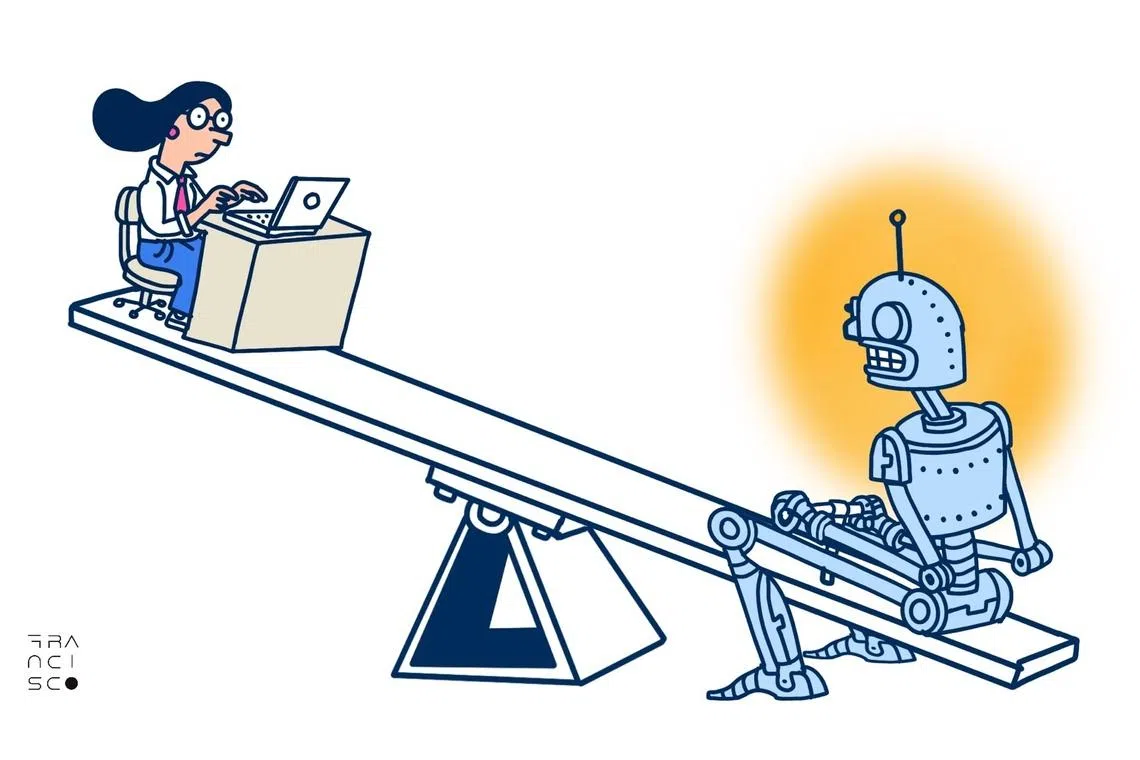
Feel strongly about these letters, or any other aspects of the news? Share your views by emailing us your Letter to the Editor at [email protected] or filling in this Google form. Submissions should not exceed 400 words.Recent headlines warn that artificial intelligence (AI) is wiping out entry-level roles. The reality is more subtle and arguably more troubling for young graduates.According to a new PwC analysis of more than 1 billion job postings, entry-level jobs haven’t disappeared – they’ve been “seniorised”. In occupations highly exposed to AI, entry-level roles are likely to require skills that have historically appeared later in a career: strategic decision-making, stakeholder management, leadership and judgment. That’s a great deal to ask of a 22-year-old fresh out of college, unless the candidate has extensive internship experience and strong mentorship throughout the four-year higher education journey.The numbers are stark. In 2022, there were more than 80,000 jobs suitable for fresh graduates in Hong Kong. In just a few short years, the number has gone down by 61 per cent to 31,000 in 2025, and I would not be surprised to see this number go even lower.The implication is clear. Organisations still need fresh talent; they just want fresh talent that thinks like a 15-year veteran. They want maturity, professional intuition and the ability to navigate ambiguity, traits that used to be developed across a decade of on-the-job learning.This trend is not driven by employer cynicism. As AI automates routine tasks, employers are placing a greater premium on uniquely human capabilities. They are asking early-career workers to contribute those skills sooner than in the past. The bar has been raised, and the infrastructure to help graduates clear it hasn’t kept pace.
Letters | AI hasn’t killed entry-level jobs. It’s raising the bar
Readers discuss the more demanding skill set now required of fresh grads, health authorities’ commitment to protecting patient privacy, and Cathay’s fuel levy reductions.
282 words~1 min read