Story audio is generated using AI
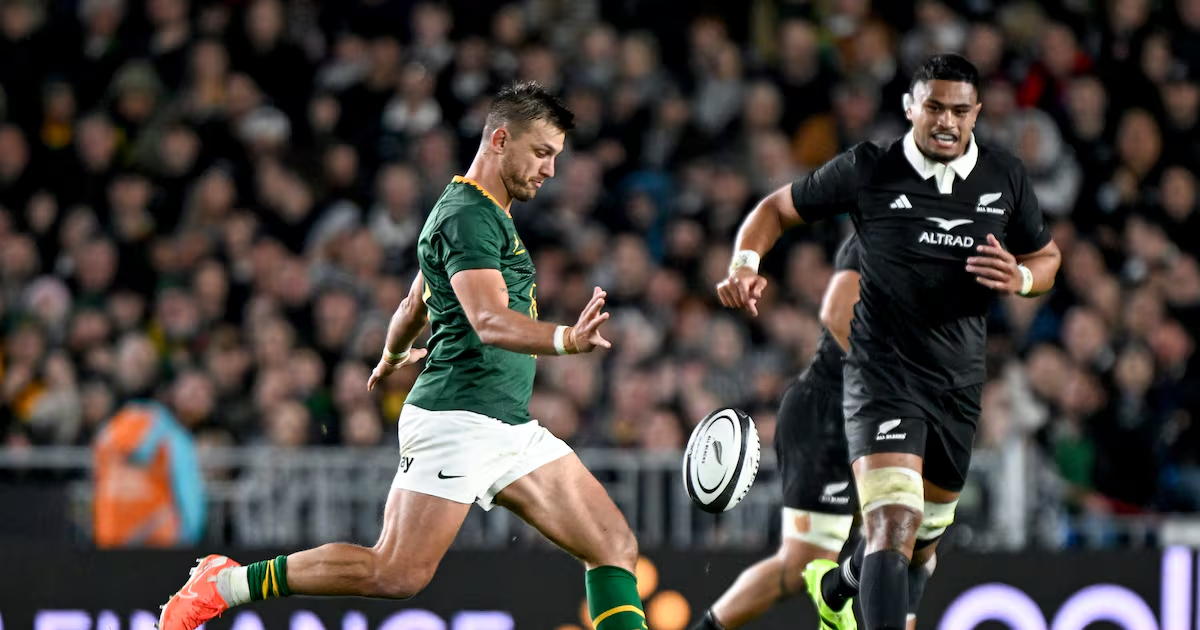
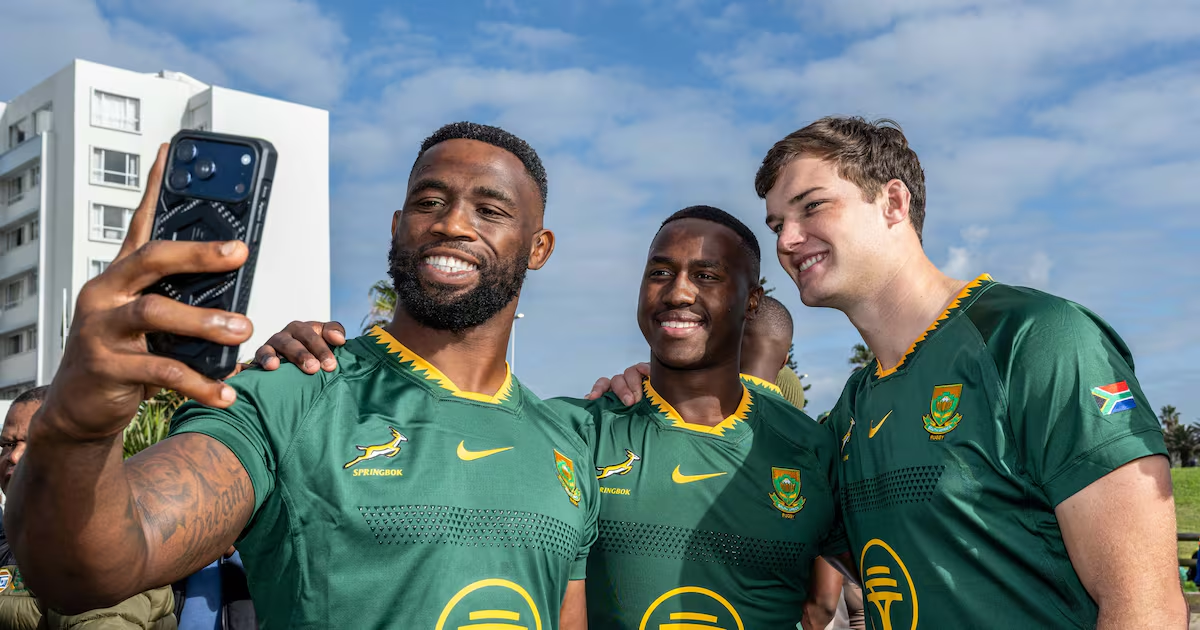
South African rugby’s on-field successes are well documented, capped by the Springboks’ back-to-back World Cup triumphs and the tantalising prospect of converting the double into an unprecedented hat-trick when Australia hosts the global showpiece next year.The country’s youth and female teams have also done well. However, the on-field success has not always translated into commercial success, with the South African Rugby Union’s (Saru’s) ambition of building a reserve fund for rainy days remaining elusive.However, the 2025 financial year showcased the corporate pull factor of the Springbok brand, with Saru pulling in millions of rands in new sponsorship deals and renewals. These have plucked the custodian of professional rugby in the country out of insolvency to a cash-flush position.Returning to profitability is the next target for Saru after the “watershed year in the commercial landscape” of the sport.The commercial success finds its roots in the radically revised approach to sponsorships Saru embarked on to sweat its assets.At the heart of the new approach was the decision to market the sport to corporate South Africa as a “whole of rugby” proposition rather than allowing sponsors to cherry-pick from rugby’s assets — an approach that naturally saw most of the money directed at the Springboks.The new approach bundles together Saru’s rights to increase value and encourage partners to leverage their association with other national teams. The subtle but powerful message to business is simple yet effective: “If you want to be associated with the Springboks, you have to buy into the entire rugby ecosystem that the Springboks support.”This approach, backed by ruthless execution, has yielded results such that the 2025 financial year was the first in which revenues from sponsorship exceeded broadcast revenues.If you want to be associated with the Springboks, you have to buy into the entire rugby ecosystem that the Springboks support.The value of the rights, when bundled together, accounted for an overall 51% increase in sponsorship value.“The approach had other significant benefits for both rugby and partners,” Saru said.For the first time, all national teams carried the name of the principal partner, FNB, on the front of their jerseys, Pick n Pay on the back, and Coca-Cola and Betway on the shorts (with the slight modification that Hyundai is worn on the shorts of junior national teams, as Betway, a gambling company, has voluntarily distanced itself from the youth market).“The application of such prominent businesses to the playing and training kit was also an endorsement of the importance of other national teams. The partner had new properties to leverage and new stories to tell, elevating the profile of both the partner and the team.”Sponsorship income increased by 75%, helping push overall revenue to R2bn. The surge in sponsorship revenue helped move Saru’s insolvent position of R82m to full solvency during the year, underpinned by a significant expansion of the commercial revenue base from R420m to nearly R800m in 12 months.Full ownership of all six Springbok home Test matches was secured, generating gross revenues of about R300m and further strengthening long-term financial sustainability.One of the latest blue-chip firms to buy into Saru’s growth story is South Korean multinational appliance and consumer electronics major Samsung.The company in November put pen to paper to serve as the official mobile and consumer electronics partner of the Springboks, Springbok Women, Junior Springboks, Springbok Sevens and Springbok Women’s Sevens.The partnership will see Samsung become an associate sponsor of the Vodacom United Rugby Championship.The 2025 financial results are in stark contrast to those tabled the previous year. Saru reported its biggest loss in nearly 30 years in the 2024 financial year, with the governing body blaming it on the failure to secure an equity partner. The nearly R100m loss in 2024 came after the union’s deal to sell 20% of its commercial rights to US private equity firm Ackerley Sports Group for $75m (about R1.2bn) fell through when the proposal failed to garner the required 75% support of Saru’s member unions.Saru has not given up on finding another equity partner. Meanwhile, “Rugby’s Greatest Rivalry”, which will see the Springboks slug it out with their nemesis, the All Blacks, at home, is sure to bring in millions. The series will mark the return of traditional tours between the two rugby greats.Saru CEO Rian Oberholzer said in the annual report: “On and off the field, significant achievements were made to underline that rugby in South Africa is in a state of rude health, both as a playing entity on the international stage and in the hearts and minds of the South African public and its businesses. “In many ways, we have become the envy of many of our fellow members of world rugby. But, like all our peers, we continue to operate under the dark cloud relating to questions of the ongoing sustainability of the sport and the many financial needs the rugby ‘fiscus’ must meet.”At the end of the year, Saru’s partner portfolio was 29 companies strong.Business Times