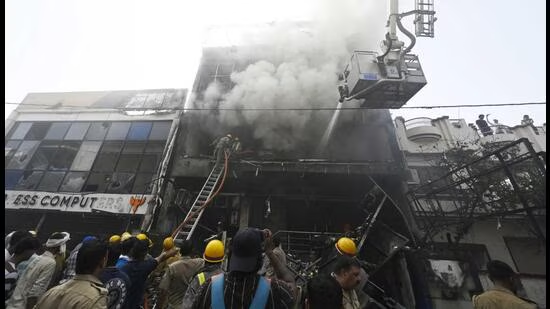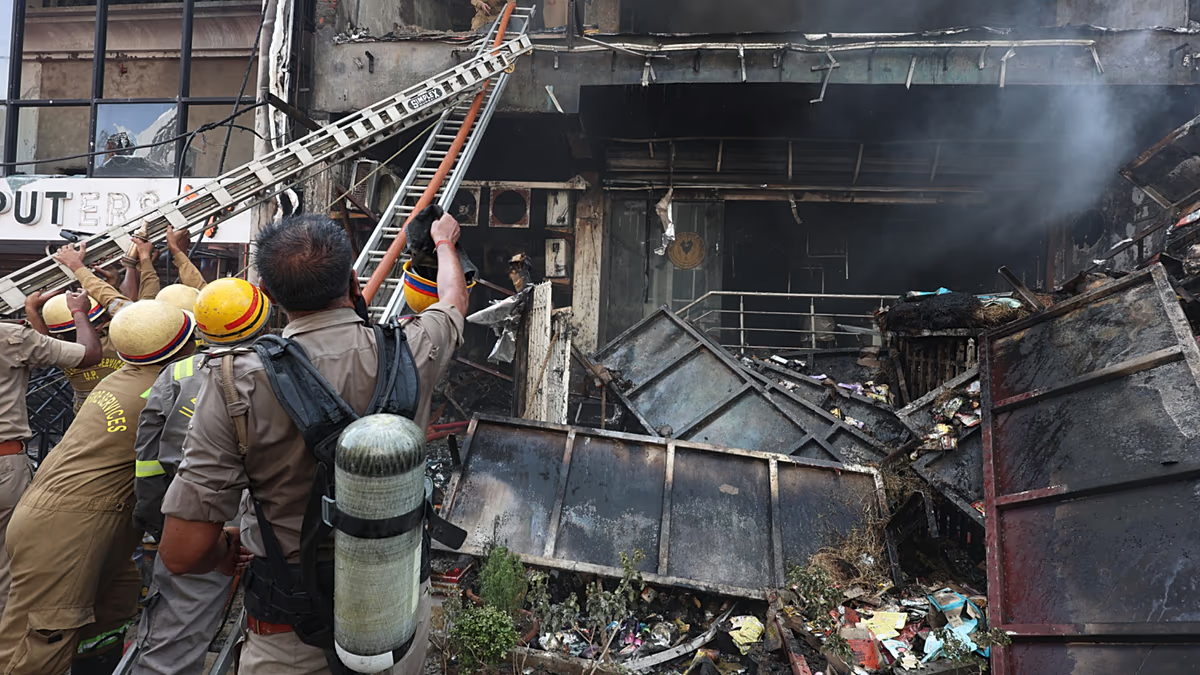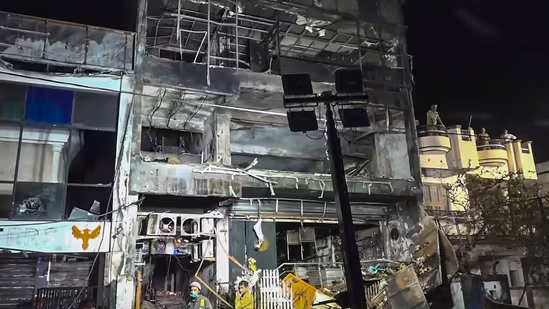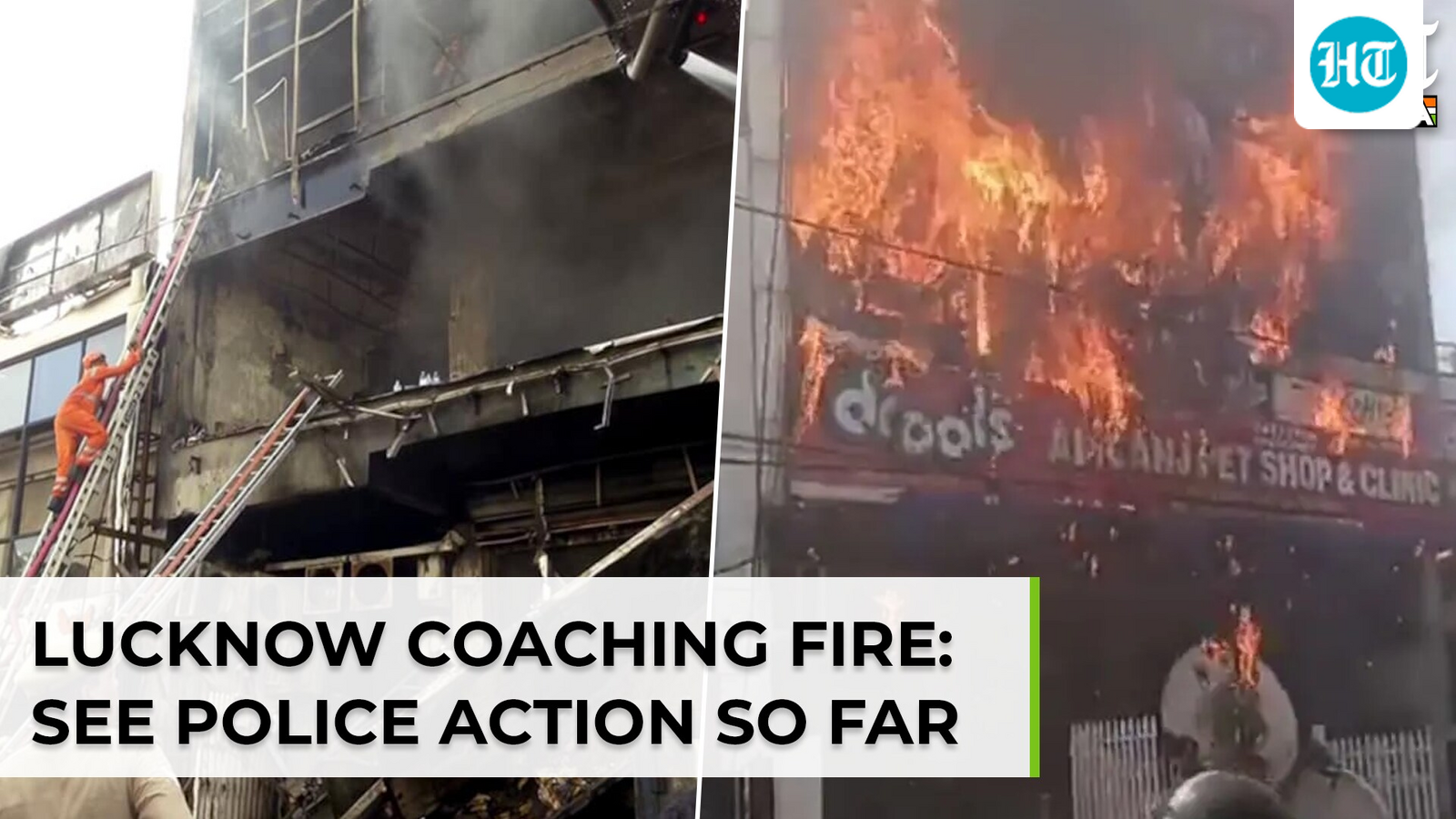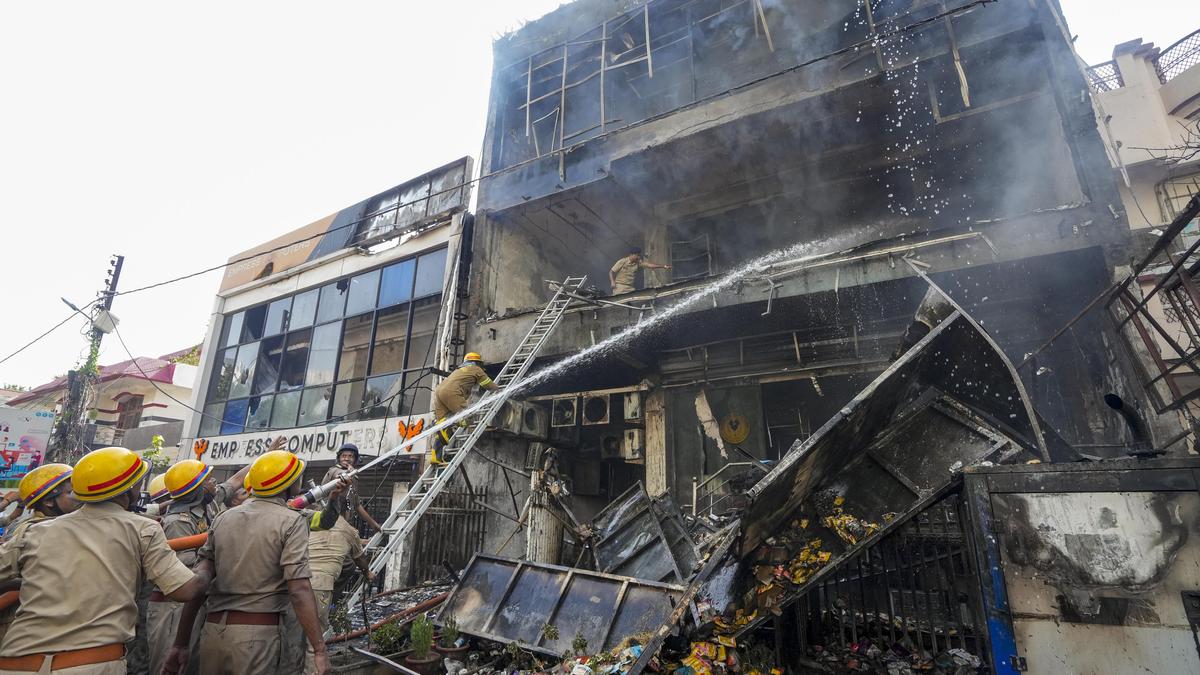
For 26-year-old Rishabh Mishra, the images of the afternoon of June 22 will always haunt him — people jumping from a burning building or clinging to live wires in an attempt to survive. One in particular refuses to fade: a man pleading from a window, his face flushed and his eyes desperately seeking help as flames raged behind him.It was around 2:30 p.m. when Mishra, a bystander, noticed the fire in a three-storey commercial building in Sector D in Aliganj, Lucknow. The building housed a pet shop and a clinic on the ground and first floor, a video gaming zone and 3D art and design animation centre named Head Hoppers Studio on the second floor, and an IT networking office on the third floor.
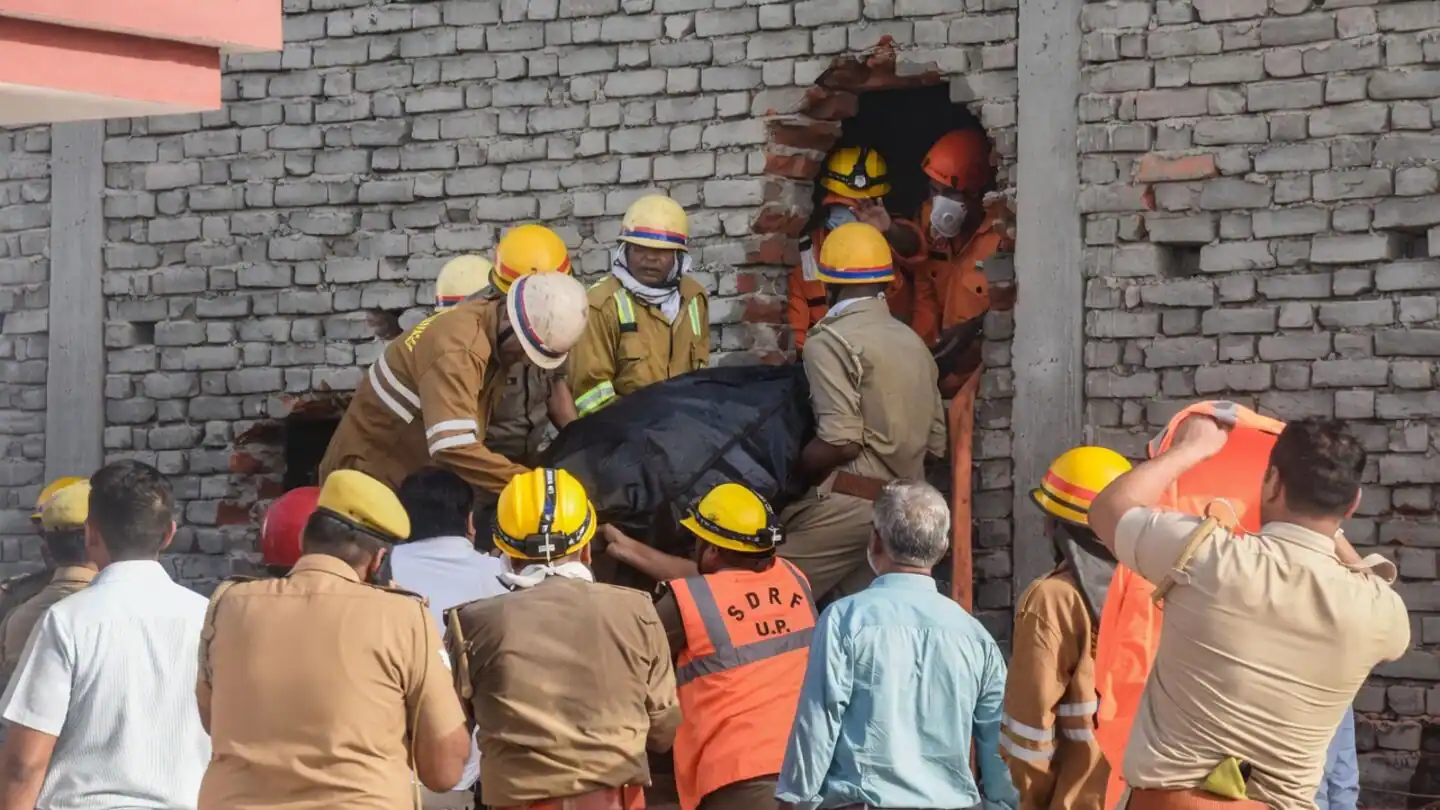
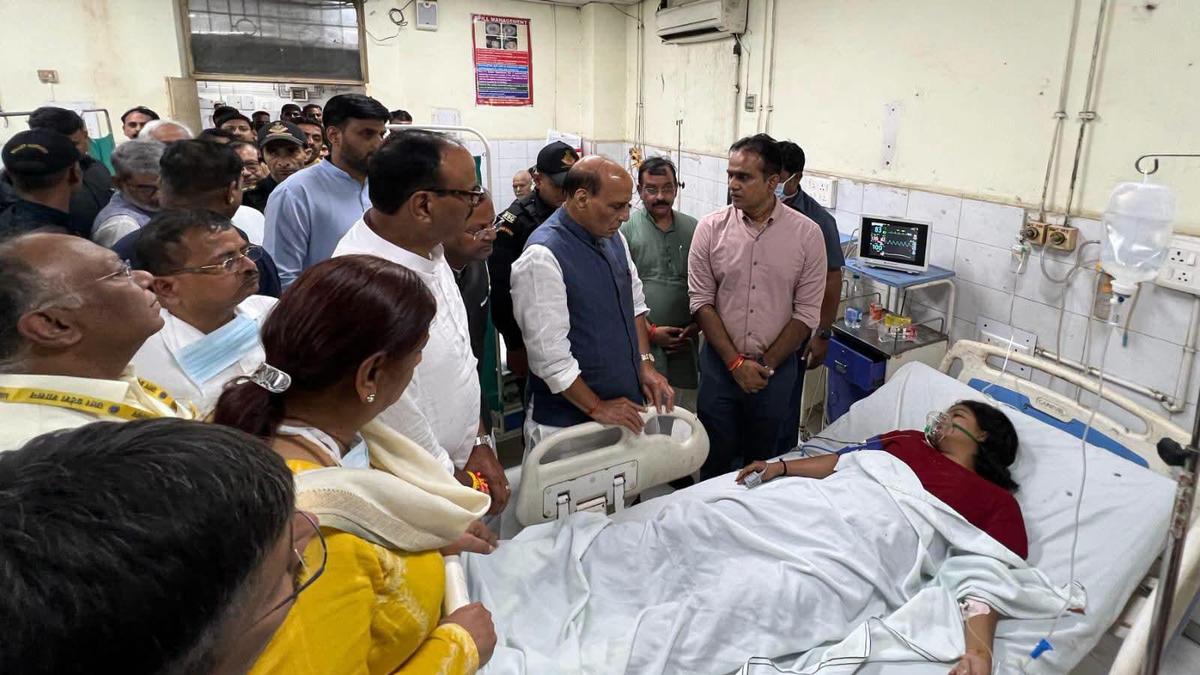
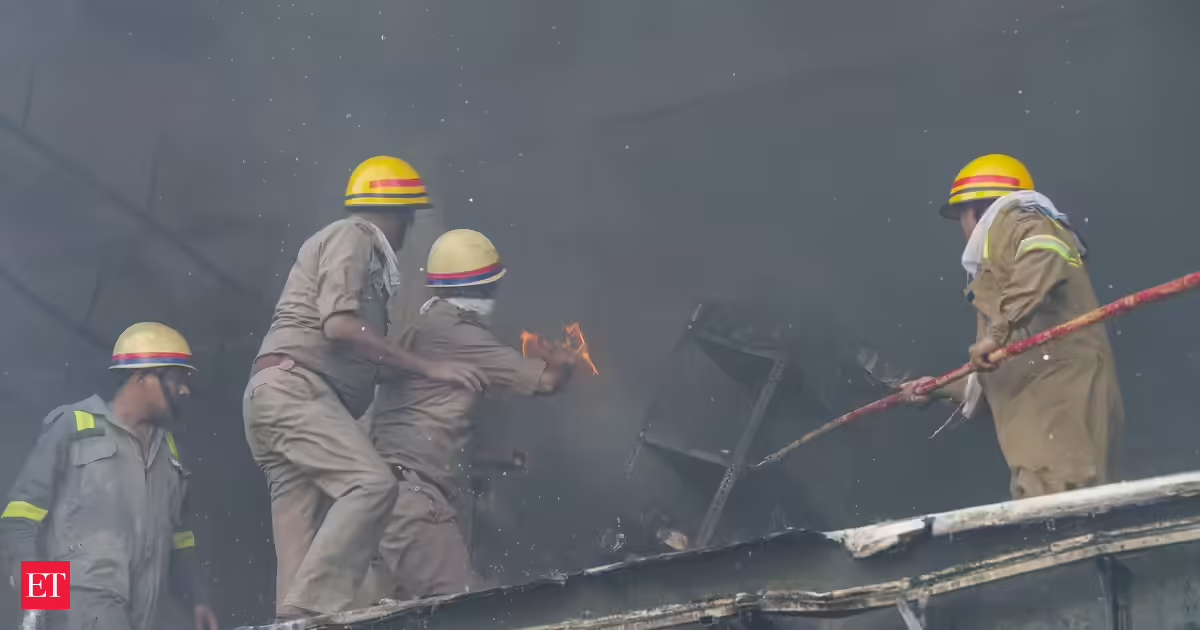
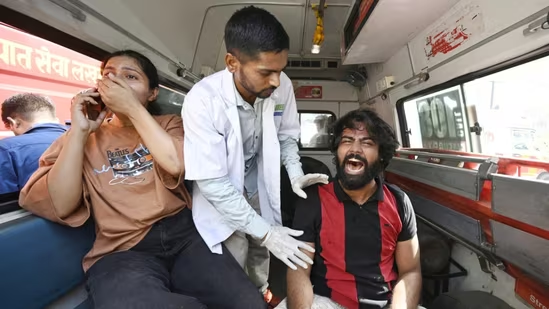
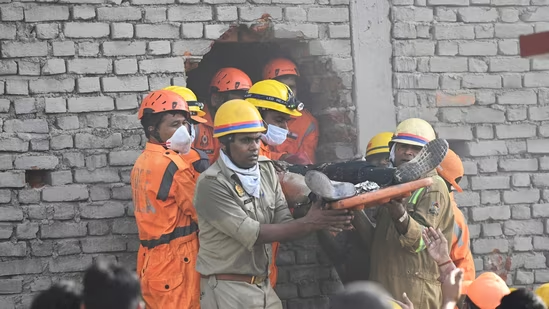
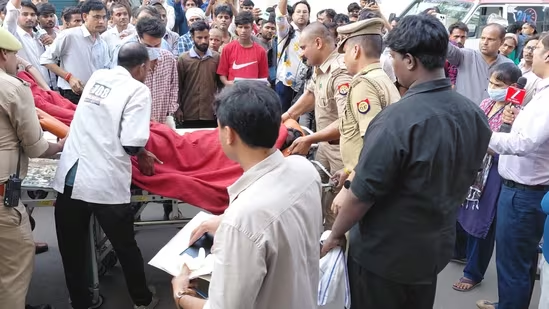
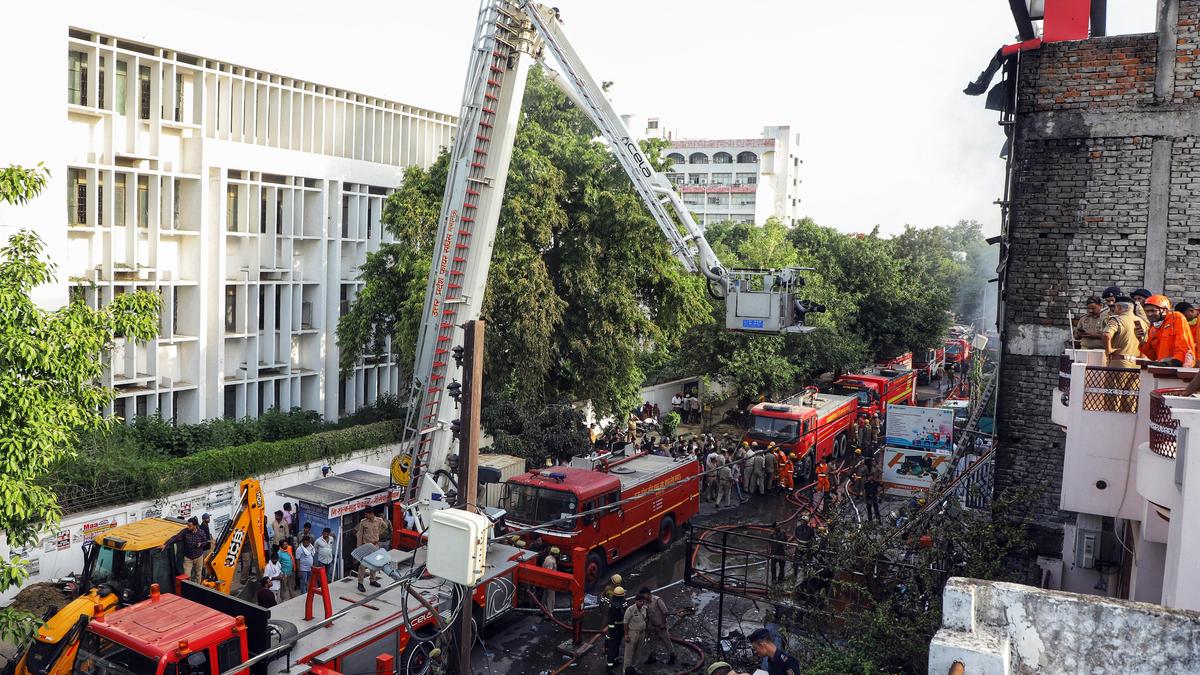
Editorial | Viksit and Surakshit: On the Lucknow fireMishra says he immediately swung into action. “I made two trips to the King George’s Medical University (KGMU) — once by car and once by ambulance — ferrying injured people,” he says.Despite having gone to the hospital twice, a visibly exhausted Mishra cannot recall the route when he gets ready to go the third time, this time on his bike. “I was just focused on getting people there. I didn’t notice the way,” he says. Taking a sip of water from a bottle for the first time after nearly three hours, he asks a police constable how to get to the premier medical institute, 5 kilometres away.The fire claimed 15 lives, most of them students and staff of the animation centre, while nine others sustained injuries and were admitted to the KGMU Trauma Centre. As per the the post-mortem reports, the 15 of them did not have major burn injuries; they suffocated to death.On the same day, the Uttar Pradesh government formed a two-member Special Investigation Team to conduct an impartial and time-bound investigation into the fire incident. The team has been instructed to submit its report within seven days.The Lucknow fire is yet another addition to India’s summer of fire tragedies. Early this month, a fire in a bed-and-breakfast took the lives of 23 people in South Delhi’s Malviya Nagar; last month, nine people were killed in a major fire which broke out at a residential building in Shahdara in East Delhi. In all these incidents, violations of safety guidelines and administrative negligence have been the causes.No room to escapeA First Information Report filed by the Uttar Pradesh police says that a short circuit may have originated in the air conditioning duct on the first floor or the pet shop located on the ground floor.According to Abhishek Pandey, an eyewitness who tried to enter the building but was forced to retreat due to the clouds of smoke, the fire spread rapidly across the upper floors. “There were no emergency exits. The only staircase in the building was obstructed by the thick smoke. Some people took refuge in washrooms to evade the fire,” says Pandey.A survivor says the digital lock of the animation centre was non-functional amid a power shortage. This left students and staff trapped. He adds that the route to the roof was blocked, forcing some people to leap in panic from windows.Pandey says it took firefighters at least 30 minutes to reach the spot. “Firefighters, police, and SDRF (State Disaster Response Force) personnel arrived to discover that there was no space for evacuation. Unable to access the main entrances, rescue teams had to breach the walls of the building to extract bodies,” he says. Nineteen firefighting vehicles extinguished the fire in about four hours, according to records of the Lucknow Fire and Emergency Services accessed by The Hindu.Anamika Samanta, an animation artist with three years of experience at Head Hoppers Studio, and Nilesh Kumar were among the 15 people who died in the fire. The two of them were in love and were engaged to be married.Anamika’s father, Vishwanath Samanta, who lives in West Bengal, is devastated. While collecting her body from the post-mortem facility at KGMU, he wails in anguish. “Our family is shattered,” he says, adding that his wife repeatedly fainted on hearing the news.Nilesh’s family is distraught too, he says. “We had visited his house 2-3 times earlier,” says Samanta. “We had also met his parents.”He last spoke to his daughter on the morning of the incident. “She told me, ‘I am going to work now.’ That is the last time I heard her voice.”