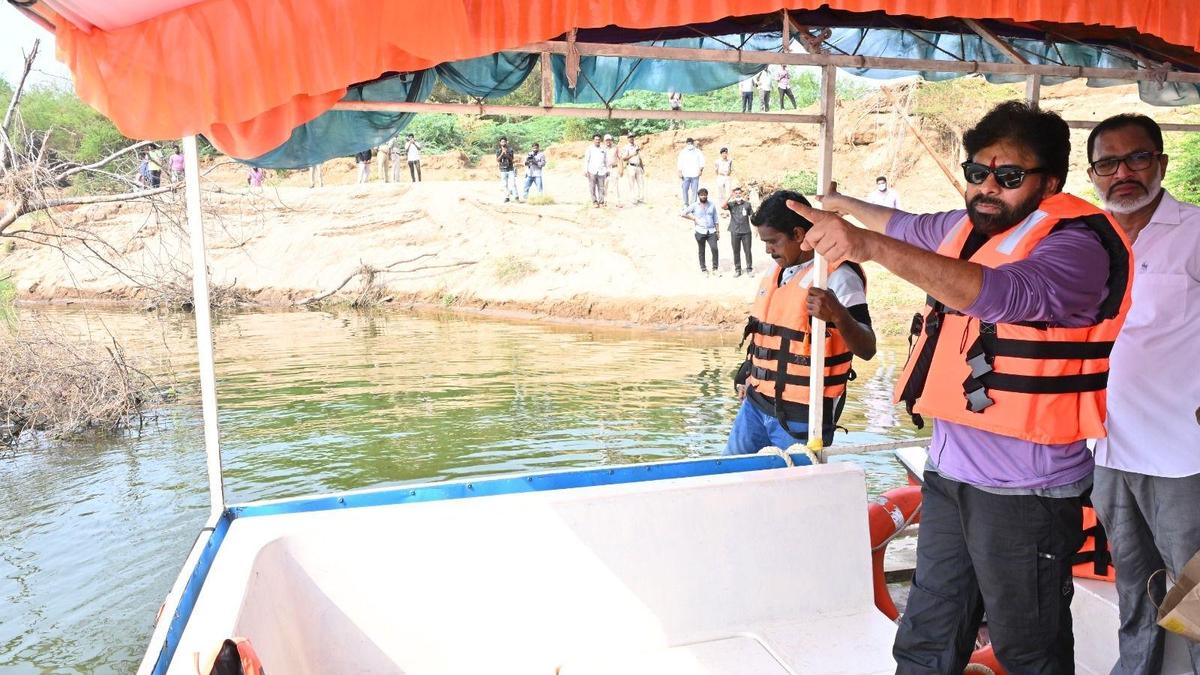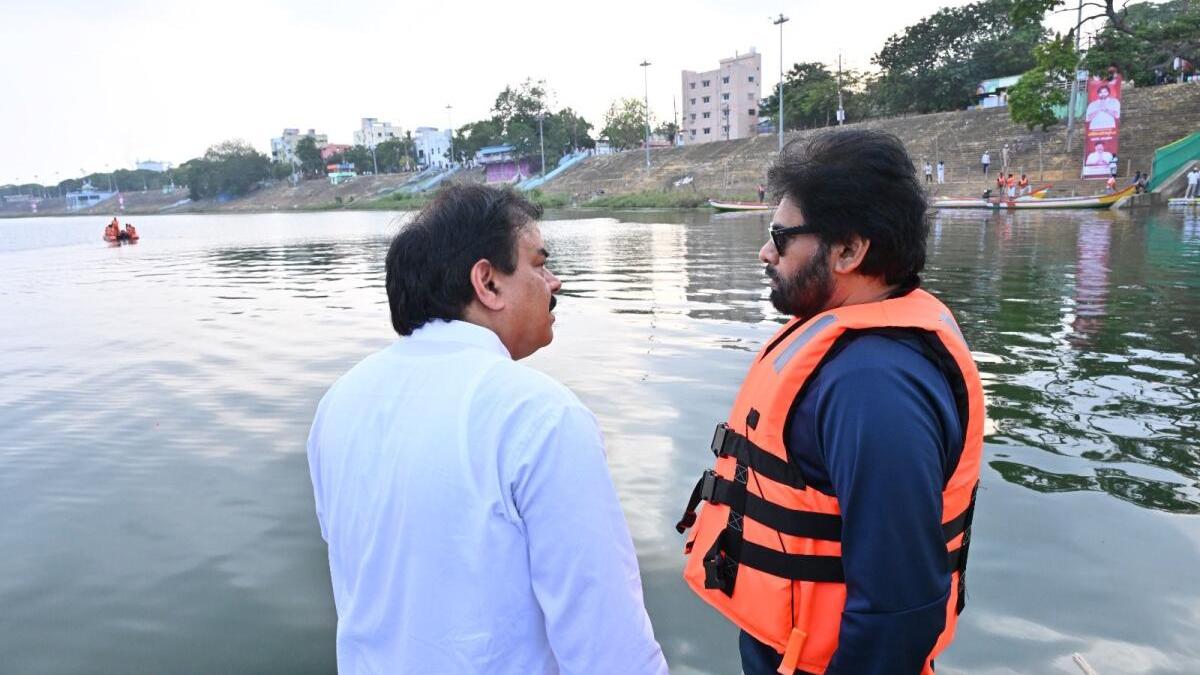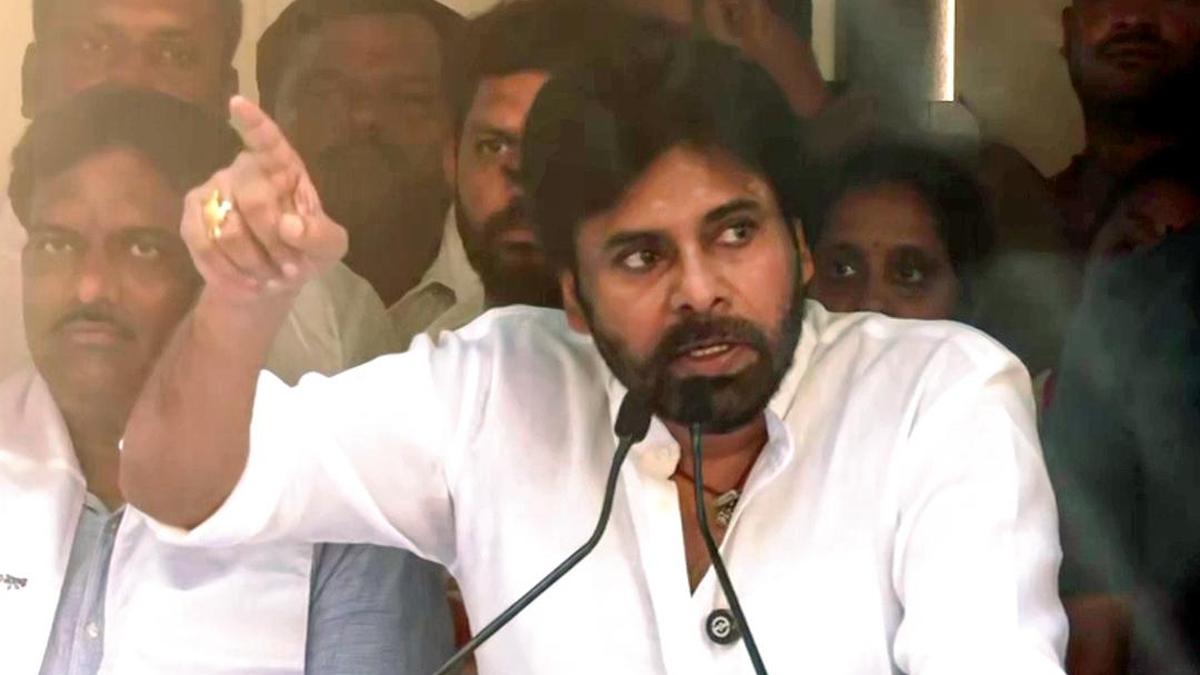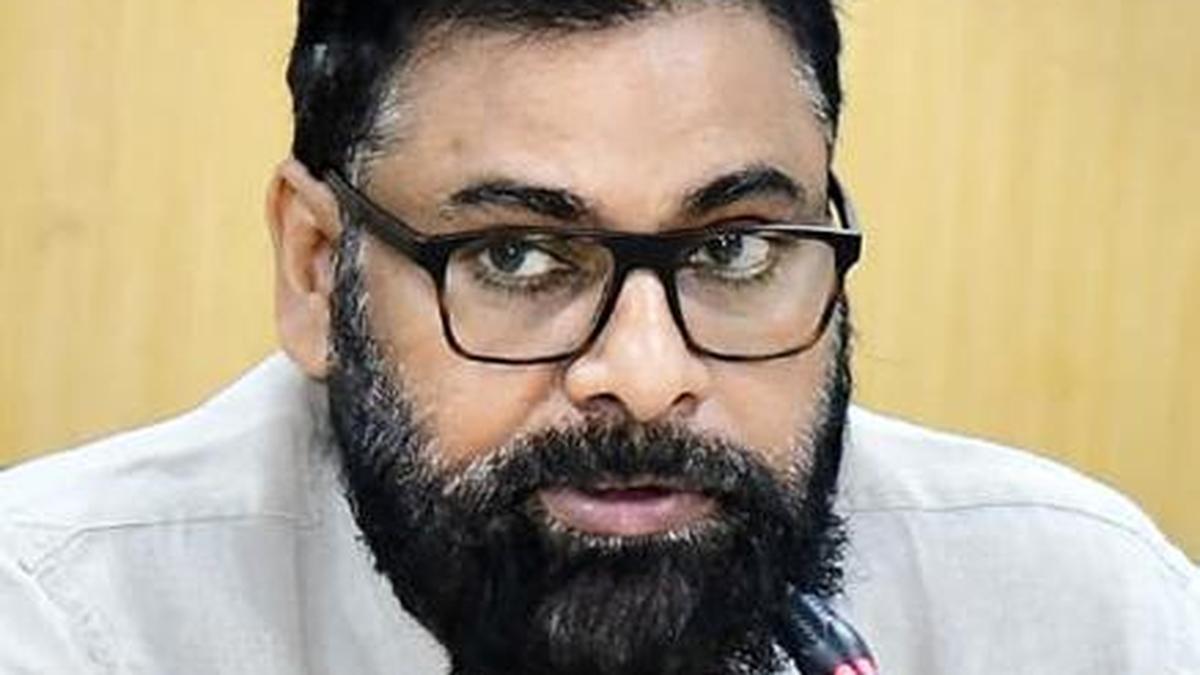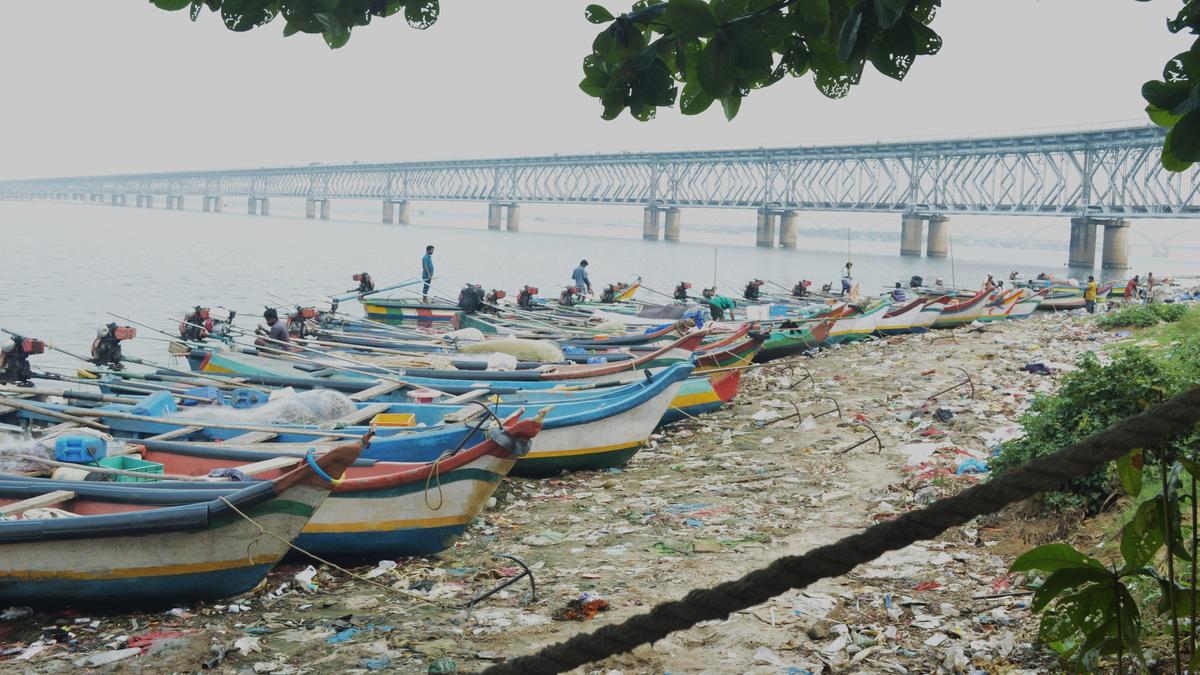
For generations, the river Godavari has been the primary water source and a vital lifeline for Rajamahendravaram city in Andhra Pradesh. However, the vast river that passes through the city now faces a severe ecological crisis, leaving residents alarmed as the findings from a recent probe declared the water to be unsuitable for daily consumption and holy dips, taken by lakhs of devotees every year.As part of the Krishna-Godavari Rejuvenation project, on May 25, Deputy Chief Minister and Minister for Environment and Forest Pawan Kalyan, accompanied by Mission Director of the Mission for Clean Krishna, Godavari Canals G.C. Kishore Kumar, and Andhra Pradesh Pollution Control Board chairman P. Krishnaiah, inspected the pollution choke points along the eastern bank of the Akhanda Godavari – Turpulanka sand shoals of river Godavari and Nalla channel. Godavari Pushakarams, which is a once-in-12-years spiritual event to worship the sacred river, is scheduled to be conducted in 2027 on the eastern banks of the city.The APPCB report released on June 8 indicates that the major parts of the river, flowing through the city, exceed permissible levels of coliform bacteria, biochemical oxygen demand, nitrate, phosphate, sulphide and biochemical oxygen.Based on the report, Deputy Chief Minister and Minister for Environment and Forest K. Pawan Kalyan says, “The Godavari river has been contaminated with various effluents and the current state of pollution in the river in Rajamahendravaram indicates that the water is neither suitable for drinking nor for bathing.”Pointing out the effluents in the above permissible level, Mr. Kalyan says, “These pose a major threat to aquatic species and cannot be recommended for drinking.”“Nitrate level is 119.6 mg /litre as against the normal level of 45 mg/litre in the water sample collected from the Andhra Paper Limited’s lagoon. This level of nitrate could pose severe health risks, including causing Blue Baby Syndrome among children. Such water is not suitable even for bathing,” he adds.The report further names Andhra Paper Limited (APL) and sewage waste through the Nalla Channel as the major contributors to pollution in the river in Rajamahendravaram.Major contributorsAccording to the report, APL generates 31,934 Kilo Litres per Day (KLD) effluents, including 400 KLD of plant domestic effluents, and is violating the rules by discharging the effluents into the Turpulanka sand shoals in the heart of the river after treatment. The APL has been discharging treated wastewater into lagoons through an open channel instead of the closed pipeline system recommended by various authorities, including APPCB.“The analysis of grab samples collected from the ETP outlet discharging into the channel and storage lagoon at Turpulanka sand shoals revealed that the sample collected from the storage lagoon exceeded the prescribed standard for Biochemical Oxygen Demand (BOD), recording 36 mg/l against the prescribed standard of 30 mg/l. The analysis further indicates Sulphides to be 3.4 mg/l against the prescribed standard of 2 mg/l and Phosphates of 5.3 mg/L against the prescribed standard of 5 mg/l,” says APPCB member secretary S. Srisaravanan.The APPCB issued a show-cause notice to APL on June 12.“The lease agreement for discharge of treated effluent into the Turuplanka sand shoals, covering 612.7 acres, expired in 1999, and it has not been renewed. However, the industry neither furnished further lease renewal of Turpulanka sand shoals in the River Godavari nor completed a dedicated drain to the Bay of Bengal despite the lapse of considerable time,” the pollution board states in the notice.The APPCB has mandated the APL management to lay a dedicated pipeline connecting to the Bay of Bengal to continue further operations and conserve the river Godavari. The APL management was given a deadline of the end of June to respond with a permanent solution to prevent pollution of the River Godavari. Failing this, the APPCB would either decide to stop production or shut down operations and impose penalties.Contacted several times by The Hindu, the APL management refused to speak or respond to their initiatives to prevent the river pollution.The downstream of the APL factory lies the Nalla Channel, through which the Rajamahendravaram Municipal Corporation (RMC) discharges 29.6 MLD of sewage water into the river.A few meters downstream of this channel, the RMC draws 65 MLD water from the river from two points – 55 MLD from Pushkar Ghat point and 10 MLD from La Hospin point – for purification for drinking water purposes in the city.“The levels of BOD and Coliform bacteria and other pollutants will lead to water-borne diseases and skin diseases if exposed to the water near Nalla Channel,” reveals the APPCB report.
Cleaning Godavari a challenge ahead of 2027 Pushkarams
The Godavari river faces severe pollution challenges ahead of the 2027 Pushkarams, threatening health and livelihoods in Rajamahendravaram.
1,268 words~6 min read