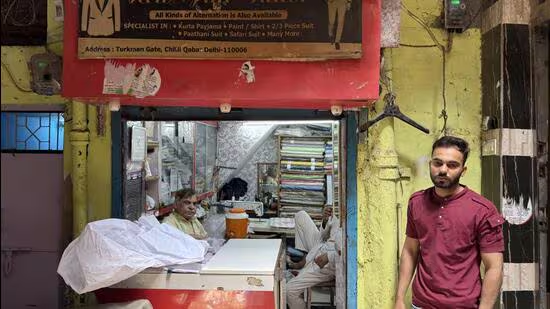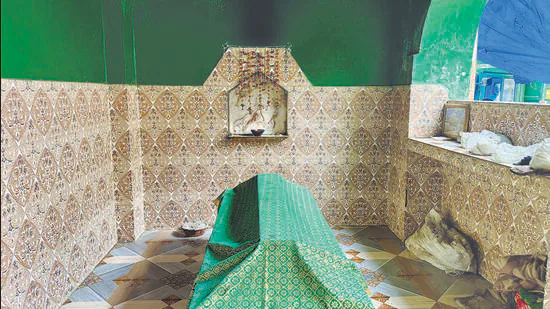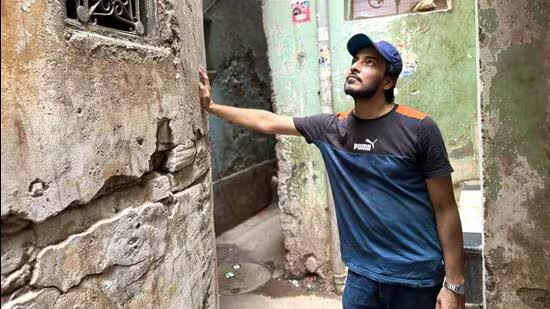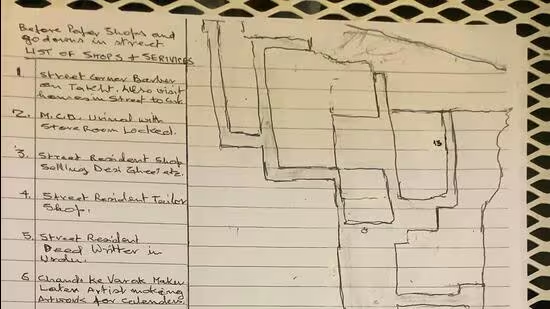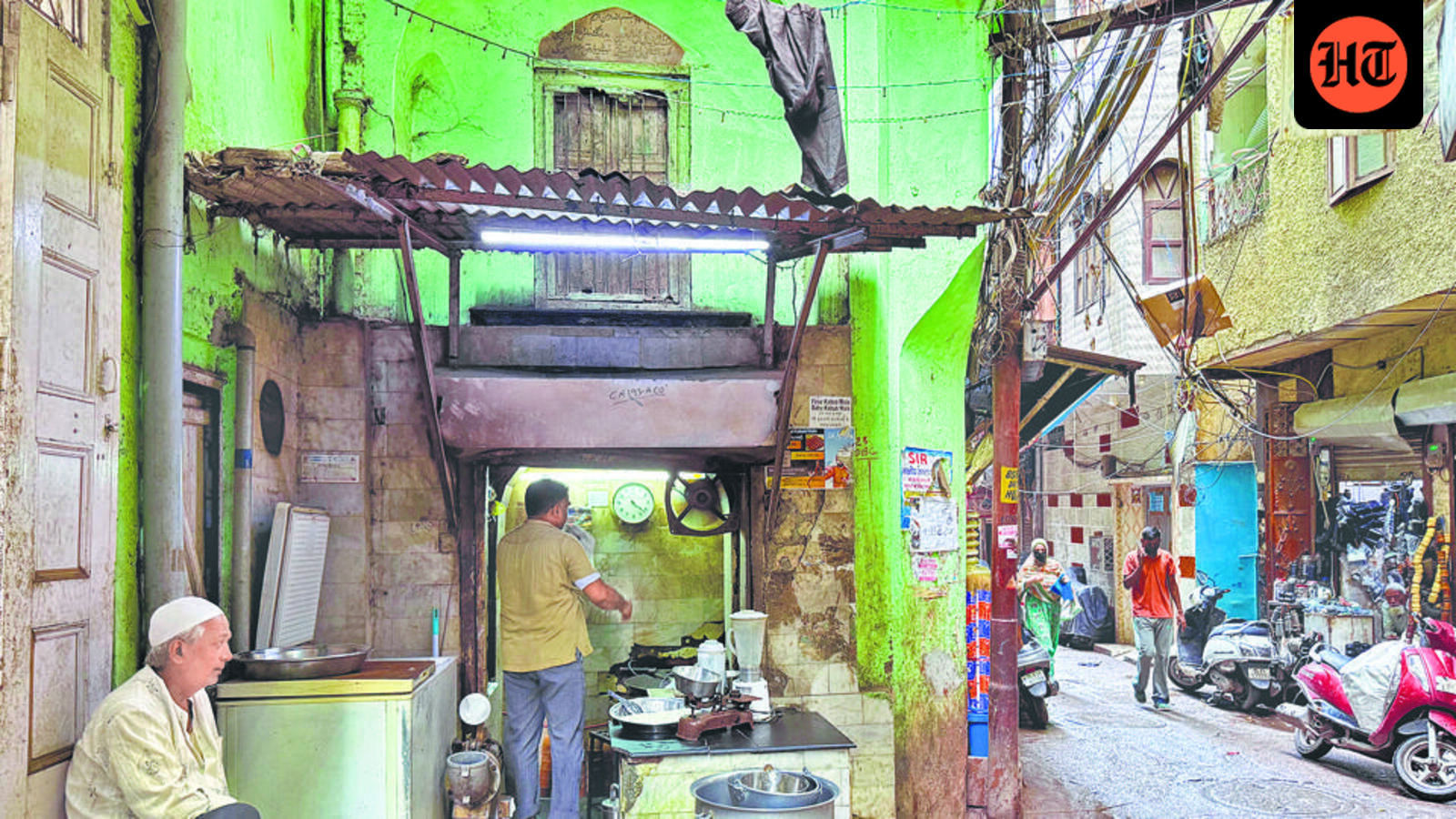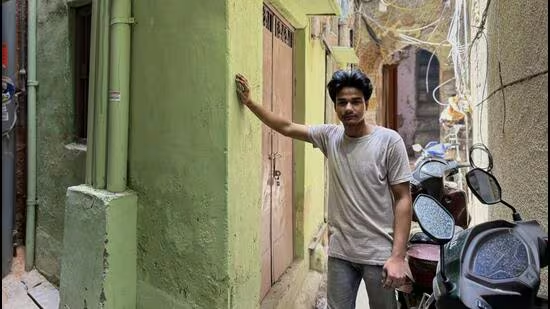
Old Delhi’s Gali Shah Abul Khair, aka Gali Shahbul Khair, takes its name from the road it opens onto. Shah Abul Khair Marg, the busy market road outside the aforementioned gali, is, in turn, named after the eighteenth-century Sufi saint buried in the shrine located on the other side of the road. This revered Shah Abul Khair, the mystic, is said to have lived through the reigns of eleven Mughal emperors.Amaan appears, descending the stairs and heading to work in Gali Garaiya near Jama Masjid, where he works as a “shoker repairer.” In his early twenties, he has spent his entire life in this tiny street. (HT Photo)Despite carrying the saint’s name, the lane is easy to miss. It appears as a narrow slit opening off the market road. At first glance, it seems to lead only to a doorway directly ahead. Only on closer inspection does it become clear that the passage continues beyond the doorway into a residential lane. The contrast is jolting, especially to the ears. The market road outside is crowded, noisy, and full of glassy daylight. Inside the lane, there is pindrop silence. It is noon, yet the lane is deserted. There are no conversations, no children, not even the cooing of pigeons.The lane is short and flanked by tall buildings. The houses rise several storeys high, perhaps in response to the shortage of space. A turn to the left leads to two doorways. Otherwise the lane ends at an old building whose arched entrance stands out for its age and grandeur.For a while, there is no sign of life.Then, footsteps echo from the side turning. Amaan appears, descending the stairs and heading to work in Gali Garaiya near Jama Masjid, where he works as a “shoker repairer.” In his early twenties, he has spent his entire life in this tiny street. About forty families live in the lane, says this young man (see photo). Yet the lane’s silence has remained unchanged for as long as he can remember. His late father was a silversmith. Pointing behind him towards the house with the grand arched doorway, he says several families live there, including that of a carpet merchant.Older residents recall that Gali Shah Abul Khair once held a different type of constitution. A shopkeeper nearby says that only two or three families originally lived here. One of them ran a glass workshop that made lenses for binoculars. The lane had a bhatti furnace where glass for the binoculars would be heated and shaped. Over time, families from outside moved in. Single-storey homes became multi-storey buildings, and the lane grew more densely inhabited.“Since I spent my childhood here, this street holds all my happiness,” Amaan says. He walks towards the market road and disappears into the blinding daylight.Within moments, the lane returns to its natural state, withdrawing into silence.
Delhiwale: This way to Gali Shah Abul Khair
Gali Shah Abul Khair in Old Delhi, named after a Sufi saint, contrasts a bustling market with its silent, narrow lane and dense residential life. | Latest News Delhi
473 words~2 min read