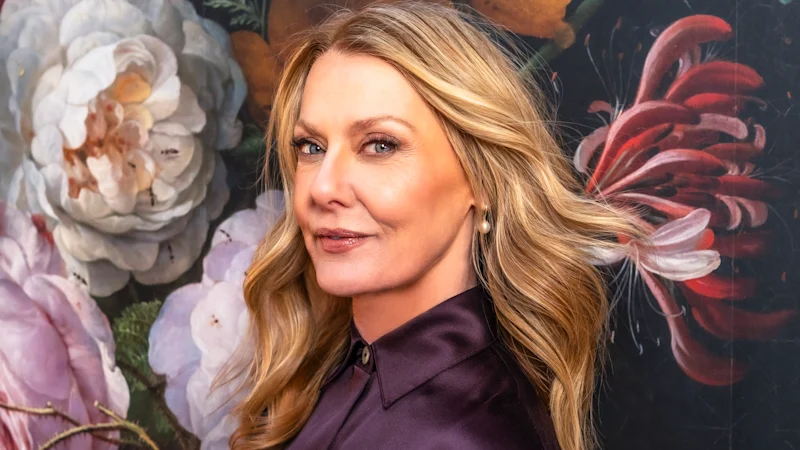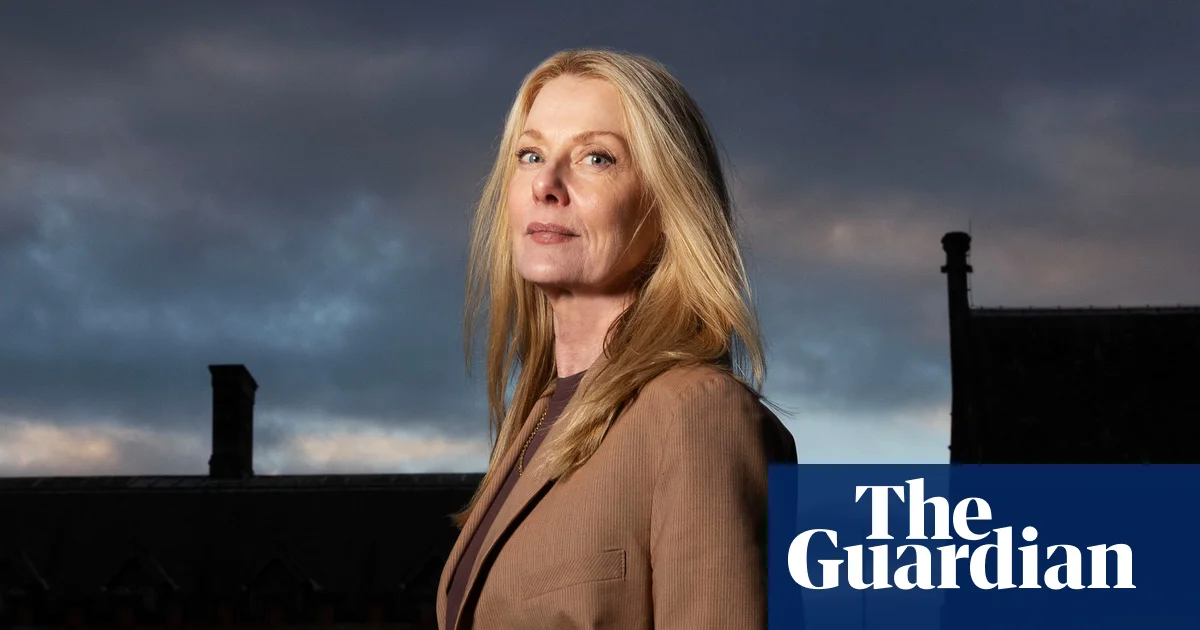
The writer and newly installed University of Sydney professor on the lure of Berlin, authors versus AI, and writing ‘from a place of admiration’Anna Funder is mere days into her new role at the University of Sydney when we meet there on an overcast Friday afternoon; she waves vaguely in the direction of her new office and says she hasn’t yet unpacked. So, with her encouragement, I gamely agree to play tour guide around my alma mater and continue to until, about halfway through the interview, she starts telling me about the architecture – at which point it becomes clear how her easy and self-effacing manner can function as a smokescreen for the sharpness of her mind.As we set off past the beds of majestic fig trees and the manicured lawns surrounding the university’s sandstone quadrangle, passing backpacked students and fresh graduates posing for photos, I ask the newly installed professor of practice in creative writing what her own experience of studying creative writing was like. She looks stricken: “We’re starting with a confession.“I have good friends who teach creative writing, and I love to talk to them, but I’ve never actually been taught it,” she says.Funder had no creative writing practice when she quit her job in international law for the Australian government to embark on Stasiland, her award-winning examination of the fallout of East Germany’s surveillance state, based on interviews with perpetrators and survivors. Published in 2002, it won the UK’s prestigious Samuel Johnson prize for nonfiction (now the Baillie Gifford), and has been published in more than 28 countries.‘Funder’s easy and self-effacing manner can function as a smokescreen for the sharpness of her mind.’ Photograph: Jessica Hromas/The Guardian“I mean, I clearly didn’t know what I was doing. But I did have an honours degree in English literature, and I had been reading my entire life. I always knew that I was going to write.”When asked if it was hard to write, she replies “No, not really” – though later concedes writing is “like childbirth – you forget the effort of it”.Stasiland germinated in the late 80s when Funder was a 20-year-old exchange student in what was then still West Berlin. What started with casual conversations with German friends turned into an insatiable desire to understand not only how citizens could turn on each other but how certain individuals refuse to – often at huge personal cost.“They were living under a bell jar in an enclosed society, under this male tyranny of the Stasi, and they still said no,” she says of three such women, who became the basis of Stasiland. “I just think to do that is incredible.”Funder secured various fellowships to return to Germany through the 1990s, probing further into the subject matter. “And then in 1997, I left the law, left my boyfriend, left the country, left my career and said to everyone ‘I’m going to Berlin to write a book!’ I was basically painting myself into this unbelievably difficult corner where I would have no option but to write my way out,” she says. Her eyes widen: “I kind of can’t believe no one stopped me.”Looking at her now, it’s easy to imagine a formidable young lawyer, radiating confidence and brooking no interference. When I say something to this effect, she releases a self-deprecating laugh – “I doubt it” – and deflects, pausing at the side entrance to the main quadrangle to tell me about the gargoyles hemming the portico arch.Funder poses for photos during our walk with the supreme but seemingly effortless poise of someone accustomed to the limelight, though she later admits to feeling “completely invisible” as she approaches 60.‘The university putting me in here is a vote of confidence in the humanities in an age of technocrats, AI, the rise of the right, book burnings and bannings.’ Photograph: Jessica Hromas/The GuardianThe same diffidence is in evidence when I describe her books as the product of deep work and she says “I’m always a bit ashamed at how long my books take”.
Anna Funder: ‘I clearly didn’t know what I was doing … but always knew I was going to write’
The writer and newly installed University of Sydney professor on the lure of Berlin, authors versus AI, and writing ‘from a place of admiration’
1,496 words~7 min read