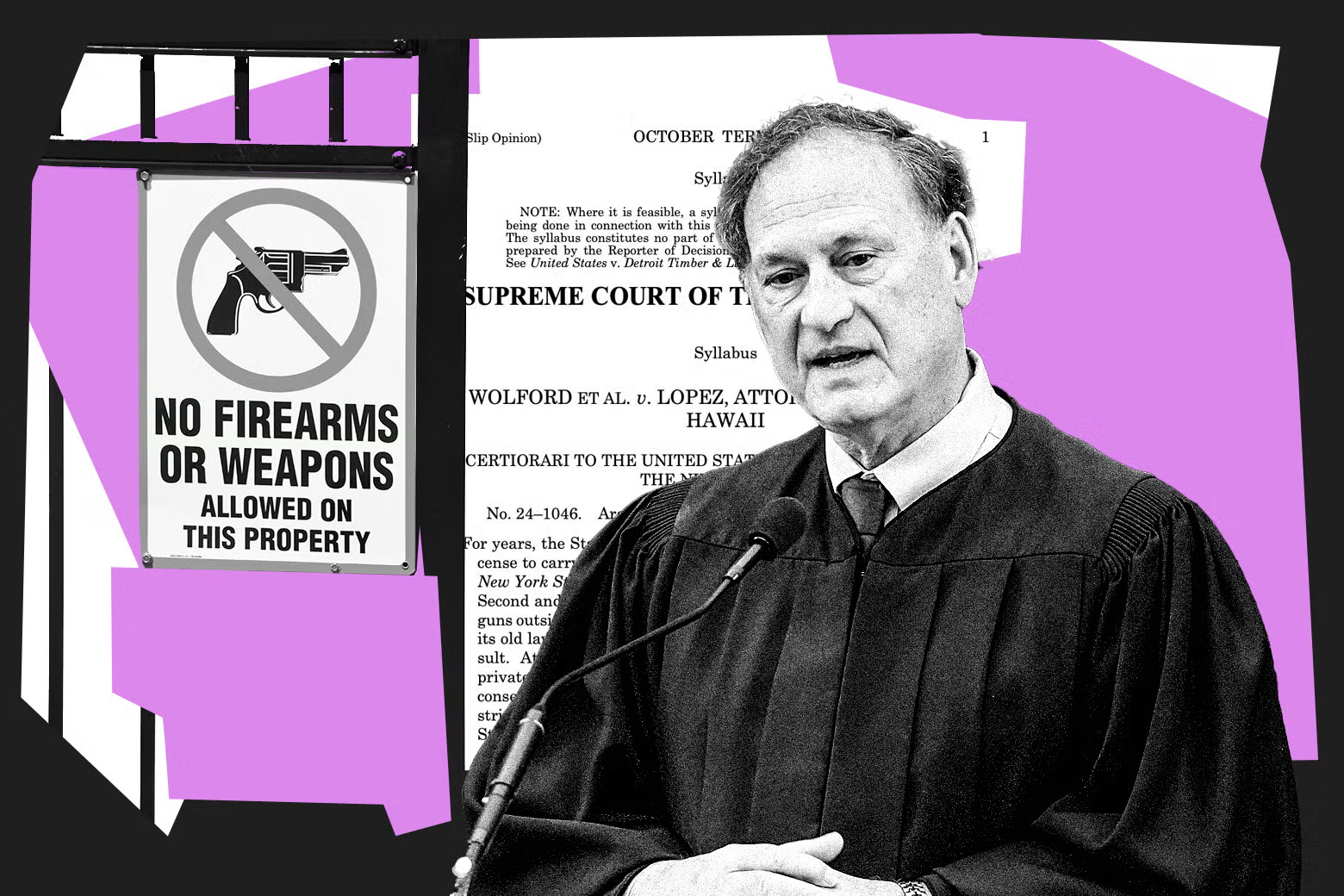
The Supreme Court ruled on Thursday in Wolford v. Lopez, and the question it answered sounds almost whimsical: must a licensed gun owner get express permission before carrying a legally permitted firearm into a restaurant or hardware store? Hawaii said yes. The Second Amendment, properly understood, says no — and on Thursday the court agreed. Justice Samuel Alito wrote the majority opinion striking down Hawaii’s law as a violation of the Second and Fourteenth Amendments, over dissent from the court’s Democratic appointees.Hawaii’s law has become known in Second Amendment litigation circles as the “vampire rule” — you can only bring your constitutionally protected firearm into a private business if the owner first invites it in. No sign, no entry. The folklore reference was sardonic, but the constitutional stakes aren’t. Hawaii’s Act 52 reversed the default that has governed firearms law in most of the country: instead of presuming that a licensed carrier may carry absent a posted prohibition, Hawaii made every commercial property a gun-free zone unless the owner posts an affirmative “guns welcome” notice. California’s Senate Bill 2 went further, requiring a specific state-mandated sign format for consent to be valid.Jason Wolford is a Maui resident with a valid concealed-carry permit. He isn’t a felon or a policy abstraction. He’s a licensed civilian who wants to carry a legal firearm into a store without hunting for a posted sign that almost nobody has put up. Hawaii made that a crime. Wolford sued.
The vampire rule comes for the Second Amendment
The Supreme Court ruled on Wolford v. Lopez, No. 24-1046 — and the question it answered sounds almost whimsical.
895 words~4 min read