Quantris is a quantum spin on a classic gameQuantum Native
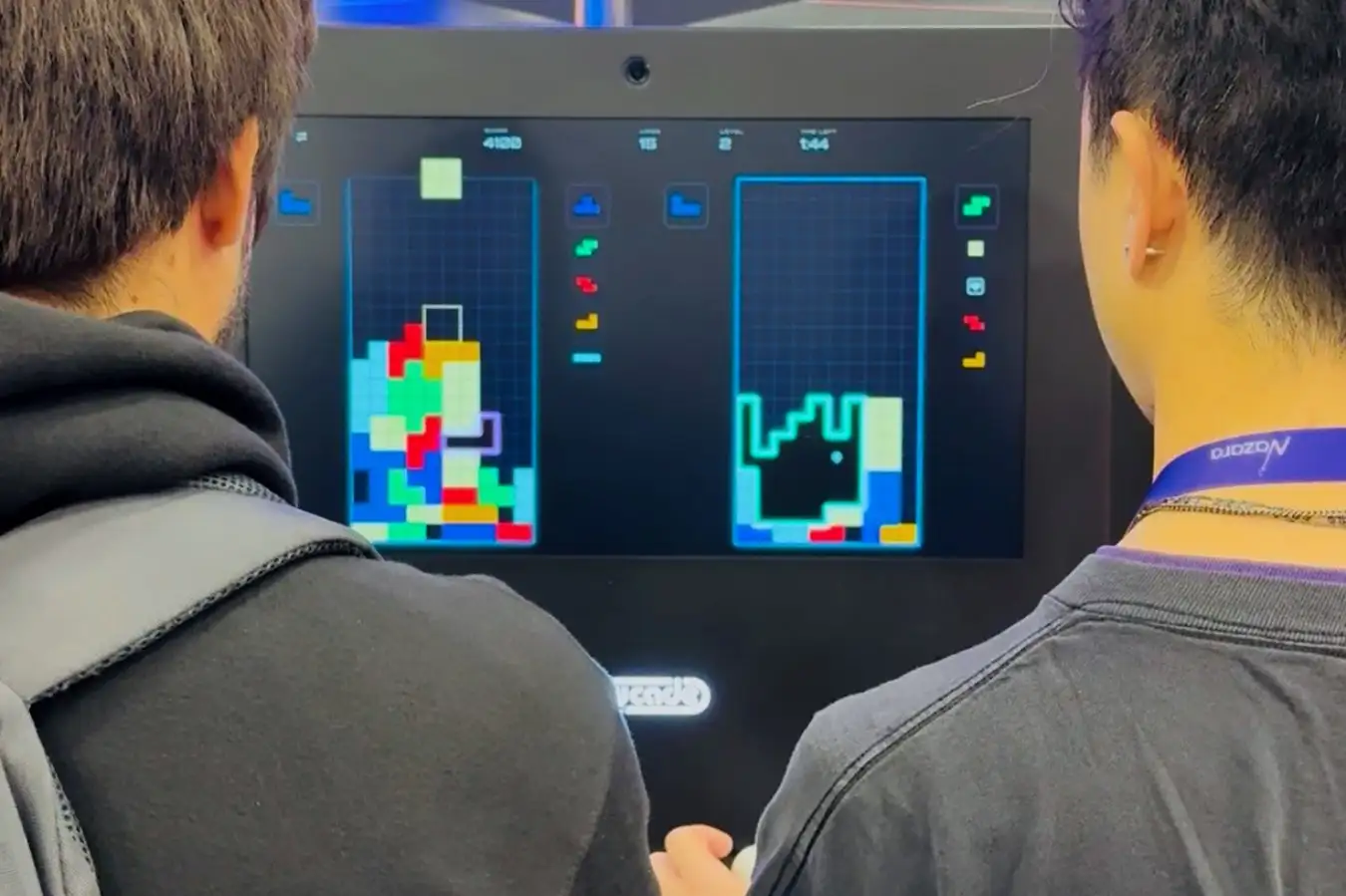
The blocks keep falling. A pale yellow square awkwardly lands on a green block shaped like the letter “z”. Next to them stands a pillar made of smaller turquoise blocks. We’ve all seen Tetris, you can probably picture it. But there is a strange block nearby, its white border seemingly confining only empty space. From the game’s instructions I know this shape is in a quantum state of superposition, an odd mix of existing and not existing in the world on my computer screen. Can this help me? To figure that out, I have to observe it. A tiny black square marked with an eye falls from the video game sky and hits the there-and-not-there block. Having been observed, it blinks into existence, bringing my stack of blocks perilously close to hitting the ceiling. There was an equal chance for the observation to annihilate the block – to find it non-existent after all – but I was unlucky. One more shape lands on the tower and the game is over. I lost at Quantris, the quantum version of Tetris. Even quantum mechanics couldn’t save me from being bad at video games.
I’m new to quantum video games, but they have a long history. While quantum physics and related phenomena were referenced in video games as early as the 1980s, we saw a real jump in the number of games based on the laws of quantum mechanics or made with quantum devices only after quantum computers became accessible through the cloud in 2016. After that, tools like IBM’s quantum software development kit gained traction, says Laura Piispanen at Aalto University in Finland, who researches quantum games. She currently estimates the number of quantum games to be close to 400, many of which were developed during weekend-long Quantum Game Jam events that have been running since 2014.