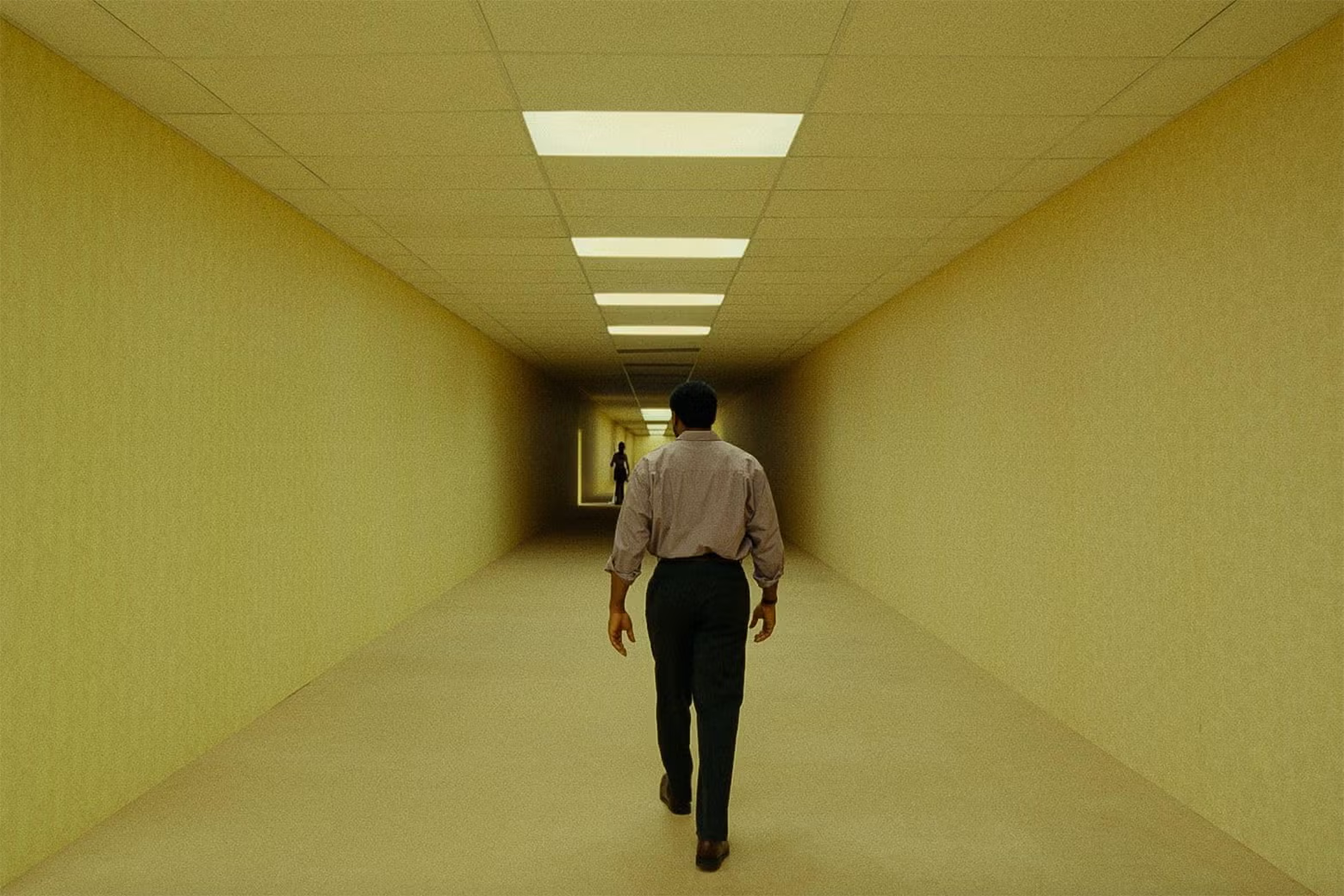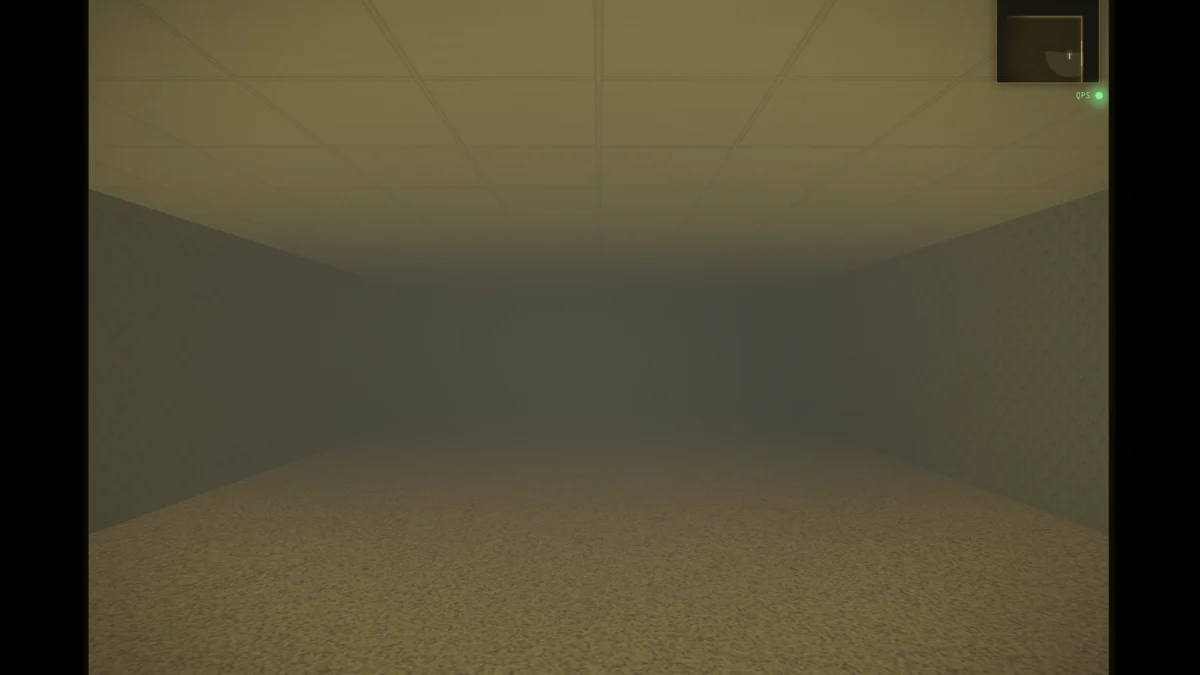
Unless you’ve spent the last month hiding under a rock (or marooned in an endless maze of liminal spaces), you know that the Backrooms movie is huge. It’s so huge, in fact, that it’s all Backrooms everything on the internet at the moment, with a whole lot of people rushing to capitalize on the film’s popularity. One of the more intriguing projects piggybacking on the Backrooms phenomenon is a recently released online game called Quantum Backrooms. The title might sound like a Deepak Chopra cash-in, but the game isn’t just using the word “quantum” to sound cool and science-y—its levels were generated by an actual quantum computer at London-based company Moth Quantum, which describes itself as “the first and only consumer-facing quantum computing company.” The game experience is reminiscent of old dungeon crawlers like Eye of the Beholder or Dungeon Master. Your character’s movement is constrained to a grid—quantized, in fact—so you can only move forward in discrete steps and turn at 90º angles. Unlike those games, however, the “dungeon” is in a constant state of flux, with the contents of each cell only becoming concrete when the player is facing it.
This reflects the idea that each cell is a representation of one of the quantum computer’s qubits. A classical computer’s bits are deterministic binary systems: each bit represents either a 1 or a 0, and will return the value it’s been assigned every time you look at it. A qubit’s state, by contrast, is probabilistic: it exists in a superposition of possible outcomes, each with a given probability of being observed when the system’s state is measured.