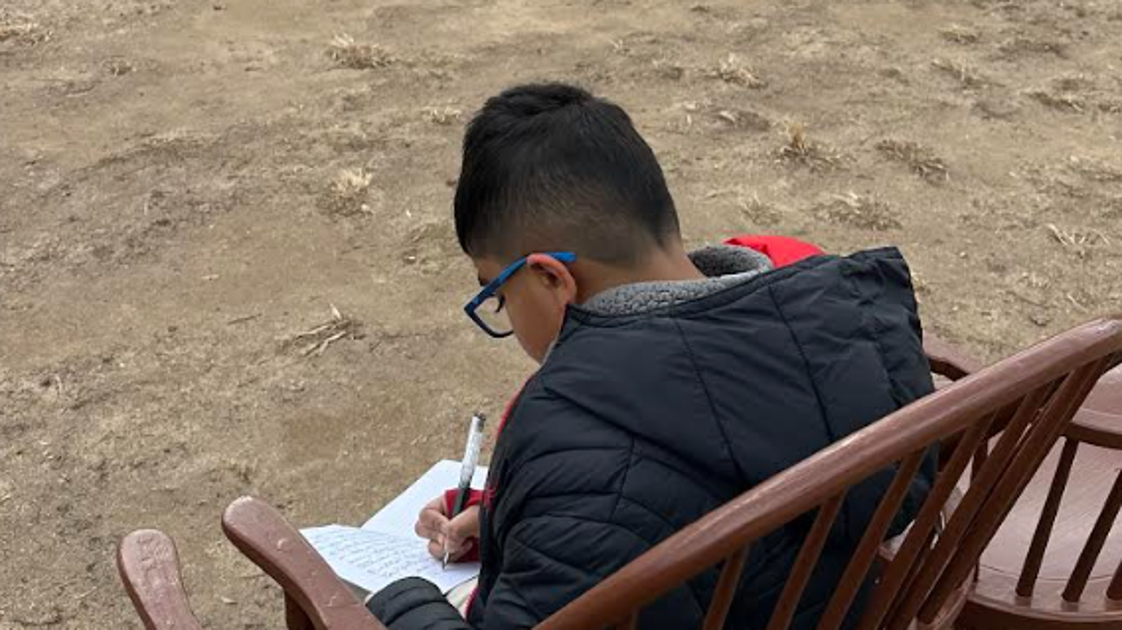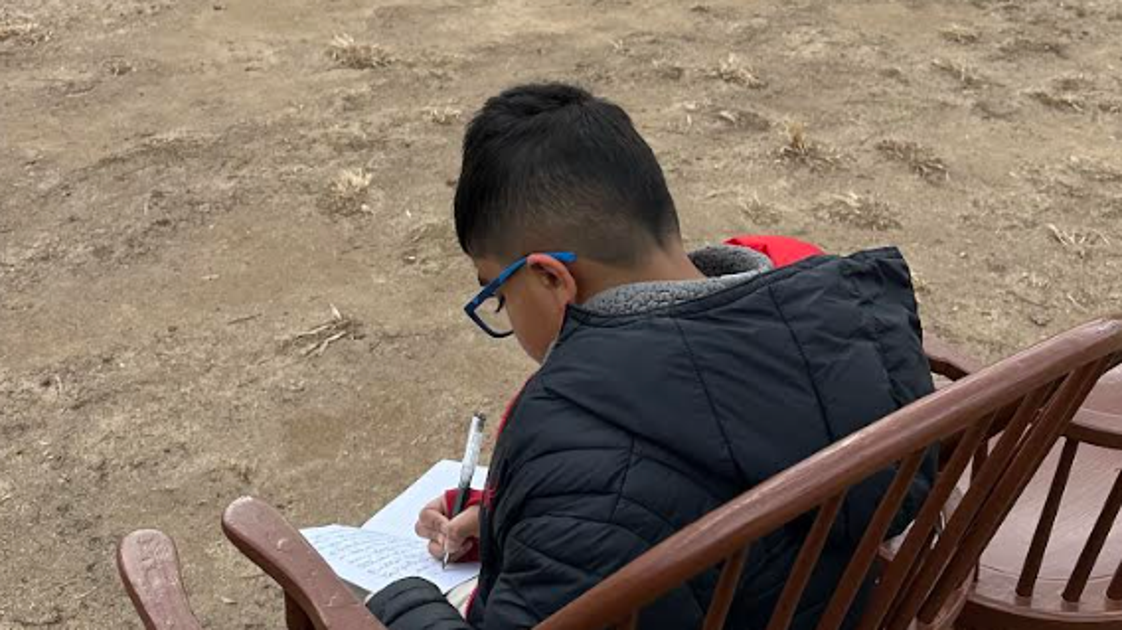
My 9-year-old son Tayz recently declined his first editorial revision.The piece in question was destined for an elementary school literary magazine. The editorial board consisted of teachers and school administrators. The stakes, objectively speaking, were low.Yet somewhere between his submission and the email that eventually landed in my inbox, a room full of adults had begun discussing the political implications of a fourth grader’s writing.The invitation itself was broad and innocent enough: students could submit a story, poem, article, drawing, or reflection for the spring edition of the newsletter. My son bypassed all those options and chose to write to George Washington instead.This did not strike me as especially unusual at first. Tayz has always had a tendency to think several emotional and historical steps ahead of his age. While other children drift toward dragons or soccer scores, Tayz gravitates toward mythology, World War II naval ships, questions of fairness, and the strange contradictions of human behavior.He imagined what it would mean to write to the first president of the United States 250 years after American independence, to explain the country we became, and the country we still struggle to be. He wrote about technology and the internet. About climate change. About voting rights and misinformation. About the strange reality of living in a world where humanity can communicate instantly across continents while simultaneously struggling to speak kindly to the person next door.The author's son Tayz writing while sitting in a rocking chair at Mt. Vernon, outside George Washington's home.Courtesy of Ami J. ShahAnd then there was the paragraph that prompted the adult conversations.“Our current president,” he wrote, “wants to make it a Limited States of America, only offering good things to a few people that he likes, instead of all Americans.”Limited States of America.When I first read the phrase, I had two immediate reactions.The first was parental pride. Not because I necessarily want my fourth grader becoming America’s youngest political commentator, but because, aside from being clever, the phrase reflected something more important: synthesis. He was attempting metaphor. Critique. Historical comparison. He was trying to wrestle with the gap between ideals and reality using language as his tool.My second reaction was something closer to grief. Not because the school objected to it, but because my 9-year-old had already absorbed enough of the national mood to write it in the first place.The email from the editor was thoughtful and kind. She explained that school leadership felt the paragraph was too overtly political for the elementary school publication and worried it could generate backlash from the broader school community. She also made clear that she valued freedom of expression and wanted to speak directly with Tayz so he understood this was not a rebuke of his ideas.In truth, I understood their position immediately.I wasn’t sure we fully understood his.Children absorb tension before they understand context. They notice injustice before they have language sophisticated enough to describe it carefully. They ask questions long before adults are prepared to answer them. By the time we decide a subject is too political for children, many of them have already been living with it for years.What struck me most was not that Tayz had opinions. Children have always had opinions. It was that he was trying to locate himself within democracy itself — trying to understand what citizenship means in a country whose founding ideals and lived realities do not always align neatly.As a parent — and as someone who spent years in diplomacy and public service — I found myself unexpectedly unsure how to guide him through the moment.Part of me wanted to march into the building in defense of principle and expression. Another part recognized that learning to write for institutions also matters. Editorial judgment exists everywhere. Audience matters. Context matters. Every publication, from a fourth-grade literary magazine to a national newspaper, makes decisions about tone, platform, and risk.I realized quickly that this could not become a lesson in outrage.I did not want my son to learn that disagreement automatically means suppression. Nor did I want him to internalize that institutions are obligated to publish every thought exactly as he conceived it. That lesson would ultimately make him less resilient, not more courageous.But neither did I want him to walk away embarrassed for thinking deeply.That balance felt harder than I expected.How do you teach a child that his voice matters while also teaching him that every platform has boundaries? How do you explain that editing is not always erasure? That compromise sometimes reflects fear, sometimes prudence, and often both?“How do you teach a child that his voice matters while also teaching him that every platform has boundaries?”Mostly, though, I kept returning to a simpler realization: this was one of the first times my son had encountered the gap between conviction and acceptance. The world was offering him a trade. Change your words and be published. Keep your words and don’t.In the end, Tayz decided he did not want to revise the paragraph.He accepted the consequence easily enough: that the piece simply would not appear in the school magazine, but he did not see the point in changing an opinion he genuinely held simply to secure publication.Instead, he matter-of-factly suggested we submit it to The New York Times.I gently suggested that perhaps little Mr. Pulitzer needed to slow his own roll a bit. He laughed. Then, after a pause, he added that maybe one day he would study law and enter politics. I remain entirely unsure whether I should be encouraged or concerned.The magazine will still be printed. Life will move forward the way it always does in elementary schools, with field trips and library books and spelling tests unfolding alongside occasional moments of startling seriousness.Tayz will move on to the next thing, as children so often do. However, I suspect I will remember this longer than he will. Somewhere between his draft and the editor’s email, I realized my child was no longer simply learning history. He was beginning to locate himself inside it.Ami J. Shah is a former U.S. diplomat, nonprofit executive, entrepreneur, and mother of two. Her writing explores family, identity, culture, and the stories we inherit across generations. She lives in Maryland with her family.Do you have a compelling personal story you’d like to see published on HuffPost? Find out what we’re looking for here and send us a pitch at pitch@huffpost.com.
My 9-Year-Old Son's School Magazine Rejected His Essay. I Was Shocked When I Saw What He’d Written.
“As a parent ... I found myself unexpectedly unsure how to guide him through the moment.”
1,062 words~5 min read