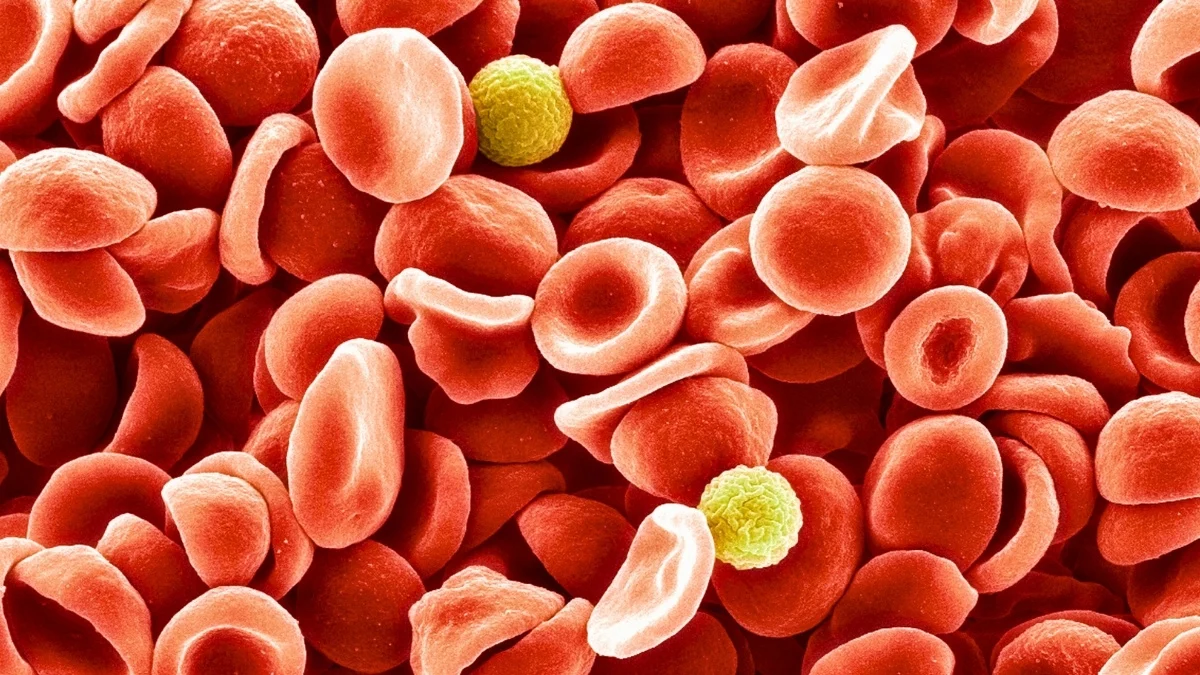
Scanning electron micrograph of red and white human blood cells. (Steve Gschmeissner/Science Photo Library/Getty Images)
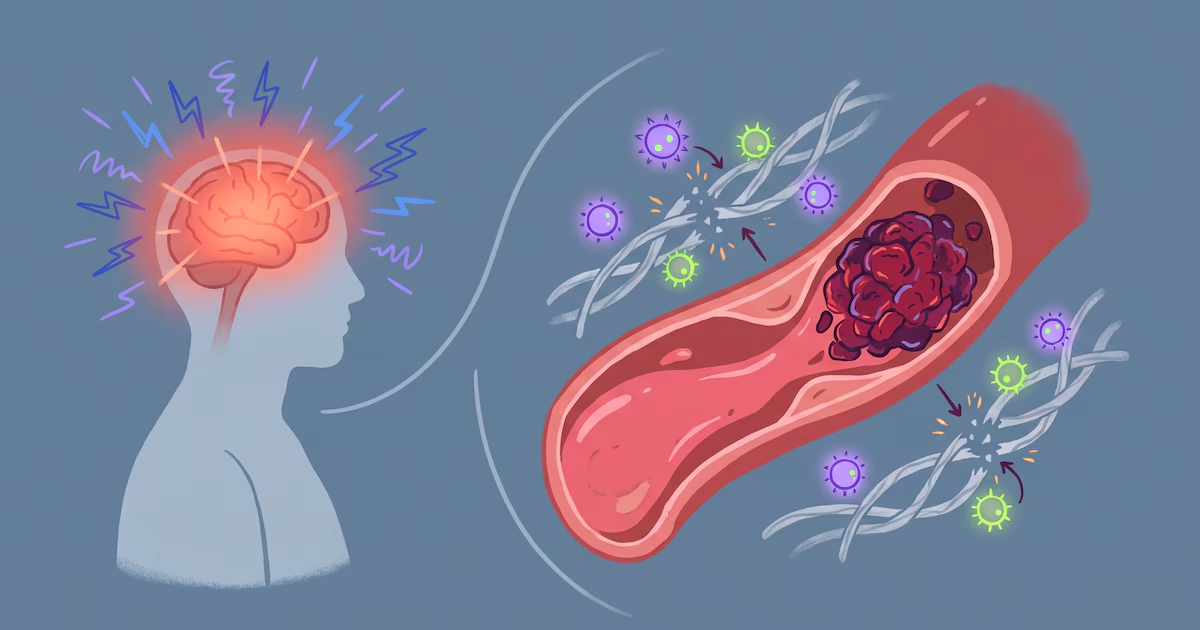
We have all heard it: "It's just in your head."When work deadlines pile up, financial worries linger or an unexpected public speaking obligation looms, we often treat anxiety as a purely psychological challenge – something to be overcome with a bit of willpower.But our bodies don't separate the psychological from the physical. Your brain is not an island, and anxiety does not stay trapped between your ears.It triggers a rapid cascade of biochemical changes that travel through the bloodstream and affect the body in measurable ways.New research from my colleagues and I captured this mind-body connection in real time. By putting healthy volunteers through a laboratory stress test, we discovered that acute mental stress acts as a direct chemical catalyst.Within minutes, it increases the production of highly reactive molecules known as free radicals. These molecules then alter the way blood clots form.In other words, psychological stress can physically remodel your blood, making it more prone to clotting.Scientists have known for decades that chronic stress is bad for the heart. Large population studies have repeatedly identified emotional stress as a risk factor for cardiovascular disease. What has been less clear is exactly how an emotion translates into a biological change that could increase cardiovascular risk.