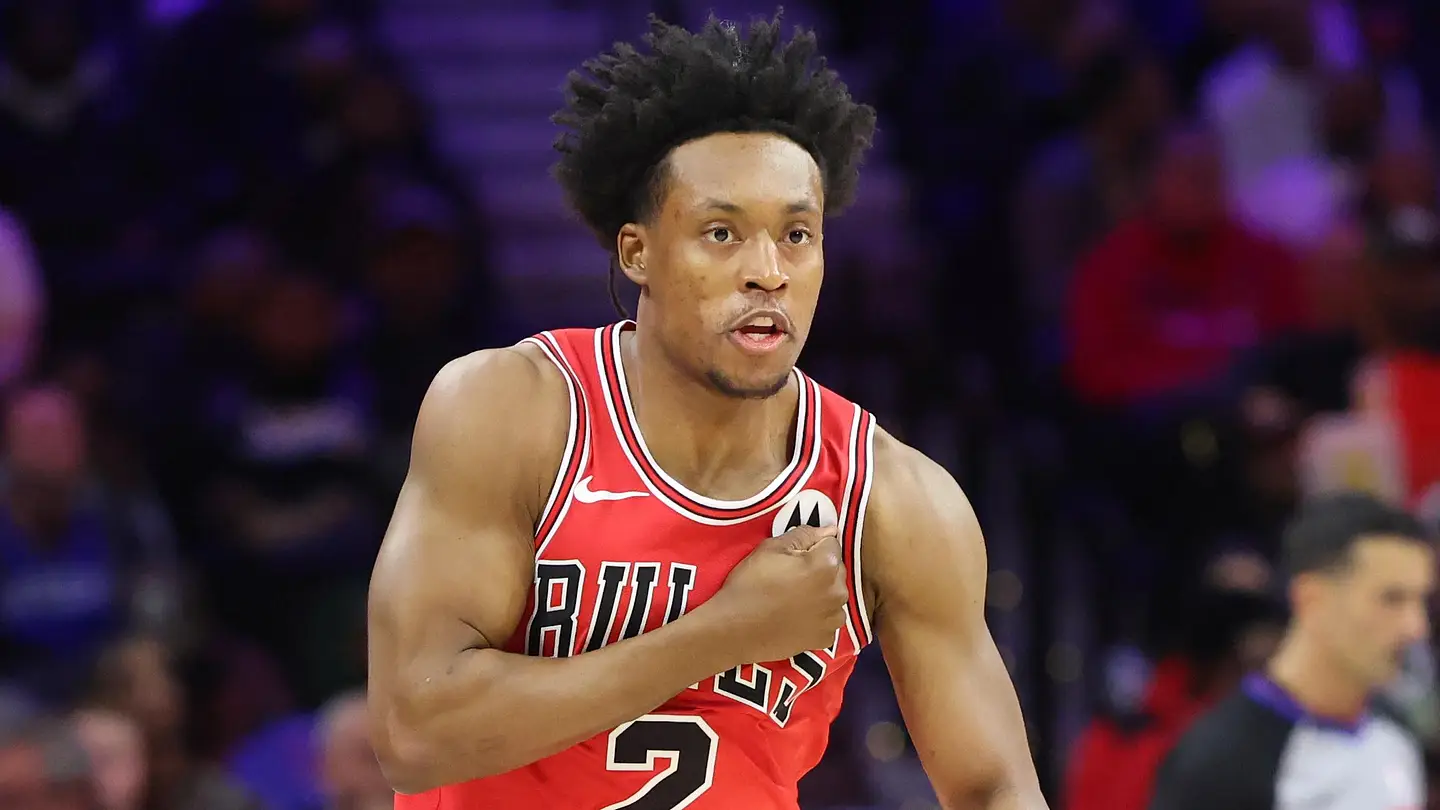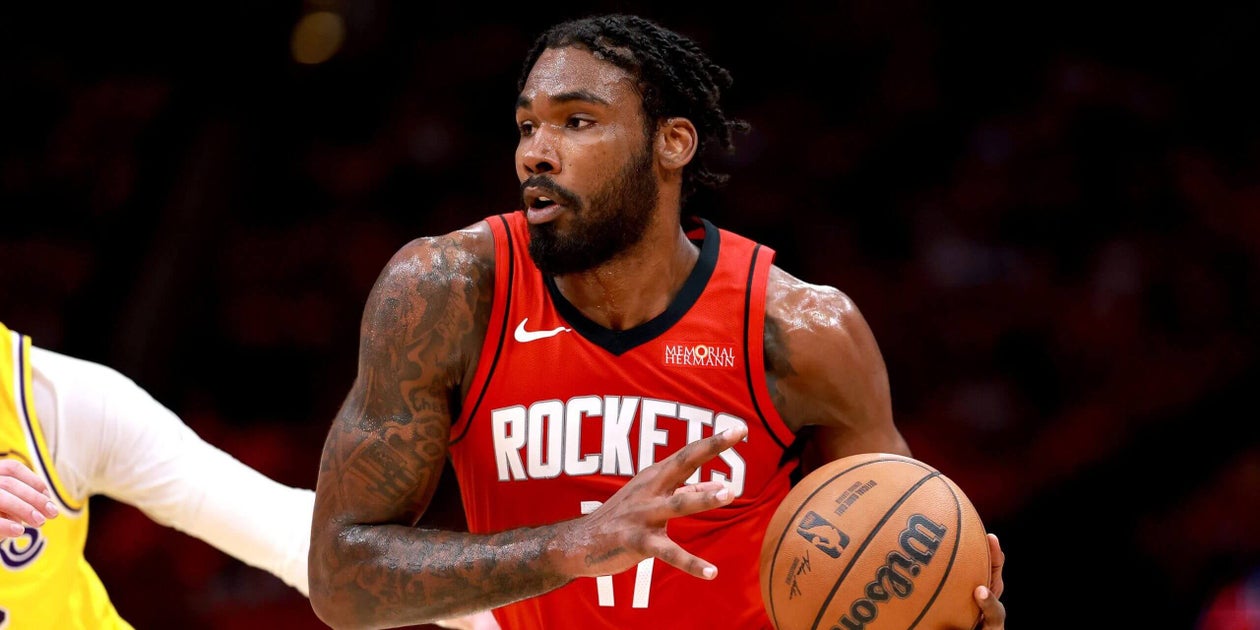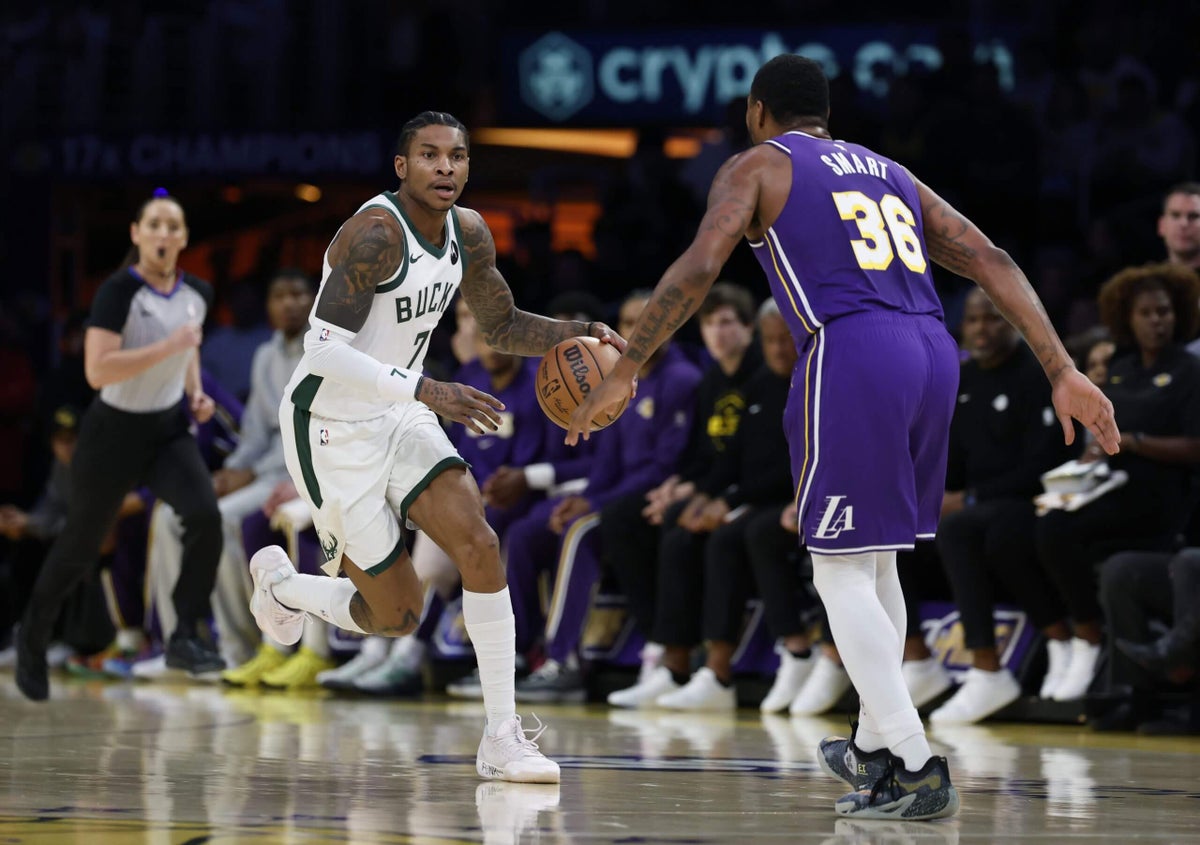
Free-agent market: Top 25 | shooting guards | small forwardsThe NBA’s free-agent point guard market may be the strongest position overall, with two All-Stars adding star power to the group (even if they’re likely to stay put) plus at least six potential starters who are likely to be unrestricted free agents. Several plus backups dot the market after that, based on my BORD$ valuations. (More on the methodology here.)As always, I’ve included all free agents and potential free agents because of player options, team options and non-guaranteed contracts, except for absurd cases where there is no chance of a player being waived and — importantly — also no chance for other cap shenanigans by declining options and signing new contracts. For one example, Miami won’t be waiving ball hawk Dru Smith from his non-guaranteed minimum deal.(PO = player option; TO = team option; NG = non-guaranteed; PG = partial guarantee; POPG = player option, partial guarantee; R = restricted; R-2w = restricted two-way)Tier 1: Max guysNoneTier 2: More than MLE, less than max1. James Harden, Cleveland (POPG): $36,396,260 Harden has a complicated contract structure that contains both a player option for $42 million and a partial guarantee that lets the Cavs sever him for just $13.3 million if he picks up the option.You probably needn’t worry about either, as it is in both Harden’s and the Cavs’ interests to decline the option and ink a new deal, likely in the range of two years and $65 million to $70 million. That arrangement would slightly lessen the Cavs’ imposing salary obligations for the coming season while giving Harden a bit more long-term insurance (at least to the extent that’s possible entering an age-37 season). Either way, it would be stunning if he’s anywhere but Cleveland on opening night.2. Trae Young, Washington (PO): $29,495,966I’ve probably seen more of Young over the last half-decade than anybody who doesn’t either work for the Hawks or cover them full-time. He’s definitely a one-man offensive engine for a team that badly needs one, definitely an elite passer, definitely lost a step two years ago and has more trouble beating switches than he used to and definitely highly flammable on defense, although he at least tries now. (More on that here.)As a small guard entering his age-28 season, the danger is less the money and more the years. He’s agreed to a four-year deal (with a player option) for approximately $212 million, far above his BORD$ valuation. It probably would’ve worked better for the Wizards’ cap management to just tack on new years to that number.For instance, getting to a total of three years, $110 million would have put two new seasons at $30 million on the Wizards’ books, which would not only accommodate additions and re-signings vis-à-vis the luxury tax but also crack the door open for a cap-room play in summer 2027. Still, even after opting out of his deal, there was little to no chance that Young would change teams.How excited is AJ Dybantsa about being the number 1 pick?Josh Robbins and Jeshua KiddTier 3: MLE guys3. Collin Gillespie, Phoenix: $21,472,942Gillespie agreed last week to a four-year, $48 million deal. This even larger valuation may sound pretty extreme because Gillespie’s career had little traction until he blew up in his age-26 season, but he was fantastic last year. He’s also a career 40.5 percent 3-point shooter on serious volume, holds his own on defense and can run an offense.The Suns only have early Bird rights on Gillespie, capping what they could have paid him at an estimated $15.6 million in 2026-27 salary. The average salary on his agreed-upon deal is a few million less than that, and the Suns should manage to keep him, Jordan Goodwin and Mark Williams while staying under the second-apron payroll threshold.4. Kevin Porter Jr. Milwaukee (PO): $19,960,319Porter was the Bucks’ second-best player in 2025-26 and might be the best one when camp opens, even while going cold from 3 (just 32.2 percent) in his 38 games.Porter’s issues at other stops and iffy commitment to defense are likely going to cap his salary south of this BORD$ valuation, as the Bucks may not have much competition for his services at eight-figure prices. He surely will opt out of his $5.4 million deal for 2026-27, however, and as an early Bird rights player, the Bucks can pay an estimated $15.6 million in 2026-27 salary to retain him if need be — just beating the non-taxpayer MLE amount ($15 million) that would let other teams in the door. A deal for a bit less than that, in the neighborhood of three years and $40 million, seems like a reasonable sweet spot.5. Fred VanVleet, Houston (PO): $17,526,557VanVleet missed the season with a torn ACL, so BORD$ is triangulating here based on his age and previous track record. He also has a player option for $25 million; he could just opt into it and try his luck as an unrestricted free agent next year.What might work better for all parties, however, would be if he declines the option and immediately re-signs with Houston on a deal that pays him less money for 2026-27 (so the Rockets can manage the tax aprons) but gives the 32-year-old more security for the years that follow. Maybe something in the neighborhood of three years and $70 million.6. CJ McCollum, Atlanta: $16,536,607McCollum was the perfect spark plug for Atlanta’s offense once he came over from Washington; he also, alas, turns 35 in September and doesn’t really fit the timeline of this Hawks roster full of 20-somethings.Still, McCollum and the Hawks have already agreed to a one-year, $21 million deal, though BORD$ values him just a whisker above the non-taxpayer MLE. A two-year deal would’ve been about the maximum tolerable risk given McCollum’s age. Atlanta is miles from the projected tax line, and McCollum’s expiring contract possibly could be used in a midseason swap for elite talent.7. Jamal Shead, Toronto (TO): $16,103,212 Shead is an interesting situation. Normally, you might think he’d be a “decline and re-sign” candidate because of his value contract (just $2.3 million), but Toronto’s situation with the tax aprons argues for the opposite approach. The Raptors can barely stay under the projected first apron even with Shead at his current number, much less if he gets a raise, but they will have a lot more money a year from now.Thus, they were likely to lock in Shead at his current number, which they reportedly did Thursday, and then try to sign an extension based on that. There is also a scenario where the Raptors hold off on an extension to preserve the possibility of 2027 cap room, because Shead’s minimum cap hold would go a long way toward achieving that.8. Collin Sexton, Chicago: $14,248,237 At this point, we basically know the drill: Sexton isn’t really a point guard and is too small and defensively suspect to start on the wing, but he can fill it up when he gets cooking. Sexton is a career 38.9 percent 3-point shooter who averaged over 30 points per 100 possessions for four different teams across eight seasons. The full non-taxpayer MLE might be slightly aggressive for a bench microwave type, but a two-year deal between $25 million and $30 million would likely return value.Chicago has Sexton’s Bird rights but seems unlikely to pursue him as the Bulls pivot to a rebuild centered on their heap of cap space; however, Chicago could play a part in sign-and-trade scenarios for teams that don’t have access to the MLE.
NBA free agency 2026: Point guard class offers several options for interested teams
This position may be the strongest overall this offseason, but some of the top names have already agreed to stay put.
3,604 words~16 min read