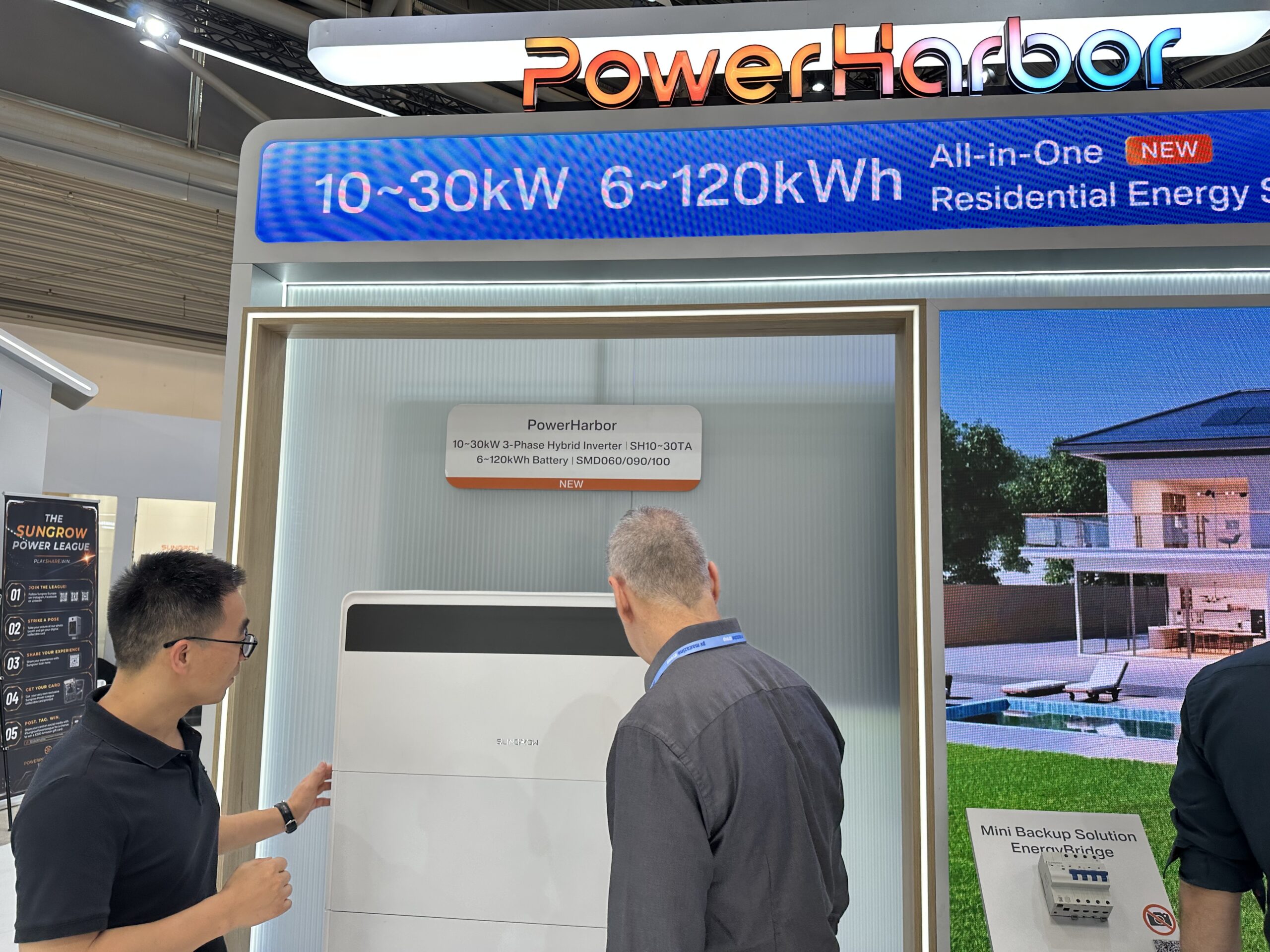
Sungrow’s new PowerHarbor residential all-in-one hybrid inverter system offers 10–30 kW inverter power, 6–10 kWh modular LFP battery blocks, 1.6× PV-to-battery fast charging, AI-driven energy optimization, and up to 150% phase unbalance output.
Chinese inverter and storage system manufacturer Sungrow has unveiled this its new PowerHarbor all-in-one battery inverter for residential applications at the Smarter E trade show in Munich, Germany.
“This is Sungrow’s first all-in-one product for the residential segment,” the company’s Team Leader for EU Solar/Storage, Andrea Polini, told pv magazine. “A key innovation of this new system lies in its modular battery architecture. Unlike previous Sungrow battery systems, where modules were connected in series and functioned as a single dependent unit, each module in the new design is equipped with its own optimizer. This makes every battery module fully independent and intelligently managed. As a result, new and older modules can be combined even years apart, with the system automatically balancing their operation to ensure optimal performance throughout the product’s lifetime.”
This architecture also enables smarter energy usage, according to the manufacturer. “The system can selectively switch off battery modules when full capacity is not required, such as during periods of low household consumption at night or in winter. By only activating the necessary modules, overall efficiency is improved and the lifespan of the system is extended,” Polini went on to say. “It supports strong charge and discharge capabilities and is optimized for modern energy environments, including dynamic electricity tariffs and participation in virtual power plants. Using AI-driven control, the system can anticipate solar production and household demand. For example, it may delay charging in the morning if high solar production is expected later in the day, and then concentrate charging during peak photovoltaic output. This allows the system to better capture and utilize solar peaks, achieving up to 160% of nominal power during peak charging conditions.”