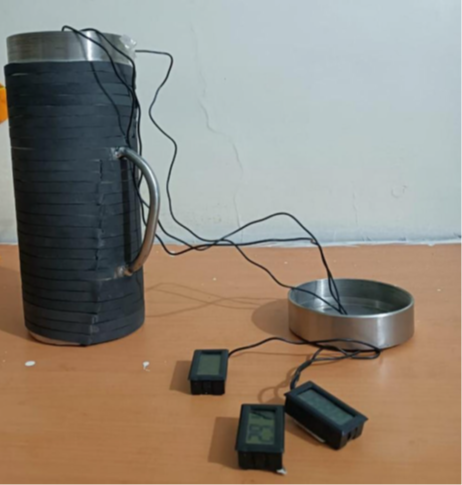
The prototype stores around 1.5 to 2 kWh of thermal energy and can maintain water temperatures between 50 C and 60 C for up to 14 hours after charging.
Researchers at MIT World Peace University (MIT-WPU) have developed a solar thermal energy storage system that enables hot water availability even after sunset by storing solar heat in a phase change material (PCM)-based thermal battery.
The technology addresses one of the biggest challenges associated with solar energy—its intermittent availability—and has the potential to reduce dependence on electricity and fossil fuels for water heating applications, according to its creators.
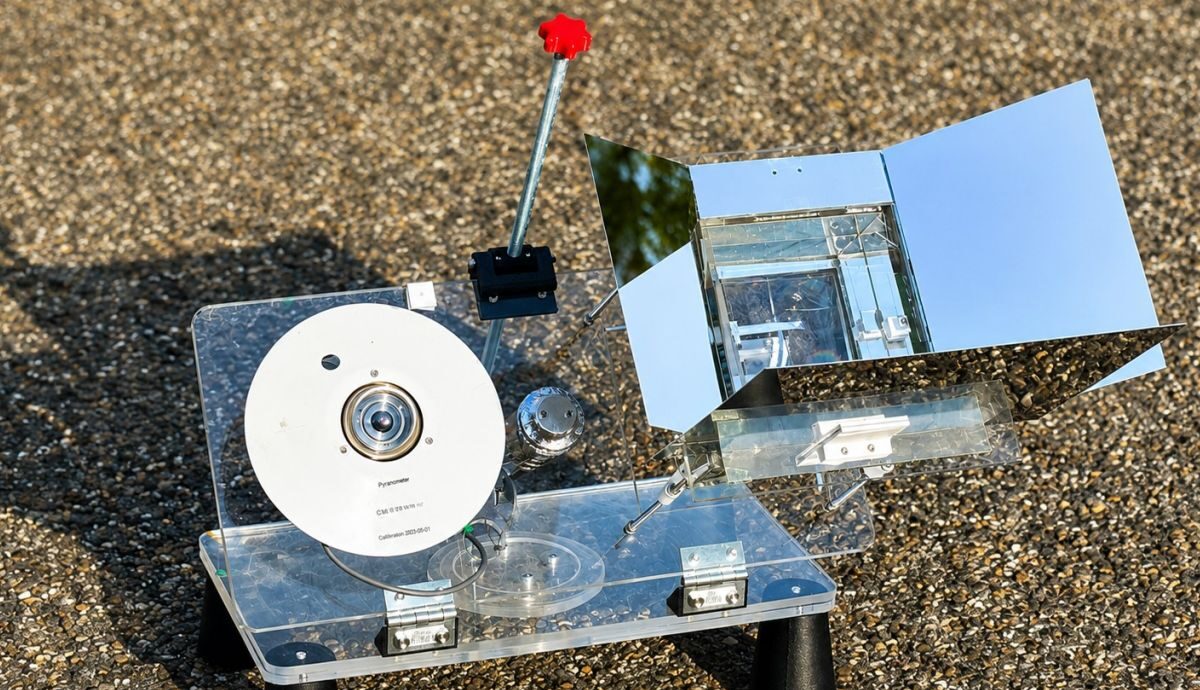
Developed by Anita Nene and Rohit Ghadge from the Department of Mechanical Engineering, MIT-WPU, the system combines a Scheffler solar concentrator with a thermal storage capsule containing paraffin wax, a phase change material (PCM) capable of storing and releasing large amounts of heat.
A Scheffler solar concentrator is a parabolic solar thermal reflector that tracks the sun while keeping its focal point fixed. This allows concentrated solar heat to be delivered to a stationary receiver, making it well suited for applications such as cooking and industrial process heating. PCMs can absorb, store, and release large amounts of latent heat over defined temperature ranges. They have often been used at the research level for PV module cooling and the storage of heat.