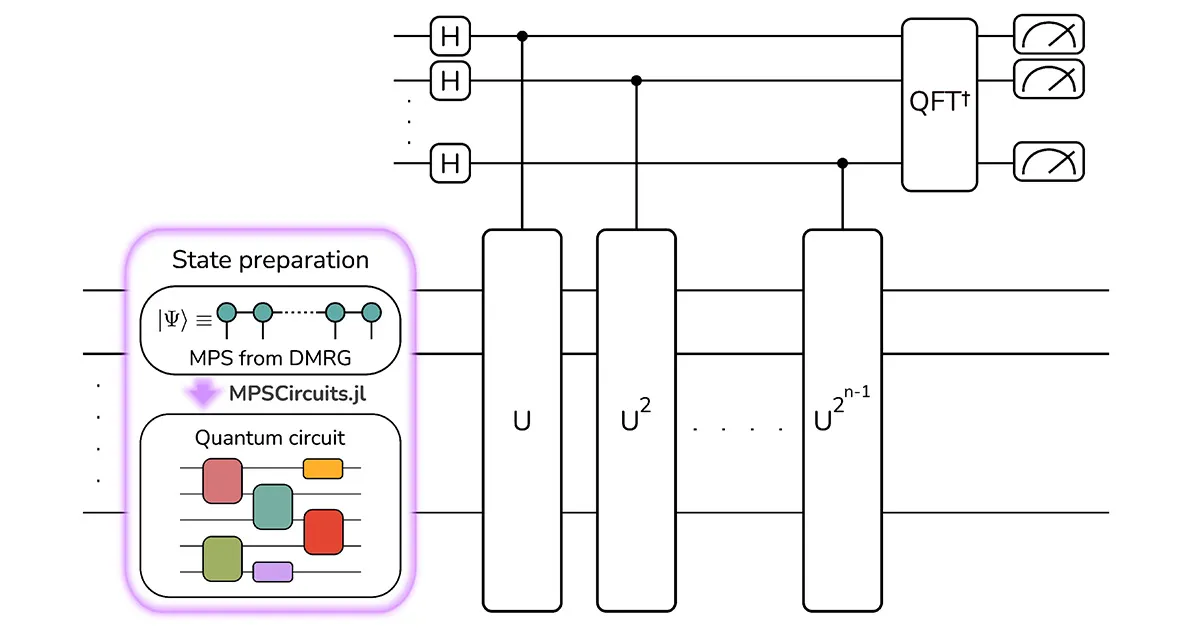
Quantum Machine Learning (QML) is rapidly moving from theoretical whitepapers into practical engineering pipelines. If you are curious about how quantum algorithms actually interface with material science, the newly open-sourced spinq-vqe repository from ARPA's QONDRA division is a perfect sandbox.
Built entirely in Python using PennyLane, spinq-vqe tackles the quantum many-body physics of Mn₃Sn. For context, Mn₃Sn is a Kagome antiferromagnet that recently demonstrated ultra-fast 40-picosecond spin-orbit torque switching. Simulating the ground state of its highly correlated Kagome lattice is notoriously difficult for classical systems, making it an ideal candidate for quantum variational methods.
Here is a breakdown of what makes this repository worth cloning, whether you are a QML researcher or a classical software engineer looking to bridge the gap into quantum systems.
1. VQE and the Barren Plateau Problem in the Wild
One of the most valuable aspects of this repo is its transparent handling of algorithmic bottlenecks. In notebooks/02_vqe_run.ipynb, the pipeline attempts to find the system's ground state using a Variational Quantum Eigensolver (VQE) with a Hardware Efficient Ansatz (HEA).