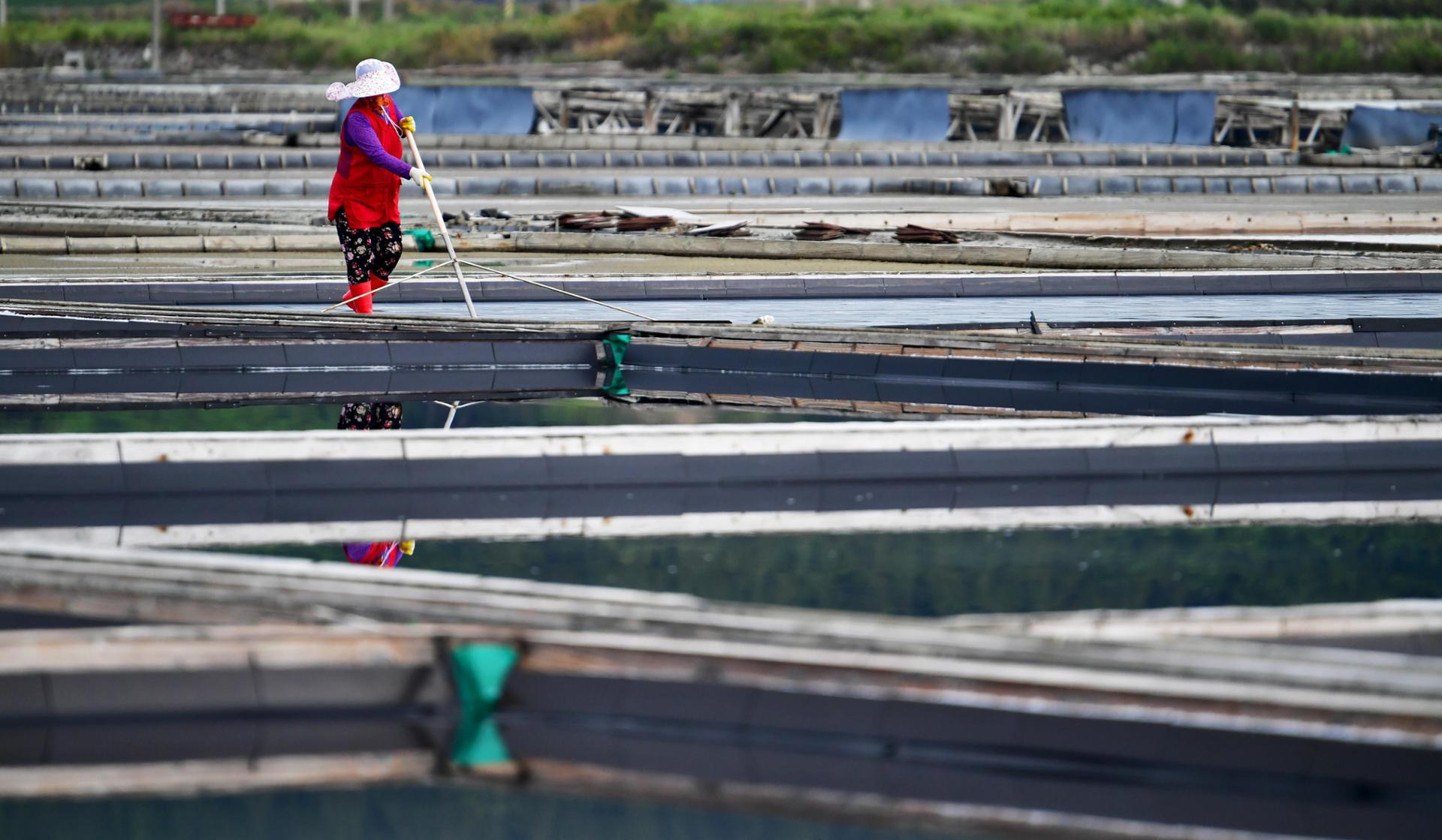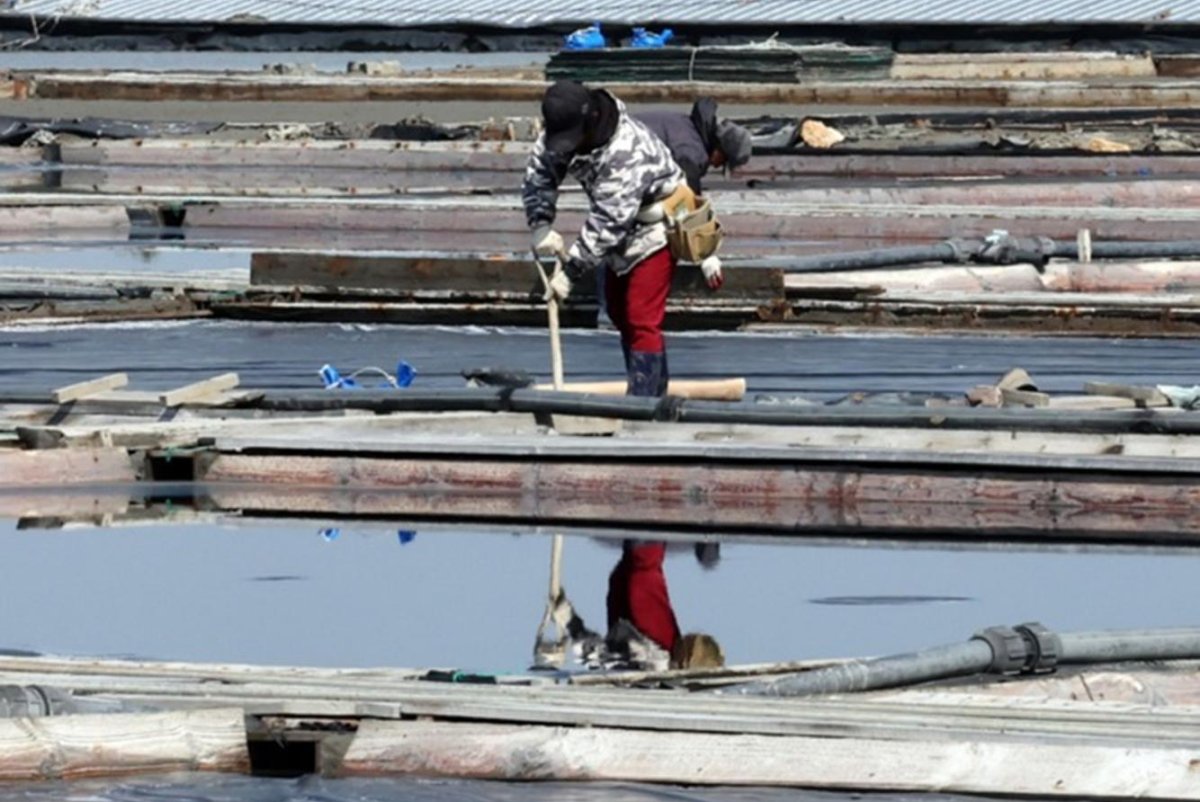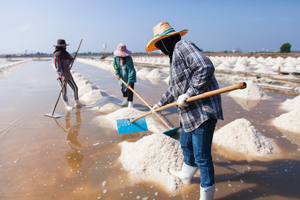
This photo is not directly related to the story. (123rf) South Korea’s long-running “salt farm slave” problem is again testing the country’s human rights safeguards, this time with possible trade consequences, after three salt farm workers were officially recognized as victims of human trafficking.The Ministry of Gender Equality and Family recognized the three workers as human trafficking victims on Tuesday, as recurring labor abuse cases in the country’s salt farming industry continue to raise concerns.According to the ministry on Thursday, the three workers, all in their 50s and 60s, had worked at a salt farm in Yeonggwang, South Jeolla Province, for periods ranging from three months to three years.During that time, they were allegedly subjected to physical violence, confinement and unpaid wages before being rescued in May after a local resident reported the suspected abuse to police.Police said the workers had been recruited through an employment agency. Some had intellectual disabilities or difficulties communicating, making them particularly vulnerable to exploitation.Police said they had referred three suspects to prosecutors on charges including assault, unlawful confinement and quasi-fraud.The exploitation of vulnerable people — including those with intellectual disabilities and people experiencing homelessness — at isolated salt farms is widely known in South Korea as the so-called “salt farm slave” scandal.The issue first drew nationwide attention in the early 2000s through investigative reporting by a local broadcaster. It resurfaced in 2014 after a man with an intellectual disability escaped from a salt farm where he had allegedly endured more than five years of abuse and unpaid labor.That case prompted a nationwide crackdown, with police identifying 129 suspects involved in human rights abuses on islands across South Jeolla Province. Despite those efforts, similar incidents have been reported.In 2021, another worker with an intellectual disability escaped after allegedly enduring seven years of forced labor, violence and severe sleep deprivation.Son Sang-yong, an official at a local labor advocacy group, said many victims are unable to report abuse on their own because of the isolated nature of salt farms, making it difficult for them to seek help or escape.The controversy has also attracted international attention, raising concerns that repeated forced labor allegations could affect South Korea’s economic interests.The United States Trade Representative announced on June 2 that South Korea was among around 60 economies, including the United Kingdom, Japan, China, Australia and the European Union, identified as lacking sufficient measures to prevent goods made with forced labor from entering their supply chains.The proposal could expose affected imports to an additional 12.5 percent tariff beginning next month.“Rather than arguing that the US assessment is unfair, South Korea should first prepare the supporting documents requested by July 6 in line with the required standards,” Lee Jae-min, a professor at Seoul National University, told the JoongAng Ilbo.“It needs to persuade the US that it is taking sufficient measures to address the shortcomings identified over forced labor and will take corrective action where necessary.”In response, South Jeolla Province launched joint inspections with local governments on June 22 covering all 714 salt farms in the province, according to provincial officials.Inspectors are examining employment contracts, wage payments, the status of workers with disabilities, and allegations of threats, violence and forced labor. They are also checking whether wages are paid monthly and whether workers maintain direct control over their own bank accounts.Separately, the Ministry of Oceans and Fisheries, the National Police Agency and the Ministry of Employment and Labor are expected to launch a joint investigation.Some critics, however, argue that official inspections remain largely ineffective because they focus on paperwork, such as employment contracts and payroll records, rather than identifying actual abuse.Labor groups said repeated cases demonstrate the limitations of government inspections.“Administrative authorities’ formal inspections alone have clear limitations. A governance system involving labor organizations should be established to strengthen workers’ rights and develop effective countermeasures,” regional labor organizations said at a press conference on June 18.
Salt farm slavery cases return amid trade concerns
South Korea’s long-running “salt farm slave” problem is again testing the country’s human rights safeguards, this time with possible trade consequences, after t
644 words~3 min read