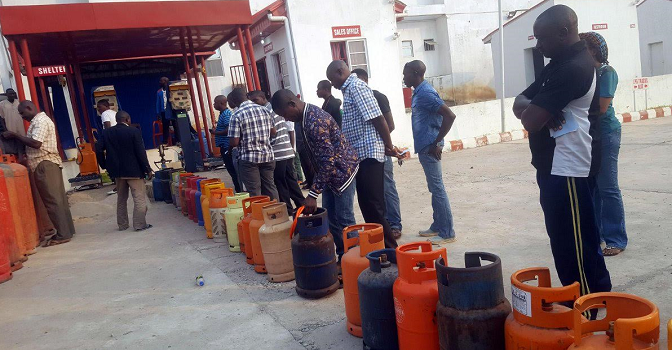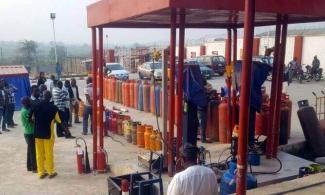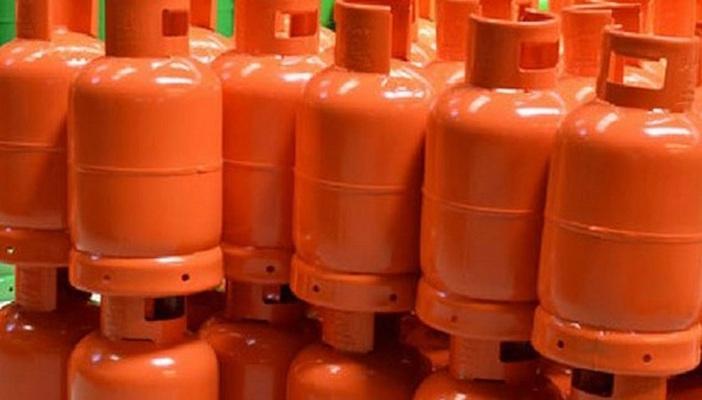
Before the bombs started falling over the Strait of Hormuz, Nigerians cooking with gas were already paying more than most of their continental neighbours.
Now, with the US-Iran war having choked the world’s most critical energy corridor, they are paying even more, and the relief in sight is thin.
A kilogram of liquefied petroleum gas in Nigeria currently fetches around N2,300, up from N1,700 in February, a 35 per cent surge that has arrived on top of years of structural price pain. Across Africa’s five largest economies, only South Africa, a country whose LPG market is driven by a chronic electricity crisis and industrial demand, charges more.
That places Nigeria in an uncomfortable second position, as Africa’s most populous country pays more for cooking gas than Egypt, Morocco, and Algeria, yet without the consumption infrastructure or subsidy architecture those countries have deployed to cushion their populations.
In Egypt, where the government classifies LPG as a social good and prices it accordingly, consumers pay LE 22 per kilogram, equivalent to roughly N608. In Algeria, a major hydrocarbon exporter, state support has kept the per-kilogram price at 22 Algerian dinars, about N226, less than a tenth of what Nigerians currently pay.