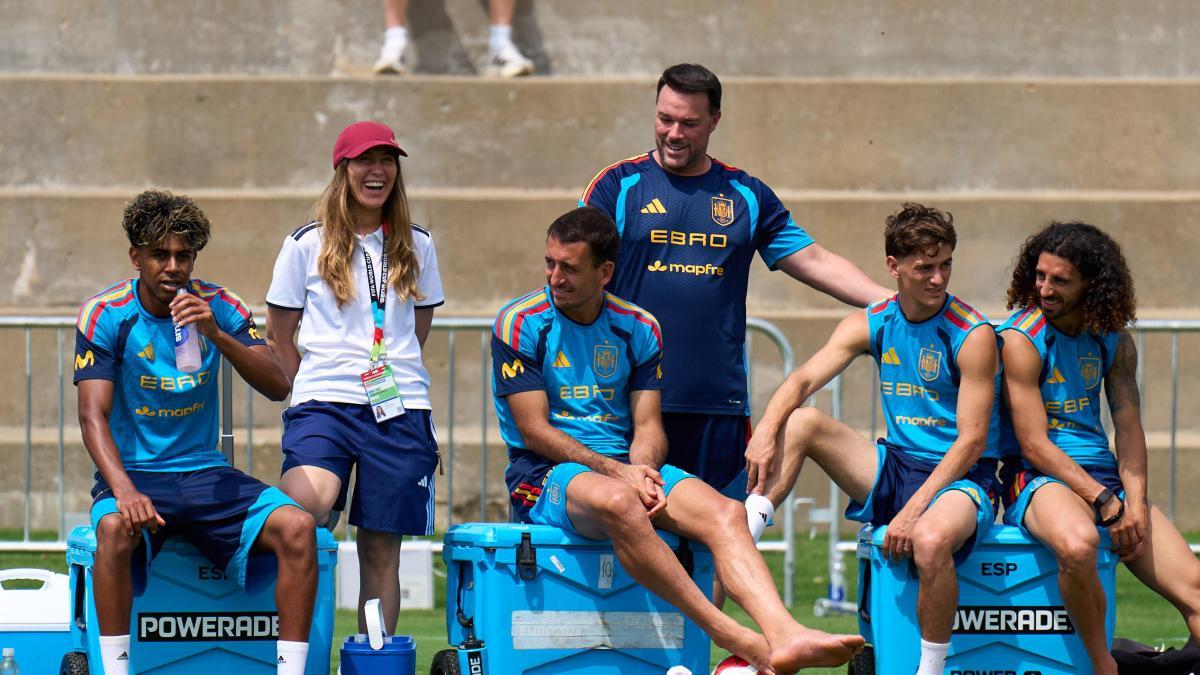
If you’ve been to Spain, you’ll know that food matters — a lot.And it is no different for the country’s football team, one of the main favourites at this World Cup. Whoever wins the tournament at New Jersey’s MetLife Stadium on July 19 knows they will have faced five knockout rounds and more than a month travelling across the United States, Canada and Mexico. That means physical preparation and injury prevention are arguably as important as the tactical side of the game — and nutrition is a big part of that.Norway took 500 kilograms of seafood from home with them before Erling Haaland and company left for the States, as announced by the Norwegian Seafood Council. Spain decided against that approach, as sources from their football federation (the RFEF) and their chefs and nutritional team told The Athletic. They asked to remain anonymous to protect their positions.Those voices said they had decided against bringing products from Spain, given the 4,300-plus mile journey from Madrid to their base in Chattanooga, Tennessee and the number of days they expected the side to spend in the U.S.But there are certain foods which they couldn’t go without at their base camp — namely jamon.“We accepted we could not bring food from Spain, but we worked a lot to find local providers of certain products that are a regular part of our diet,” someone within the Spain setup told The Athletic. “We have found a jamon provider here to make sure we are not short on that. The players love it.Jamon Iberico is one of Spain’s most typical foods (Gabriel Bouys/AFP via Getty Images)“Our target with the food is to ensure players eat well (with) quality local products, but also mix them with products from our own culture which footballers especially enjoy.”It may even have an influence on morale. Nine of the 26 players in Spain’s squad spent last season playing away from their country, and missing Spain and its food is a constant theme in their media appearances.In March, Marc Cucurella spoke about what he missed most about Spain, as he was living in London at the time and playing for Chelsea. Earlier this month, he completed a €60million (£51.7m; $69.4m) move to the Spanish capital with Real Madrid.“There always has to be a good plate of jamon,” the defender said while with the Spain national team. “Actually, I take this opportunity to tell my friends from here to send me some in the coming weeks.” That press conference was sponsored by meat company ElPozo, but the sentiment was real.The nutritionists around the team have taken that homesickness factor into account.“The thing every player loves the most is to taste food that reminds them of home,” a source from the Spain chef’s team says. “When you spend too many weeks away from home, you don’t want dishes that are too sophisticated.“Players need familiar flavours and dishes they are comfortable with. In super-long tournaments like this one, there is an emotional part in food planning and that’s something we pay a lot of attention to. “Spain have been based in Chattanooga during the World Cup group stage, around a two-hour drive from Atlanta, Georgia, where they played their opening two games. They trained at Baylor University’s facilities, but the players stayed and mostly ate at a city centre hotel.They were given buffet menus there with a wide variety of salads and vegetables, along with protein and carbs such as rice, pasta, legumes and potatoes. They then could choose from meat and fish options that changed every day. Desserts are allowed, too.Spain were based at Baylor College for the first two group games (Florencia Tan Jun/Getty Images)“There are clearly some favourites around the team,” the source from the chef’s team adds. “Our sweet potatoes are normally among the most popular options, and then the famous arroz con leche. It is like rice pudding. We always do it for dinner the day before a game. It has become a tradition in the team, a lucky charm in a way.”“The key is to make players enjoy when they eat, and educate them through that,” say RFEF sources. “More than forbidding certain types of food, our philosophy is about educating players and making them feel responsible for what they do.“What makes the difference and gives results is to build healthy habits. If players have them, then there’s room for flexibility every now and then to eat other stuff — and we don’t mind it at all.“In the same way you won’t improve your health by eating one salad, you won’t destroy it by eating a burger. What counts is what you do on a regular basis.”Jun 26, 2026Connections: Sports EditionSpot the pattern. Connect the termsFind the hidden link between sports terms
Why Spain players love jamon – and how rice pudding became their ‘lucky charm’
While national team organisers avoided flying products from Spain, there are certain foods which players couldn’t go without at base camp
792 words~4 min read