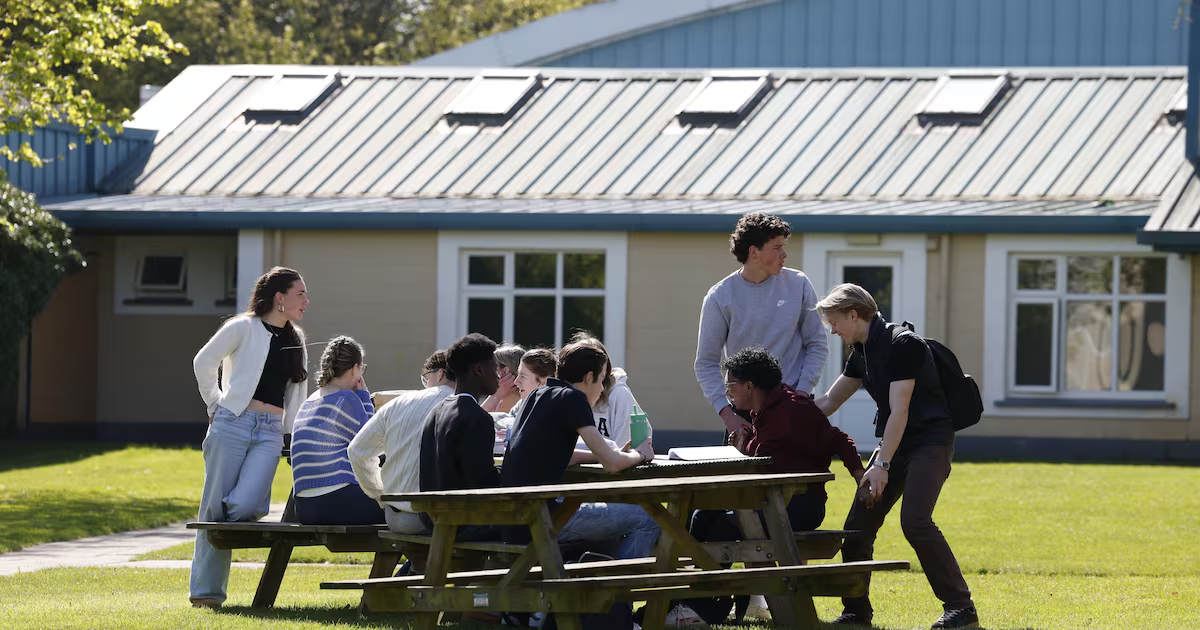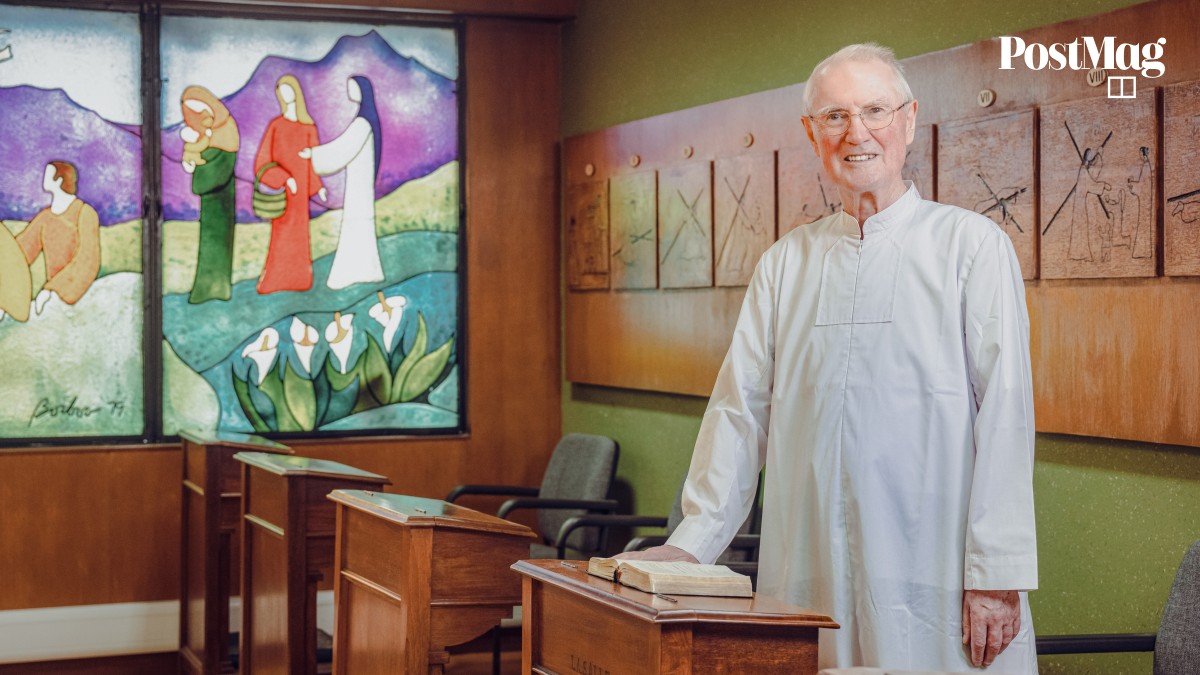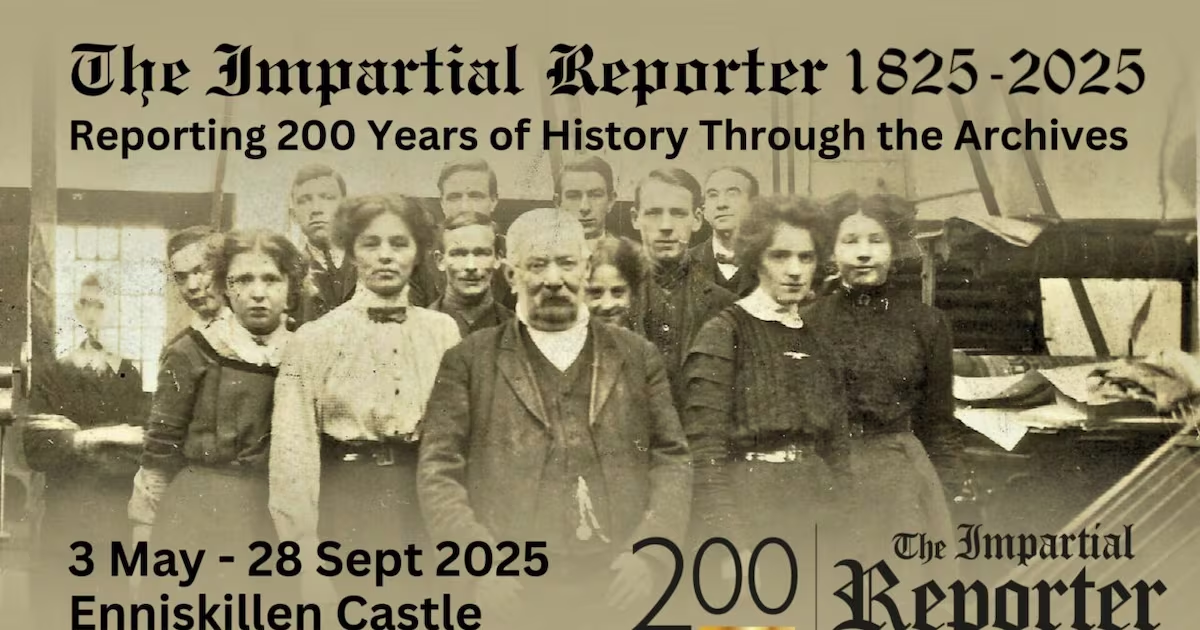
A Co Antrim college has marked a significant anniversary with the publication of Friends’: 250 Years of a Quaker School in Lisburn (£50) by the historian Philip Orr. One of the few Quaker schools now operating anywhere in Ireland, Friends’ School Lisburn was founded in 1774 and points to an illustrious educational record alongside an immense historical canvas. Notable former pupils include the actor Ian McElhinney, the novelist Rosemary Jenkinson, children’s writer Sam McBratney, and further back in time, Florence M Wilson, who wrote The Man from God Knows Where, the story of United Irishman Thomas Russell. During the Gaelic Revival of the 1890s, Bulmer Hobson boarded at the school. He went on to become a leading revolutionary before the Easter Rising, which he attempted to prevent. In 1913, Hobson swore Patrick Pearse into membership of the IRB. The book recounts that Hobson later recalled his clash with one of his teachers in the school over interpretations of history and how he had been told to leave the class. Orr is a former pupil and teacher of English and drama at Down High School, Downpatrick, and although this school may not have the same longevity as Friends’ School, it also boasts a remarkable past. In Floreat Dunum: A History of Down High School (£30) Ken Dawson, a former vice-principal, presents a comprehensive evaluation of its 93-year history and the period prior to that. The school opened in 1933 on the site of the former County Gaol. The gaol was best known for the execution of John Logue, hanged in 1866 in what is thought to have been the last public hanging in Ireland, on a charge of murdering a 10-year-old boy. Logue had served time in Dublin’s Mountjoy Prison and Spike Island, Cork. Decades later, stories frequently arose among pupils of a ghostly presence, especially at night, and there was talk of haunted sightings. As recently as 2019, one vision of a man in a long blue trench coat “with the appearance of a warder” was reported after a school open night. [ Inside a Quaker-ethos secondary school in Ireland: ‘There is a high expectation of good behaviour’Opens in new window ]Across 29 chapters the author digs deep into the past, describing a school that has served pupils of the mid-Down area for more than 90 years. The building was converted into emergency accommodation for evacuees from Belfast during the Blitz in spring 1941. Illustrious literary names associated with the school include the novelist David Park, historians Gareth Russell and Olwen Purdue, and the theologian Alister McGrath. Staying with an academic theme, 100 Years of Empowering Women (IrFUW, €25), edited by Fiona Ahern, celebrates the centenary of the Irish Federation of University Women. Ten sections explore the role of women in academic life, starting from 1925, when the federation was formed to support the small number of women graduates then in Ireland. The experiences of 37 women are highlighted, their lives forming a framework for the history of the organisation. Some of the accounts reflect women’s influence in the Gaelic League, through Cumann na mBan, 1916, the fight for equal educational and job opportunities, and women’s protests against the wording of the proposed 1937 Constitution, which emphasised that a woman’s place was in the home. In an introductory note, the president of UCD, Prof Orla Feely, who holds a degree in engineering, states that the number of women studying this discipline in Ireland has moved from a trickle to a steady stream. There are many signs of progress, she writes, but no room for complacency, and there is more to be done to support women to reach their full potential in universities. In the hierarchy of church narratives, Meeting Among the Spires: A History of First Presbyterian Church Armagh 1673-2023 (£20) by Tony Davidson deserves a distinguished position. The author, who was minister of the church for 28 years, is the perfect guide to this thoroughly researched 350-year history. The book is broken down into four different eras, spanning 21 ministers, along with snapshots of others connected to the church. The author has a nose for engaging stories, is well read, and the book has an invaluable bibliography.The church’s longevity resembles a richly varied tasting menu organised with care. Fresh insights are brought to a tapestry of events, alongside human-interest stories from the congregation. Among subjects covered are King William and the Scottish Enlightenment, the American Declaration of Independence, the 1798 rebellion, the icy relationship between Presbyterian and Anglican neighbours, and 20th-century events such as the Belfast Agreement of 1998. One of the first ministers, Rev William Henry (1791-95), was suspended for insobriety and written out of the congregation’s history. Total abstinence among the clergy was a later tradition, but around 1860 when Armagh’s Abbey Presbyterian Church needed a new building, money came from Alexander Findlater, a leading wine and spirit merchant in Dublin. Robert Garmany McCrum, a linen merchant who built the model village of Milford, was a key figure in First Armagh. The family had a designated pew, while a stained glass window was installed in RG’s memory. A significant claim to fame is the fact that his son, Willie McCrum, who was goalkeeper for Milford Football Club, proposed the idea of a penalty kick in 1890, a rule which was accepted the following year by the International Board. One of Ireland’s oldest provincial newspapers, the Impartial Reporter, marked its bicentenary last year and has published a book tracing its past, along with more recent stories from previous employees. The Impartial Reporter 200 Years, 1825-2025 (£10) is brimful of 50 essays and articles by local historians such as Jack Johnston, former editors including Denzil McDaniel, journalists, freelance contributors and present-day staff. Writing in a foreword, the president up to last year, Michael D Higgins, praised the pivotal role the newspaper has played in two centuries of journalism, and the significant contribution made by the Trimble family over the remarkable 181 years they owned and published the paper. The newspaper has expanded its geographical coverage into Dungannon and surrounding districts and launched a new supplement, The Farmer’s Voice. In 2025, for the second consecutive year, it won the UK Local Weekly Newspaper of the Year Award for its investigative, campaigning journalism and deep engagement with the community, as well as for its distinctive front-page design and high print quality. Paul Clements is an author and travel writer
Local history: Empowering women, a Quaker education, and a varied tasting menu of church longevity
A History of Down High School, 200 years of the Impartial Reporter, and A History of First Presbyterian Church Armagh
1,068 words~5 min read