In 2015, Tim Berners-Lee — the inventor of the World Wide Web — was asked about blockchain-based identity and gave a direct answer:
The chain is too slow. The chain is too expensive. The chain is too public.
He was right.
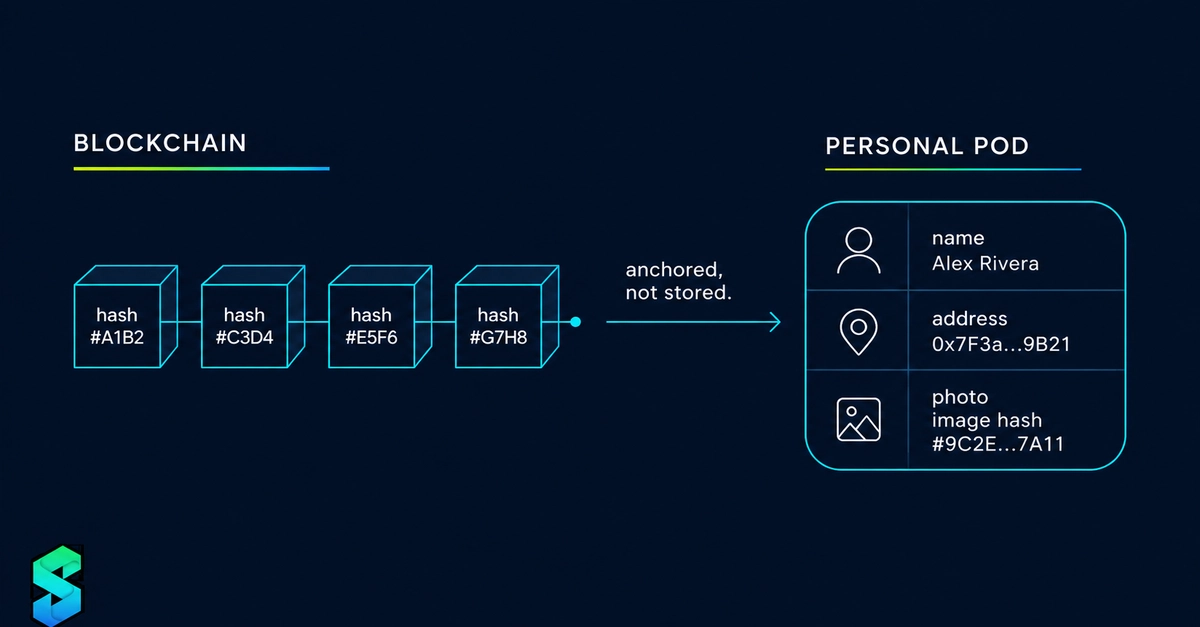
A decade later, the identity-on-blockchain conversation has matured. Most credible identity projects no longer propose storing personal data on chain. The cryptography has gotten more refined; the architectural discipline has improved; the lessons of "let's just put everything on chain" have been absorbed.
But the architecture that emerged is not uniformly applied. There are still identity systems out there with too much information on-chain — credential subjects, attribute values, even biometric hashes that practically enable correlation. Each of these is a legacy of the early "store everything on chain" era that the field has been slowly leaving behind.