Lower-inflammatory dietary patterns were tied to reduced dementia risk among biomarker-positive older adults.Benefits appeared strongest for participants with elevated p-tau217, NfL, or GFAP levels.Findings suggest diet quality may still matter after early Alzheimer's-related biological changes emerge.
People with Alzheimer's disease biomarkers who followed a dietary pattern with less inflammatory potential had a lower risk of developing dementia, a longitudinal study in Sweden showed.
Over 8 years, the study followed a cohort of nearly 1,900 older adults who had baseline blood measurements of phosphorylated tau-217 (p-tau217), neurofilament light chain (NfL), or glial fibrillary acidic protein (GFAP).
Each z-score increase in adherence to an anti-inflammatory eating pattern, based on reversed Empirical Dietary Inflammatory Index scores, was associated with lower dementia risk, according to Anja Mrhar, MSc, of Karolinska Institutet and Stockholm University, and colleagues.
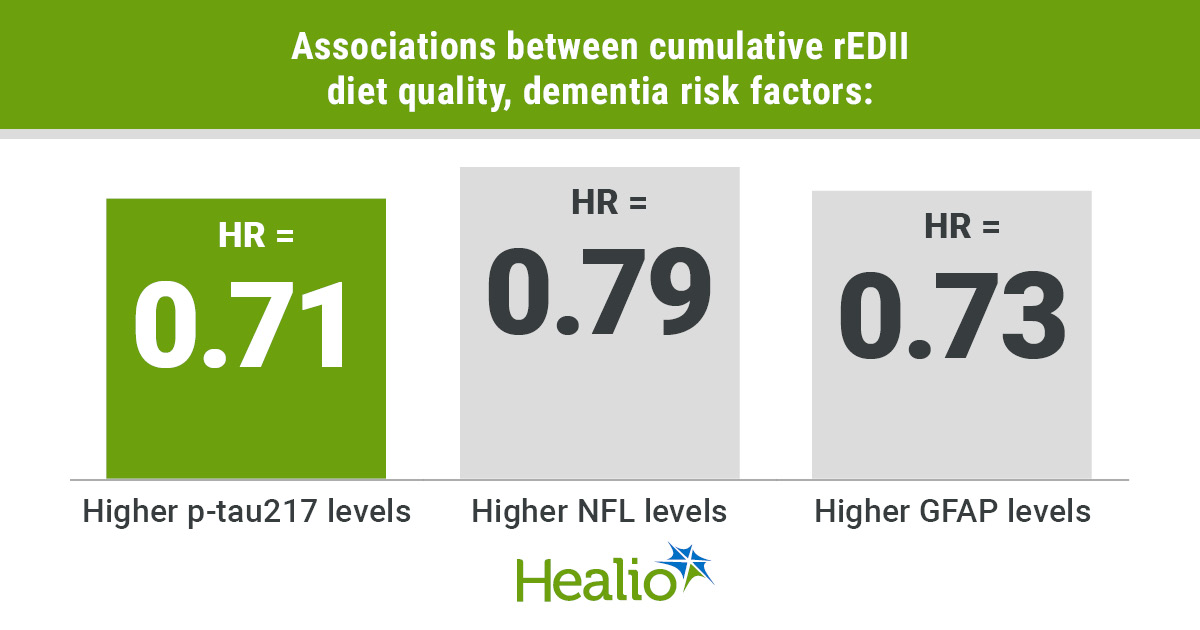
Participants with elevated p-tau217 had a 29% lower risk of dementia (HR 0.71, 95% CI 0.58-0.88) if they followed a lower inflammatory eating pattern, the researchers wrote in JAMA Network Open. Those with elevated NfL had a 21% lower risk (HR 0.79, 95% CI 0.66-0.95), and those with elevated GFAP had a 27% lower risk (HR 0.73, 95% CI 0.60-0.89).