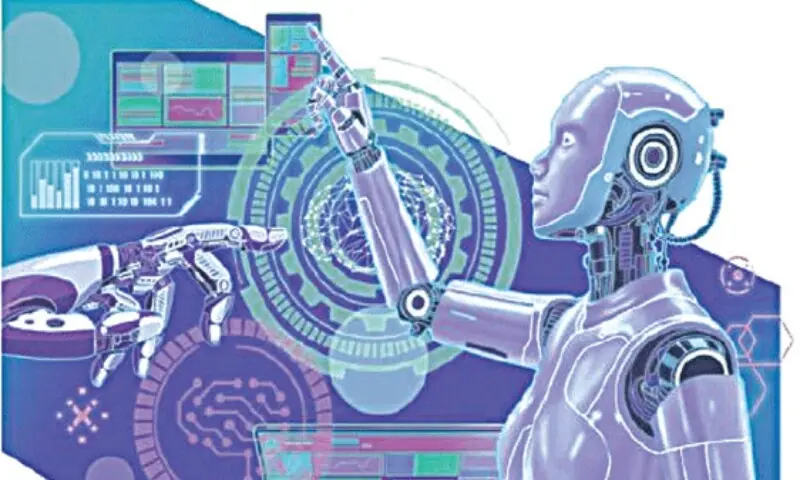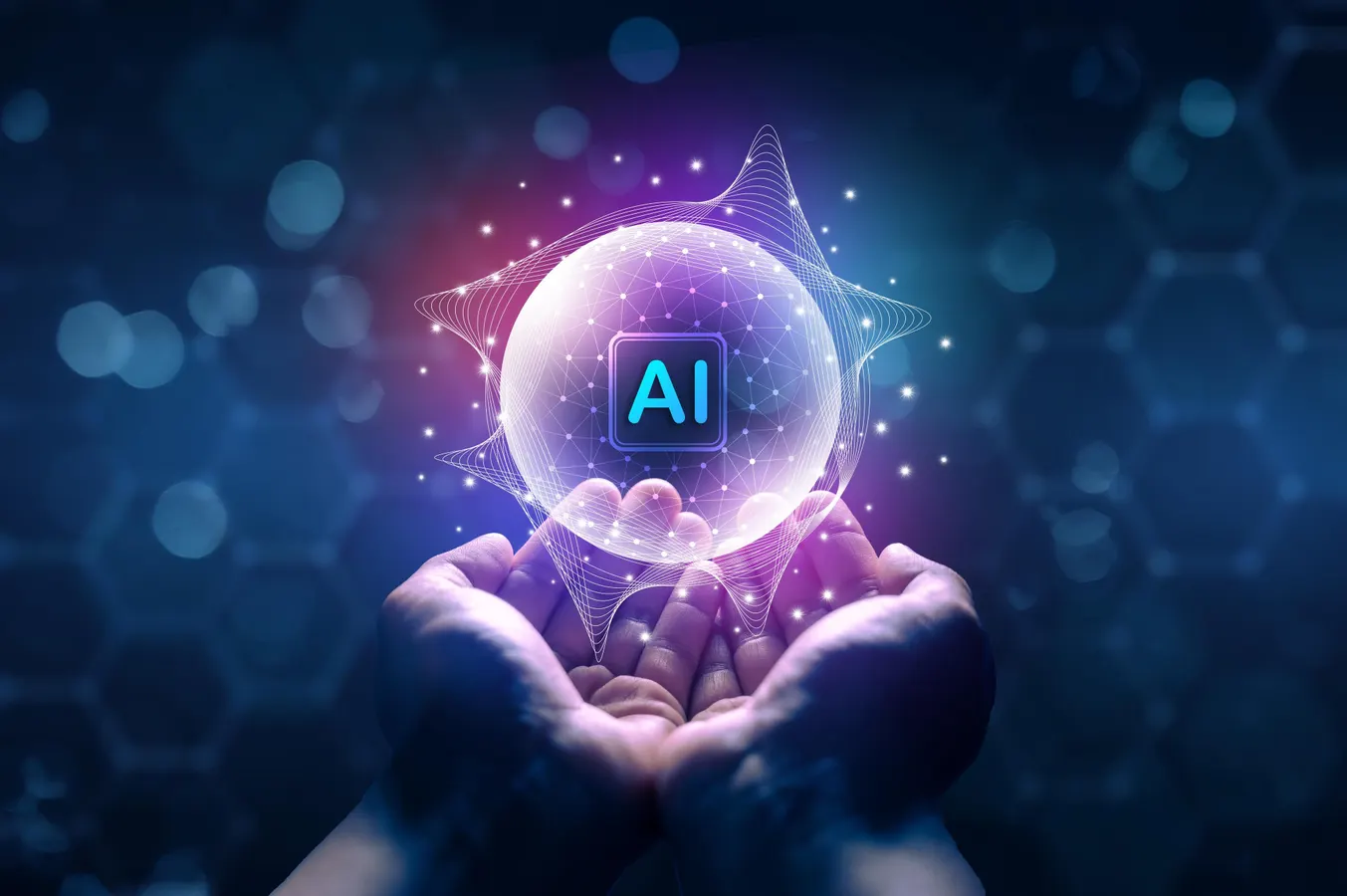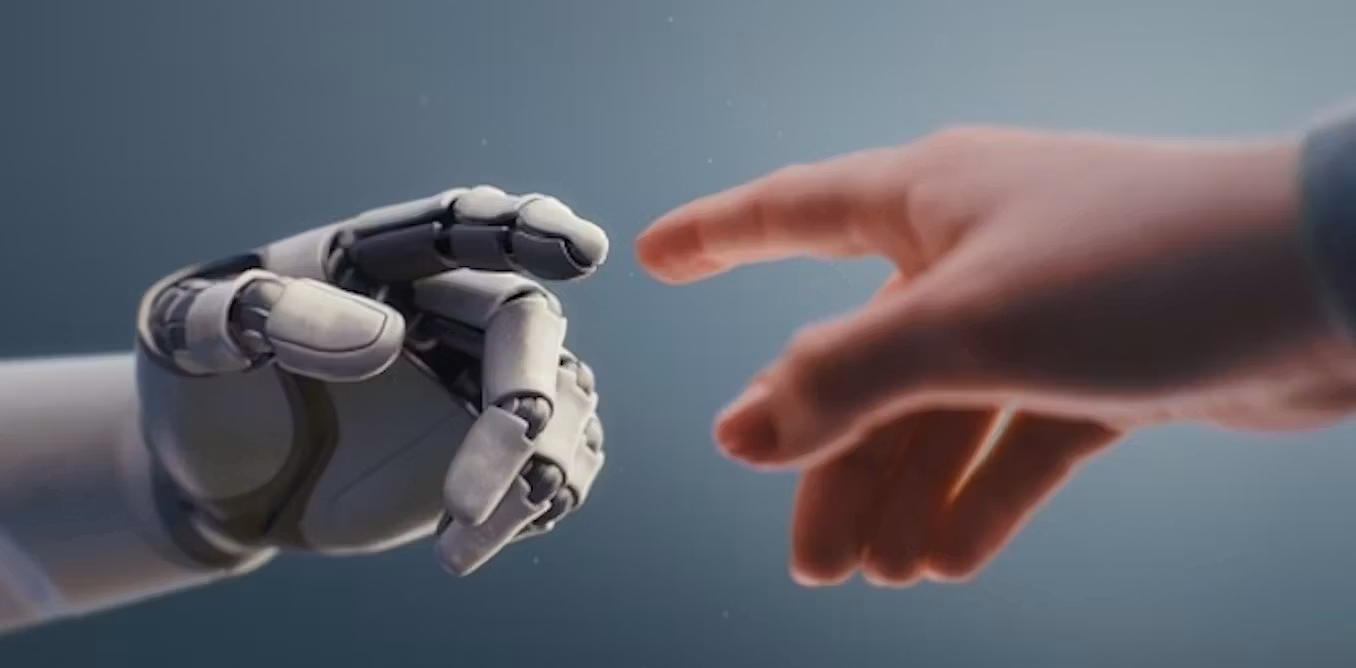
At the peak of human history, the Artificial Intelligence (AI) revolution stands out as a transformative moment, harnessing the infinite potential of science and innovation in the service of humankind. The endless possibilities of AI in every sphere of human activity and its empowering potential to deal with the unprecedented challenges of our times, is a tribute to mankind’s collective ingenuity that validates the boast of accomplishments of which ‘even the gods might be envious’. The automating of tedious tasks involving repetitive work and freeing time for leisure, expanding access to essential services, breakthroughs in medicine, ensuring longevity and better health care including cancer screening and prediction of terminal illnesses, robotic nursing of the sick, a more effective targeting of economic aid to the marginalised, enhanced accessibility of education and knowledge to all and its vast contribution to environmental sustainability in several ways including disaster management and weather forecasting are some of the crowning contributions of AI toward a more inclusive development agenda.Technology and human valuesEven so, questions about the future of human society and the ‘destiny of intelligence’ are most vigorously debated by philosophers, scientists, statesmen and the technology czars, some of whom have pleaded for a pause in the further development and deployment of AI that could hijack our idea of humanity. The claims of the AI protagonists about the ‘amazing abundance’ of goods and services and the caution against slowing down of scientific progress through regulation must contend with the compelling questions about the necessity of ethical guardrails warranted by humanitarian considerations and emotions embedded in the deepest recesses of our being through a cultural evolution spanning the millennia. The question of who we are, and whether we are ready for a new narrative of humanity in which functional efficiency and promised material abundance prevail over the yearnings of the human soul and the dignity of emotion, is an unavoidable and larger inquiry that has resisted the seduction of technological wonders. This is particularly important given that AI is able to replicate, and in some cases even outperform, cognitive skills, including the ability to understand human emotions and intuition.Are we ready for an endless technological disruption and a ‘global epidemic of stress’ caused by a prolonged volatility in the job market and a predicted ‘useless’ class of millions caused by an unmanageable stress in coping with the effects of technological disruption? Whether we have new social and economic models that protect individual self-worth and ensure for all a life of belonging and emotional well-being are larger philosophical questions arising from a humanist perspective founded on the sacrosanctity of the values we carry as a badge of humanity.Clearly, the fact that passionate propounders of AI have cautioned against ‘summoning the devil without a kill switch’, must awaken us to the urgency of serious reflection on how to preserve ‘the hidden realm of the mind from which emotions emerge, from which inspiration flows, from which our desires pulse — the subjective part of the human spirit that makes each of us ineluctably who we are’.Data privacy vulnerabilities, proliferation of misinformation, electoral manipulations, the possibility of super intelligent weapons systems going rogue, AI-enabled phishing campaigns, and surveillance and censorship are some of the ominous portends that can cause social upheavals without effective global regulation.Preserving the digital sovereignty of nation-states remains a challenge, given that control over data is intrinsically linked to national security and the strategic autonomy of nations. The establishment of a global regulatory regime that respects national sovereignty and ensures effective enforcement can no longer be postponed.A moral compassThe world of AI that could rewrite the code of humanity, therefore, needs a moral vision that can harmonise technological advancement with the preconditions of a virtuous and happy society. Terry Eagleton’s caution in relation to a sense of seductive self-assurance is eloquent and I quote: ‘An inflated self- belief can earn its calamitous comeuppance, which caused the ancient Greeks to shudder and look fearfully to the skies’.Spanish philosopher José Ortega y Gasset reminded us that ‘we live at a time when man believes himself fabulously capable of creation, but he does not know what to create. Lord of all things, he is not Lord of himself. He feels lost amid his own abundance. With more means at its disposal, more knowledge, more technique than ever, it turns out that the world today goes the same way as the worst of worlds that have been; it simply drifts’.The encyclical letter of His Holiness, Pope Leo XIV on ‘Safeguarding the Human Person in the Time of Artificial Intelligence’, clinches the moral debate on the humanist dilemmas in relation to AI. Recognising that technology is not antagonistic to humanity, the Pope has stressed the duty to remain ‘profoundly human’ in an era of AI when ‘human dignity is threatened by new forms of dehumanization’.Emphasising the need to establish standards of ethical discernment based on the dignity of the individual, His Holiness has warned against the ‘illusion’ of ‘self assertion’ and cautioned against progress that exacerbates inequalities and is incapable of healing peoples’ wounds. He has called for a rejection of the ‘idolatry of profit that sacrifices the weak, a uniformity that neutralizes differences and the pretense that a single language — even a digital one — can translate everything, including the mystery of the person into data and performance’. These assertions by the Pontiff are moral injunctions in a world that needed a reminder of the ‘splendour and grandeur of humanity’ beyond its creations and of the limitations of AI in terms of its ‘affective, relational or spiritual capabilities’.The moral code propounded by the Pope, a product of an encounter between lived experiences, spiritual consciousness and historical memory, asserts that humanity flourishes in the ‘fragility and finitude’ of the human person and in its limitations.Ethical AI governanceThus viewed in the framework of core human values anchored in the dignity of man, global leaders are expected to opt for a ‘humanist centric’ approach in the deployment and regulation of AI for the larger good of humanity with the individual at the centre of their decisions. Prime Minister Narendra Modi has stressed at both the VivaTech 2026 conference in Paris (June 2026) and the India-AI Impact Summit 2026 in New Delhi (February 2026) that such an approach would require a robust and enforceable regulatory framework, rather than voluntary and non-binding commitments, to govern the use of AI. Such a framework could democratise access to frontier AI and help build a shared, trustworthy AI ecosystem in an age that ‘levels everything and reveres nothing’. How nations deal with this epochal challenge will define the quality of political leadership and our commitment to inclusive democracy anchored in equality and human dignity as the ultimate civilisational aspiration.Ashwani Kumar is Senior Advocate, Supreme Court of India, an author and a former Union Minister for Law and Justice. The views expressed are personal
Keeping humanity at the centre of the AI revolution
The world of AI needs a moral vision that can harmonise technological advancement with the preconditions of a virtuous and happy society
1,144 words~5 min read