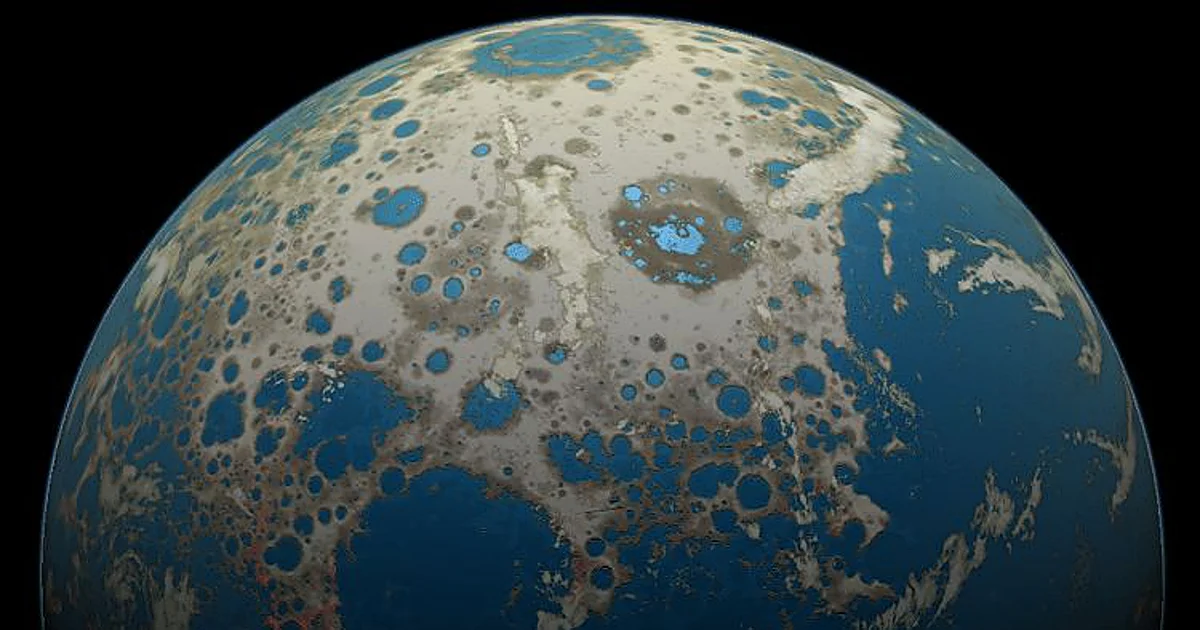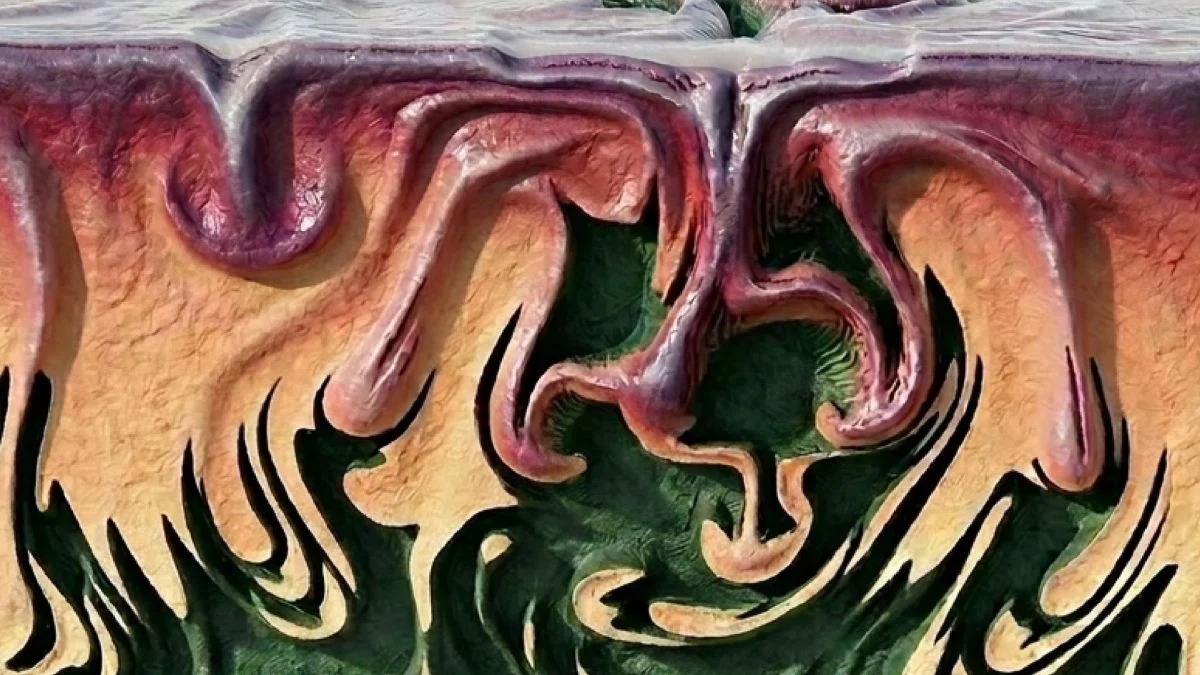
An AI simulation of an impact shows basalt-rich (purple) and basalt-poor (green) regions. (Curtin University)
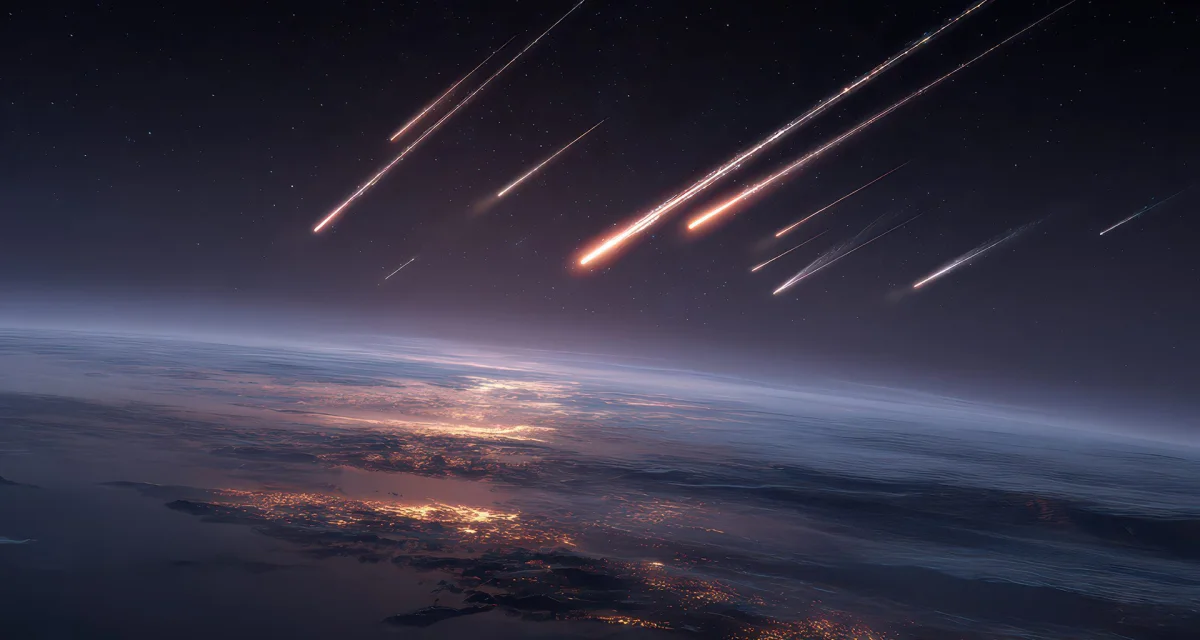
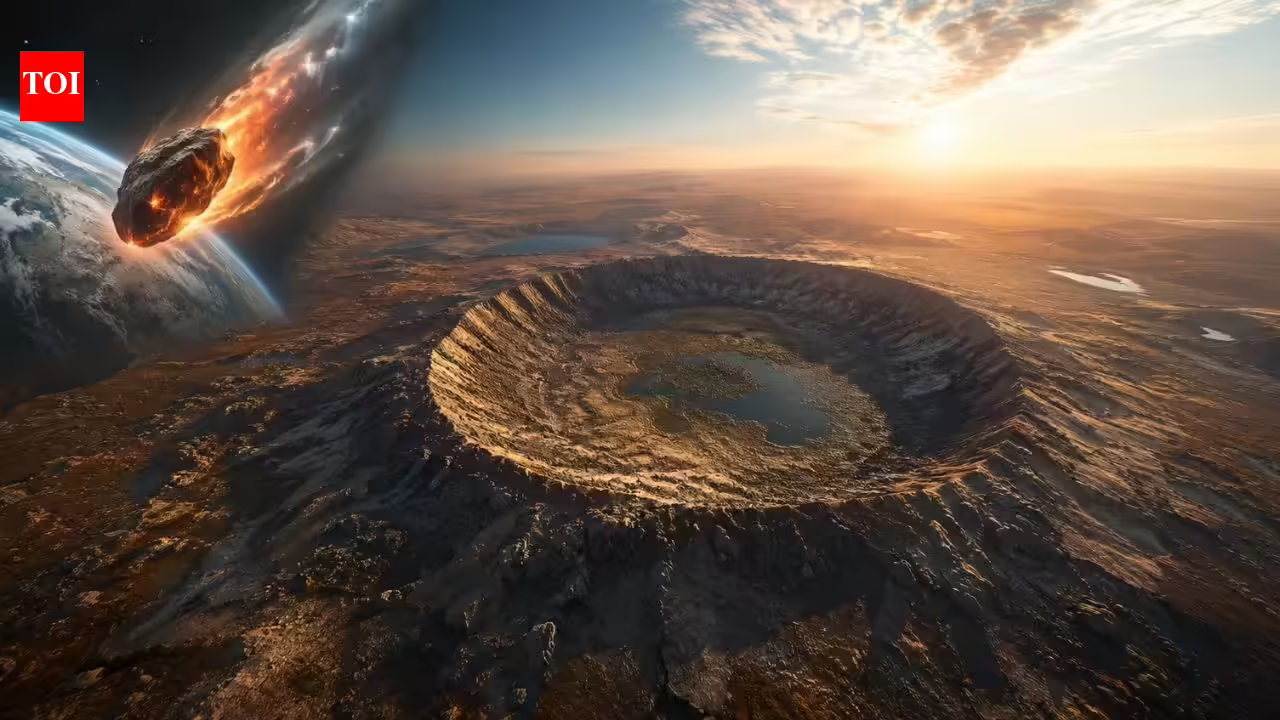
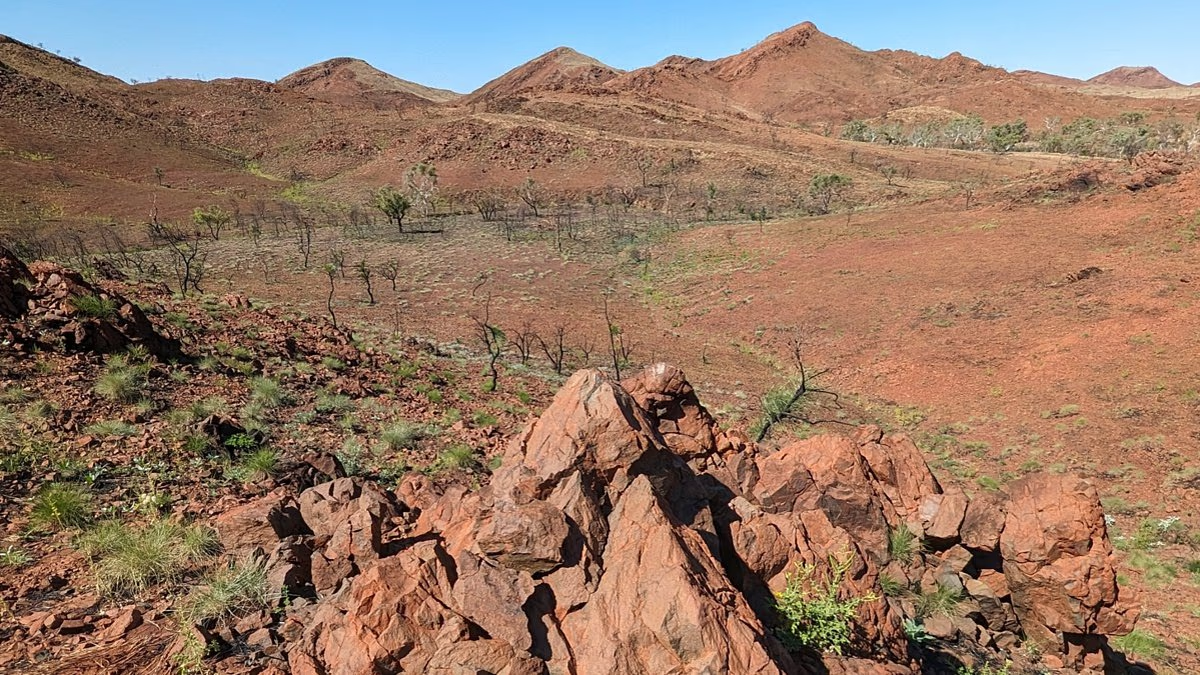
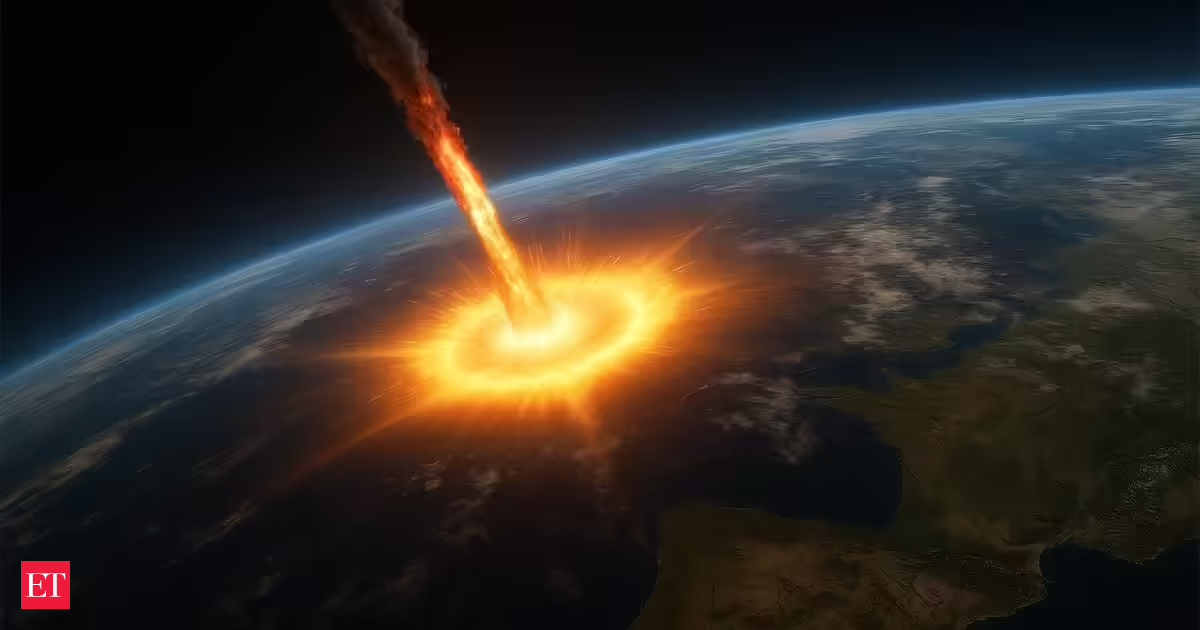
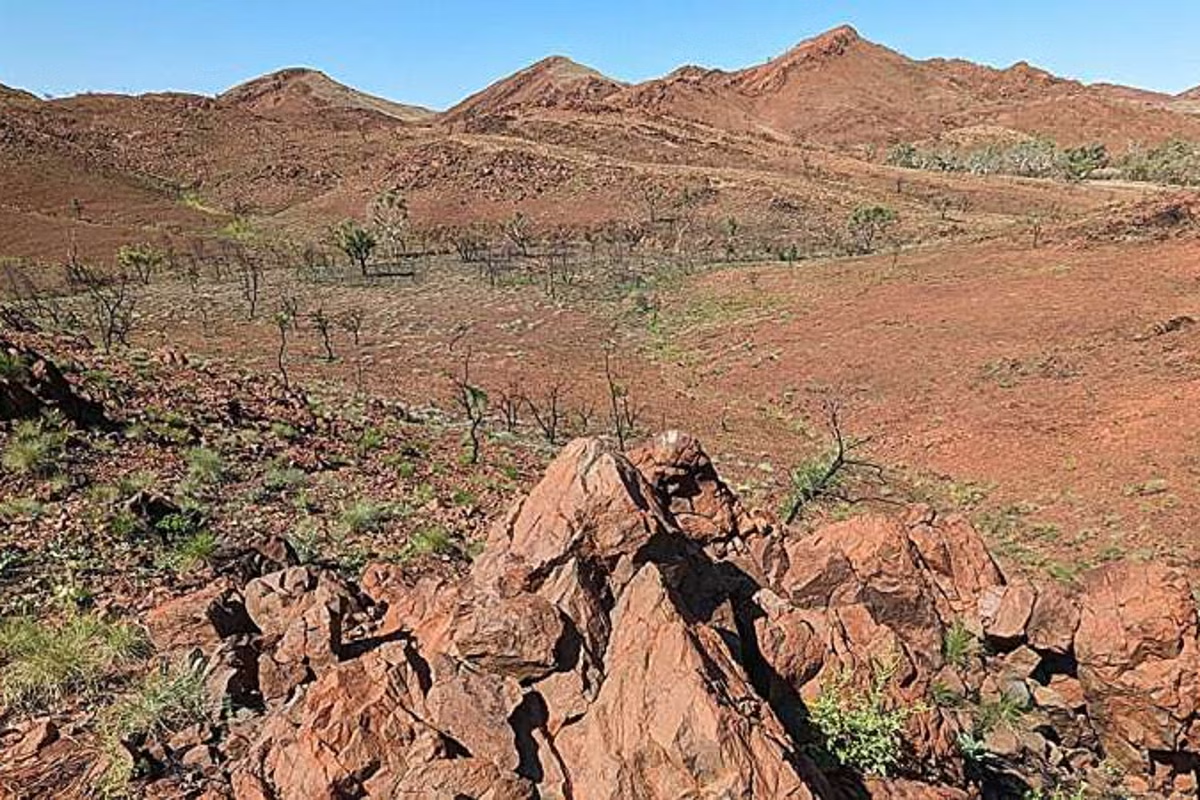
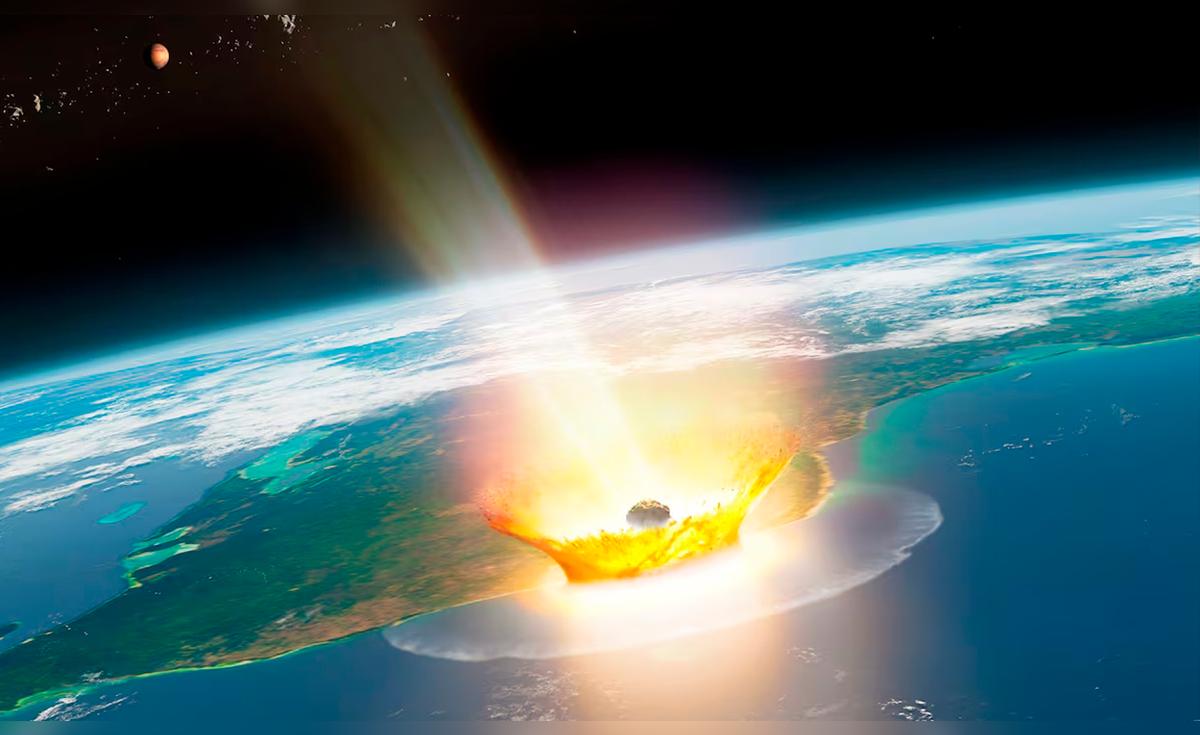
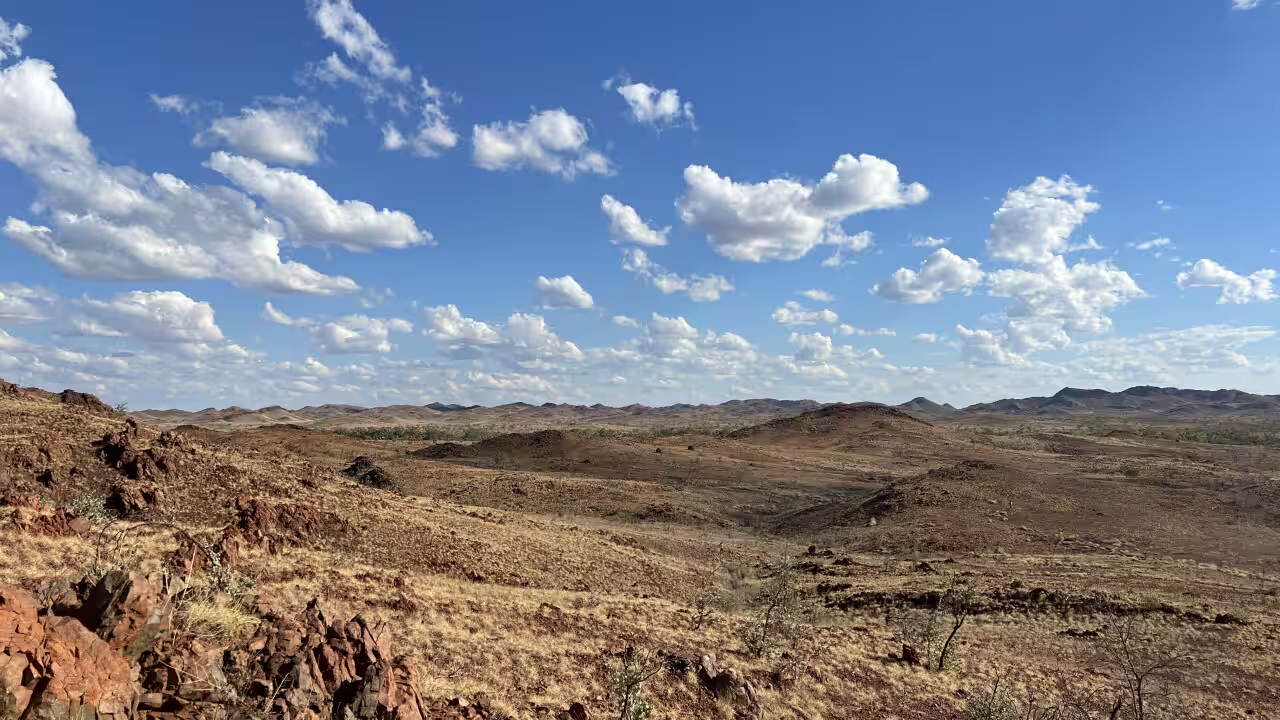
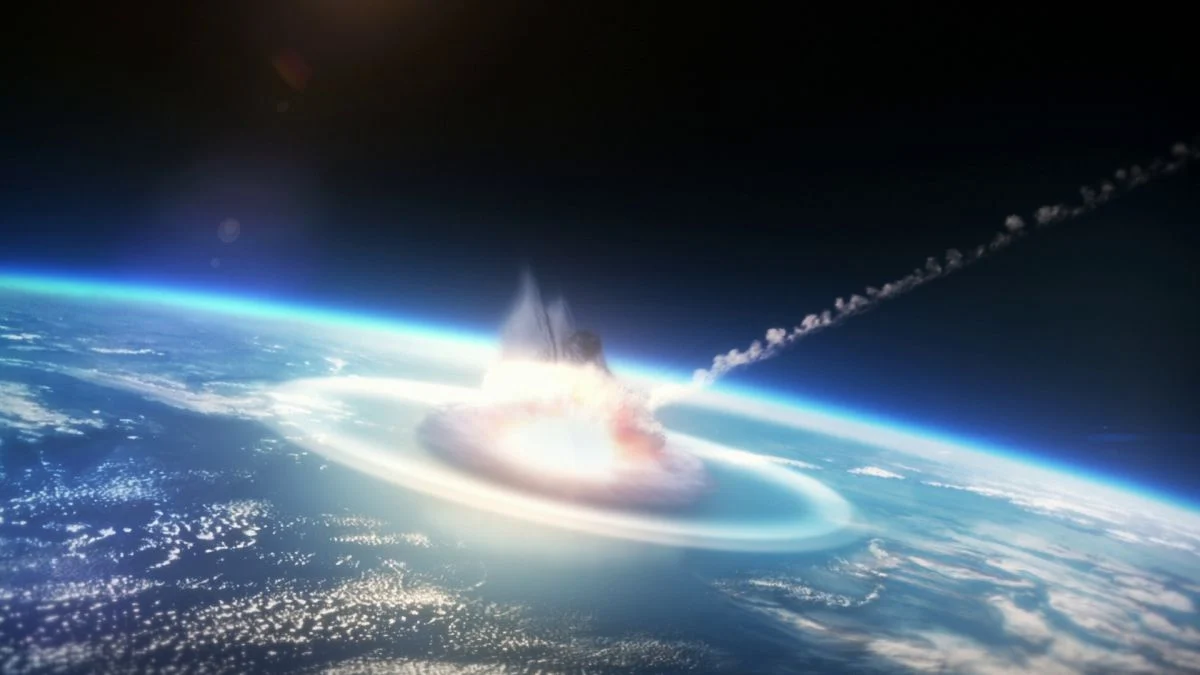
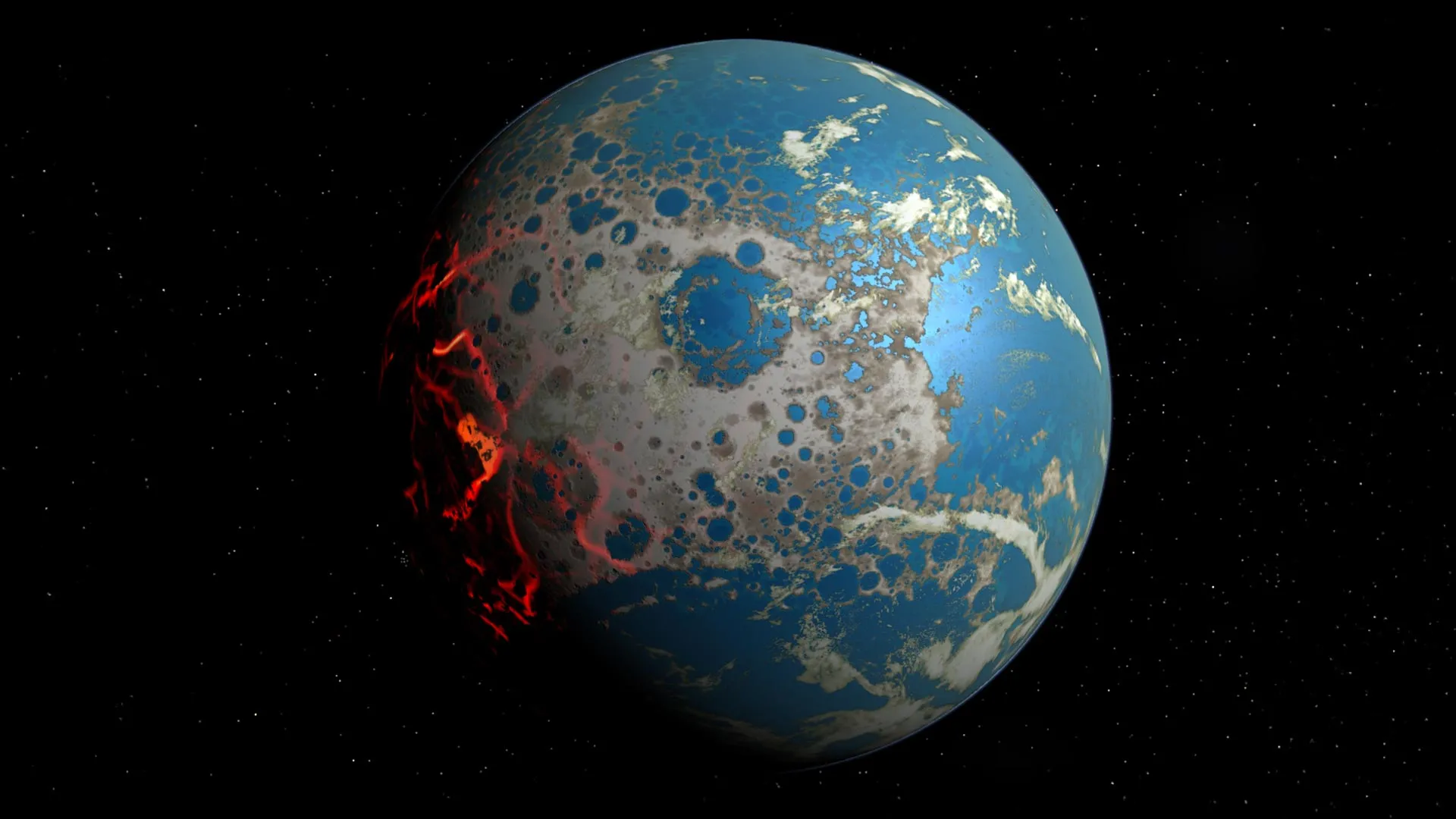
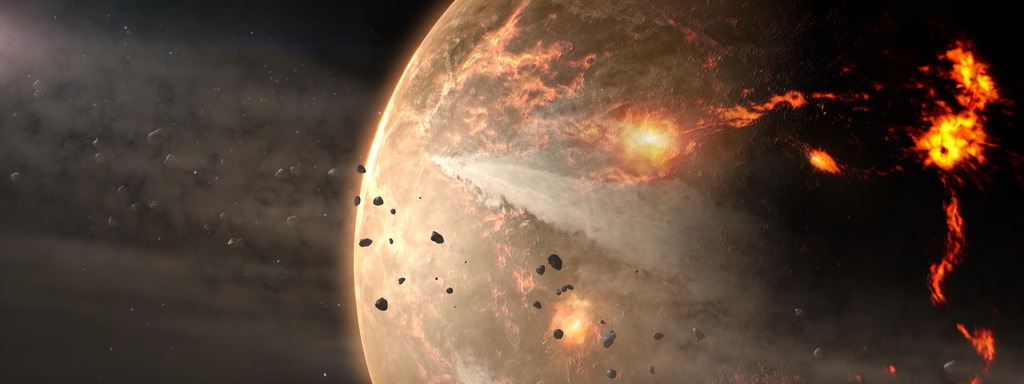
The planet Earth we live on today bears very few traces of its infancy.The 500 million years between Earth's formation around 4.5 billion years ago and 4 billion years ago – the Hadean eon – is almost a geological black hole.Very little survives from that time. A handful of ancient rocks and scattered zircon crystals preserve rare glimpses of newborn Earth, but most of the planet's earliest crust has vanished.Some researchers have put forth that the reason for this is Earth's efficient crustal recycling system, plate tectonics.But according to a team led by geologist Tim Johnson of Curtin University in Australia, that early crust may never have been able to settle into anything stable.The reason? An intense period of asteroid bombardment that pummeled Earth for hundreds of millions of years."Those impacts carried enormous amounts of energy, and that energy had to go somewhere," Johnson says in a statement."The extra heat from impacts would have kept much of the early crust weak and partially molten, making it difficult for rocks to survive."Geologist Tim Johnson pictured undertaking fieldwork in Western Australia. (Curtin University)You may be wondering: If Earth's first attempts at scabbing over are lost from the geological record, how can we possibly know what asteroids were doing during the Hadean?The answer is both farther and closer than you might think: the Moon."If you want to see what was happening to the early Earth, it's right there staring back at you," Johnson told ScienceAlert. "I have even been lucky enough to look at thin slices of samples of the Moon under the microscope. Unsurprisingly, they have all been smashed to smithereens."In fact, the Moon, Mercury, Mars, asteroids, and chunks of meteorites found scattered across the globe preserve quite a detailed record of the inner Solar System's impact history.