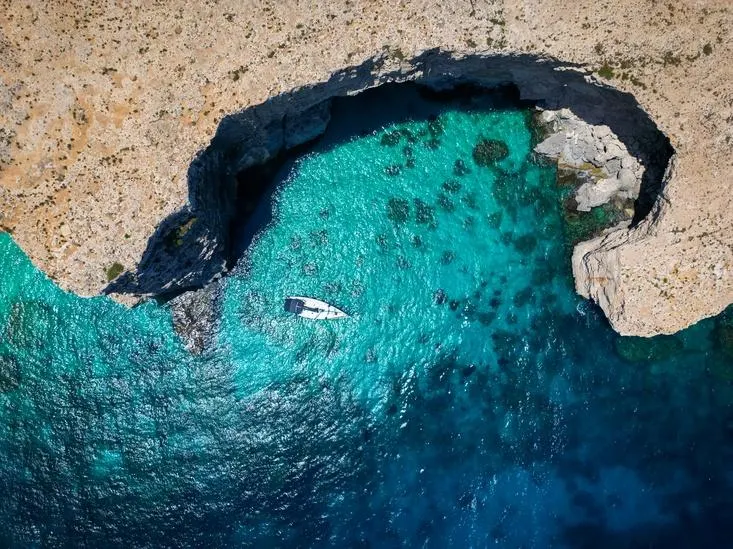
Blue Lagoon, Malta—It was forced to close its golden passport program by the EU High Court.gettyGolden Visa programs are having a moment and more and more keep coming on the market. Mauritius launched one last month. There’s a lot of excitement over Argentina’s forthcoming golden visa program and Paraguay’s new Investor Pass, with the latter particularly in the midst of a tourism revival and offering direct permanent residency with entry points starting at $150,000. Even Lebanon is proposing a new golden visa program right now.With ever-changing rules and risks, though, Portugal, as the case in point, golden visa programs are arguably becoming less straightforward and competitive, at a time when more and more Americans are interested not just in relocating overseas but in diversifying and looking to Europe as a plan B.According to The New York Times, there are currently around 30 to 35 countries with some form of golden visa program, and another 12 have citizenship-by-investment programs. The latter leads directly to a passport. The former offers a pathway to permanent residency and, in some cases, to citizenship. Understanding Golden Visa And Golden Passport ProgramsChristian Nesheim is the founder of IMI, an ‘investment migration intelligence’ platform, and describes the process of settling into a new country as gradual rather than instantaneous, a process he calls the Settlement Rights Pyramid—it’s a very clear way of understanding the golden visa and golden passport programs.The pyramid explains how immigrants/expats move through layers, starting with temporary residence, then permanent residence and becoming citizens, with supranational citizenship at the top. Nesheim’s pyramid shows that residency-by-investment and citizenship-by-investment programs accelerate progress by providing access to higher rungs on the ladder.1. Work, student and digital nomad visas fall under the temporary residence category; residency is renewable but conditional. 2. Permanent residency confers highly secure rights to stay and the possibility of reunifying with family. There are usually no political rights, but status is settled. 3. Citizenship marks the third rung and provides full political rights, unconditional residence and diplomatic protection. Citizenship-by-investment programs, or golden passports, place people in the third layer, immediately bypassing the first two. 4. Supranational citizenship is that which allows the same rights in one country as in another, and EU citizenship is the only current offering in a true legal form, although other similar forms exist, such as the Mercosur states, the Organization of Eastern Caribbean States, and the Gulf Cooperation Council. Any EU member state citizen enjoys equal rights across the 27 member states, such as freedom of movement for work, travel and education.Malta’s old Citizenship by Investment program allowed people to immediately acquire a Maltese passport and, therefore, immediate EU rights at the supranational level.For this reason, the highest EU court declared the program unconstitutional because the EU Commission said that Malta was "commercializing" EU citizenship and acting against the reciprocity of other member states.Argentina’s new golden visa program will offer a direct path to the top layer through Mercosur citizenship.There Are Critics Of Golden Visa ProgramsCritics of the golden visa programs argue that they push up property prices for locals and allow international money laundering. They are at the heart of a debate about capital mobility, inequality, and globalization.In some cases, golden visa programs have been closed because of these concerns; good examples are the U.K. and Ireland. At the outset of the war in Ukraine, people have turned to alternative routes, such as digital nomad visas and talent-based and entrepreneurial visas. An example is the U.K.'s Global Talent Visa, which has seen increased interest since the closure of the Tier 1 Investment visa, effectively the U.K.'s golden visa program. When Spain closed its golden visa program in April 2025, people sought other alternatives, including passive income and digital nomad routes. The OECD keeps track of all the global residence and citizenship by investment programs, and has a list of all of them that appear to be high-risk, in other words, that could be misused to hide offshore assets and undermine tax transparency. Many EU Countries Are Making Citizenship Harder To AcquireThis seems to be a prevailing trend in Europe, with countries tightening their citizenship rules in response to the debate about locals’ access to local resources and who has the right to enter and stay:Portugal recently passed a law to raise the residency requirement from five to 10 years before applying for citizenship.Norway has drafted legislation to raise the minimum residency requirement for citizenship from 3 to 7 years.In October 2024, Finland raised the minimum residency requirement for citizenship from five years to eight years. In 2027, it plans to introduce a mandatory citizenship test.Sweden has approved a reform to raise the residency requirement for citizenship from 5 to 8 years, and is introducing a financial self-sufficiency requirement for applicants. Swedish Migration Minister Johan Forssell said, “It was possible to become a citizen after living in the country for five years without knowing a single word of Swedish, learning anything about Swedish society, or even having one’s own source of income.”These policy shifts are evidence that governments are rebalancing mobility policy against domestic political pressures.MORE FROM FORBESForbesThe 10 Safest Countries In The World, Per 2026 Global Peace IndexBy Alex LedsomForbesPortugal Golden Visa—Still The Benchmark Or Losing Its Edge?By Alex LedsomForbesMore Americans Are Heading For Retirement In Europe. Will You Join Them?By Alex Ledsom
Demand For Europe Golden Visa Programs Rises As Nationality Rights Shrink
Demand for Europe's golden visas is strong, particularly from Americans, but it comes at a time when many countries are making nationality harder to access, for everyone.
885 words~4 min read