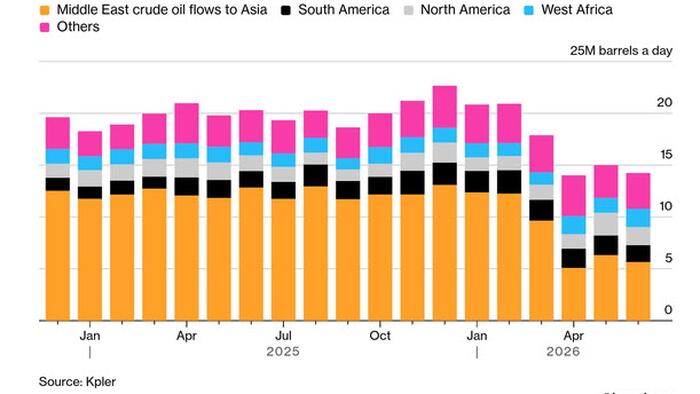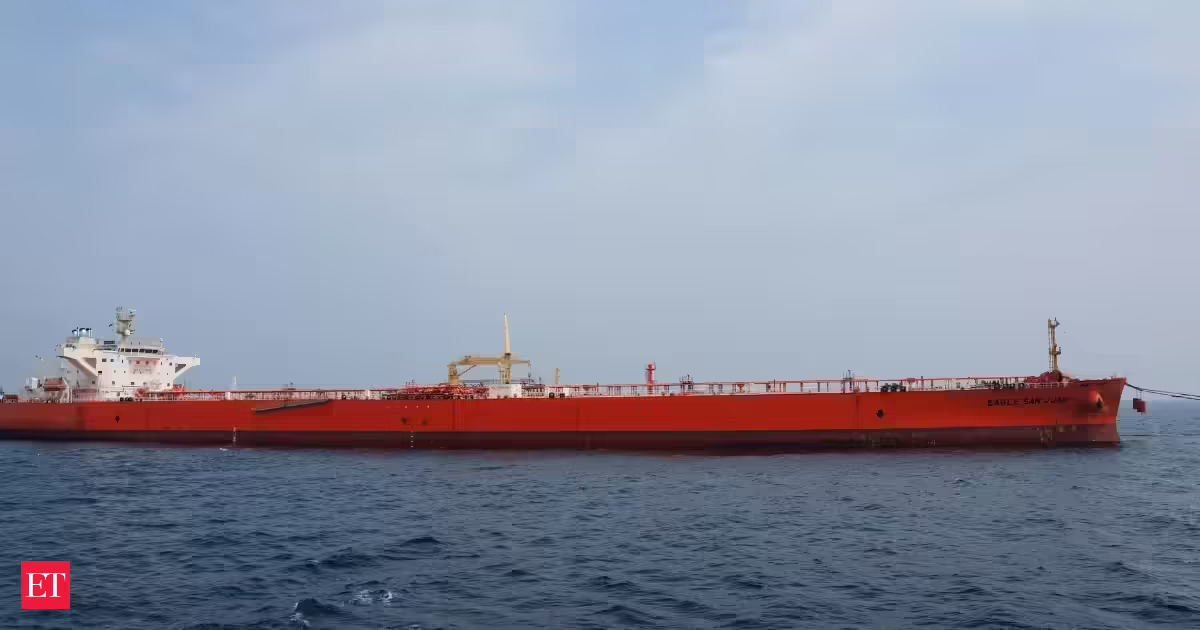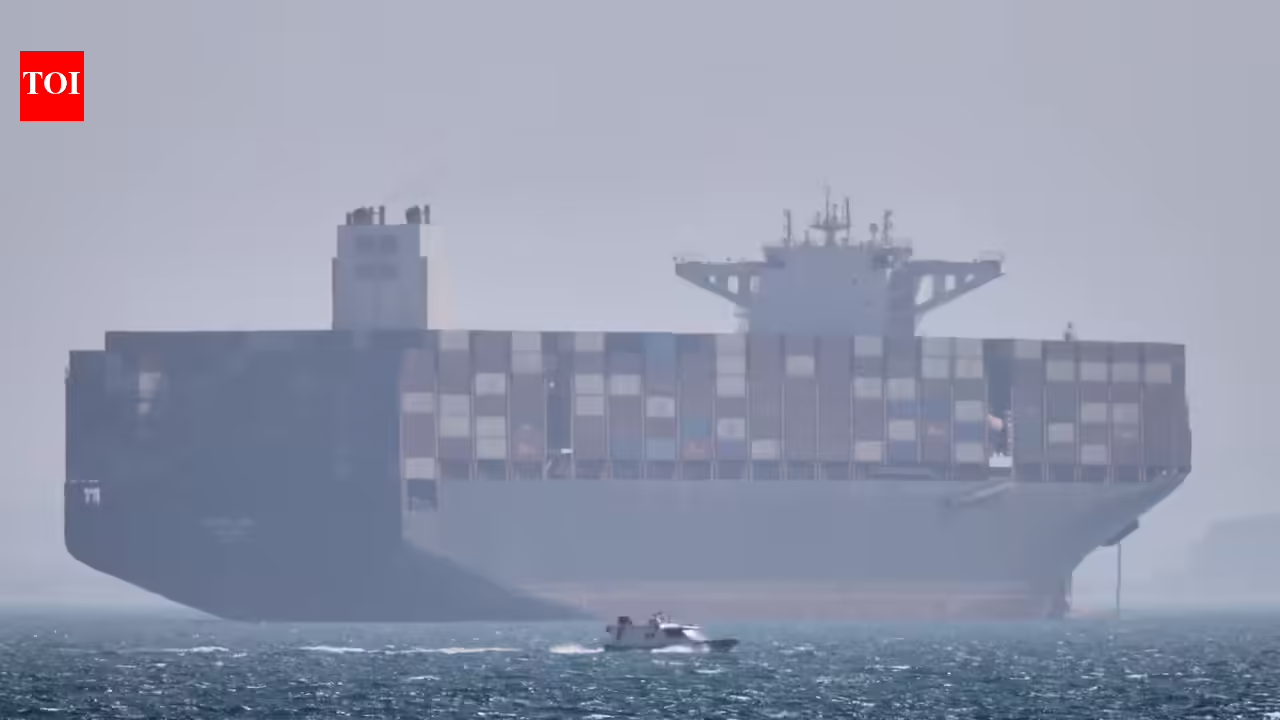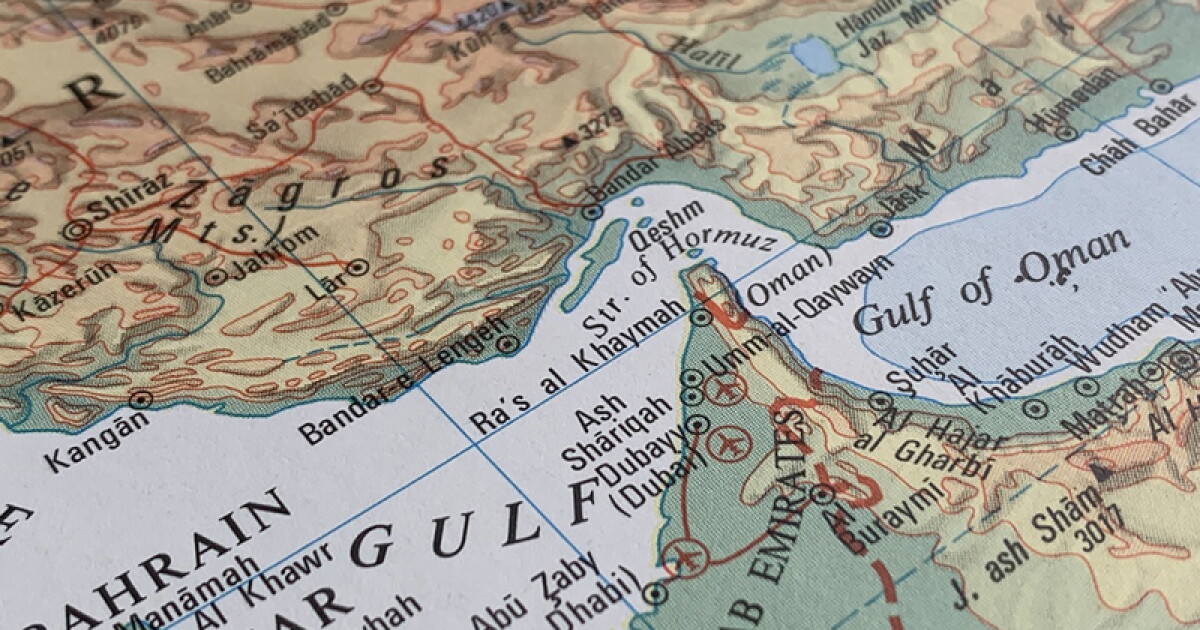
Asia-Pacific economies that have been on the front lines of staggering Mideast war-driven oil supply losses stand ready for the resumption of trans-Hormuz tanker traffic following last week's US-Iran memorandum of understanding (MOU). But the need to engage in an all-out bidding war for returning flows is not yet coming into view. The world's scramble during Hormuz's sudden near-closure in late February has — surprisingly — left the current market feeling relatively balanced, allowing both physical and futures prices for oil to tumble. Just as it will take time for Mideast producers to untangle the impacts of the war to fully ramp up production to prewar levels, so, too, will refiners in Southeast Asia and China need time to unwind their massive run cuts responding to lost supplies. Asian refiners collectively rely on the Mideast for about 60% of their crude imports under typical peacetime conditions, making the loss of roughly 12.2 million barrels per day of net Mideast oil and other liquids supplies for March-May (per Energy Intelligence calculations) particularly acute for the group. However, historic global inventory releases, a much larger-than-expected reduction in Chinese crude oil purchases, and refiners' own proactive efforts to both massively cut runs and find replacement barrels — in volume and grade — from as far afield as Brazil and the US Gulf Coast have helped ease the squeeze. Asian buyers tell Energy Intelligence they particularly welcome the return of heavier Mideast grades that the market has been starved of in recent months, with regional refiners outside of China and India keen to start ramping runs back up as Mideast supply certainty returns. For now, though, the relative balance between supplies lined up for delivery over the next two months or so and current refinery throughputs are not standing in the way of a significant climbdown in oil prices. In fact, prices for physical barrels are falling faster than futures — Dated Brent is again at a discount to ICE Brent, for the first time since the conflict began Feb. 28 — signaling an amply supplied market.
Asian Buyers Keen, But Measured, on Hormuz Reopening
Refiners eagerly await the return of key Mideast supplies, but the competitive frenzy one might expect after four months of disruption has yet to emerge as markets remain resilient.
343 words~2 min read