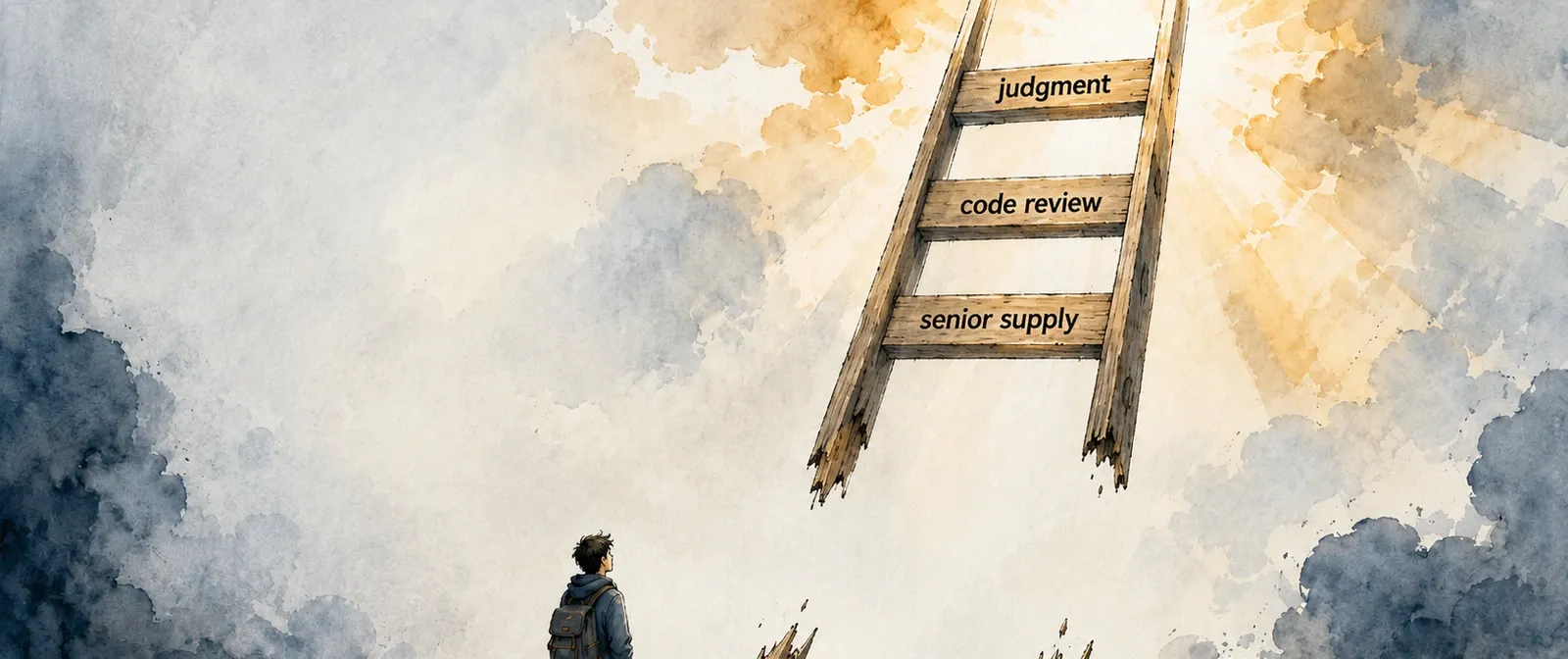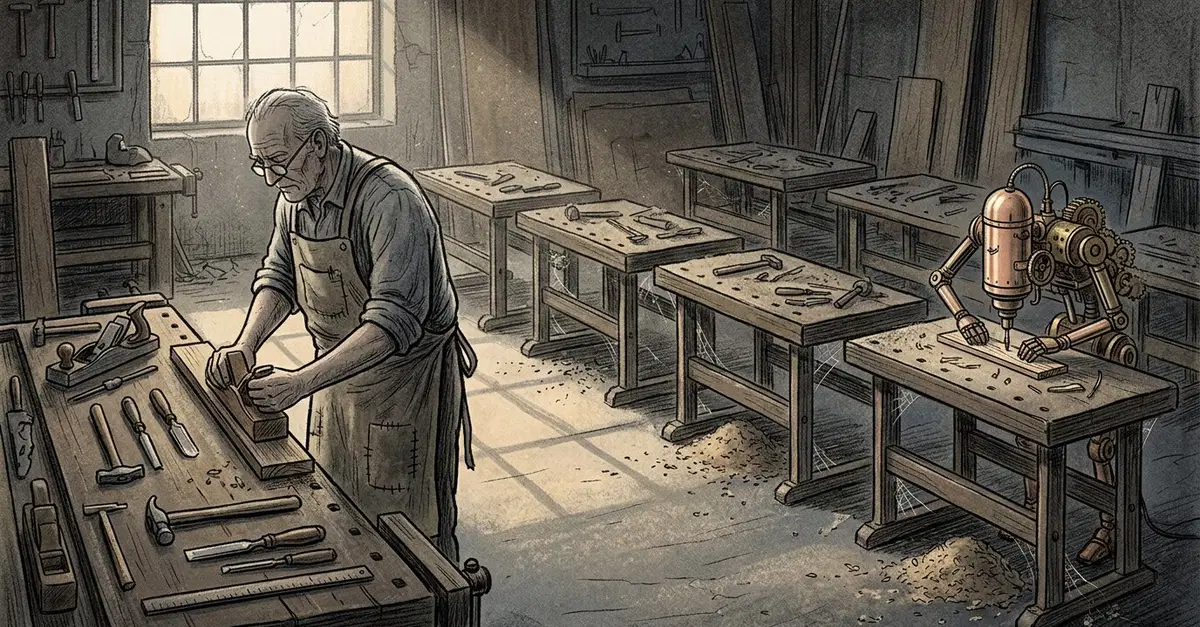
The industry is going to wake up in five to seven years to a shortage of senior engineers, and it will not be because we fired any of them. The current cohort of senior engineers is, by most measures, more valuable in 2026 than it was in 2022. The fired-them-all reading is wrong. The harder reading is that the system that produces senior engineers takes a decade to run and is being quietly drained at the front, and the people on the receiving end of the drain have not yet figured out how much they are losing.
I wrote a week ago about the junior-developer problem — the closing of the entry tier of the pipeline, the way the question-and-answer archives that taught a generation have been quietly drying up, the way apprenticeship has been disappearing in favor of fast-shipping output. That piece was about the input. This piece is about the output, five to seven years from now, when the cohort that did not get apprenticeship would have been the next batch of senior engineers and is not.
The numbers are not speculative
The numbers are, in fact, public.
At Google Cloud Next 2026, Sundar Pichai said that 75% of all new code at Google is now AI-generated and approved by engineers, up from 50% last fall. The framing is the part to read closely. Code is generated by AI; engineers approve it. The role separation is already in the corporate language.