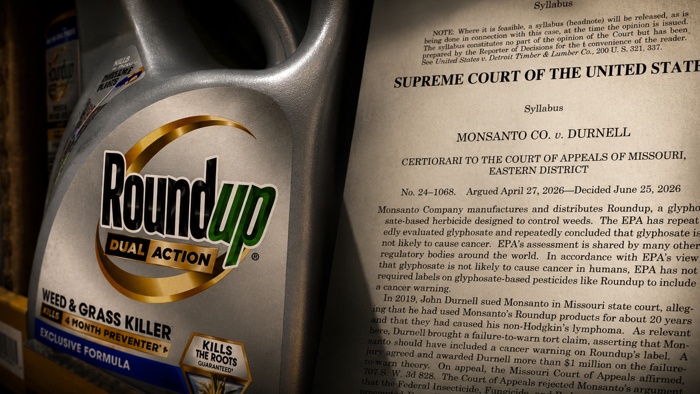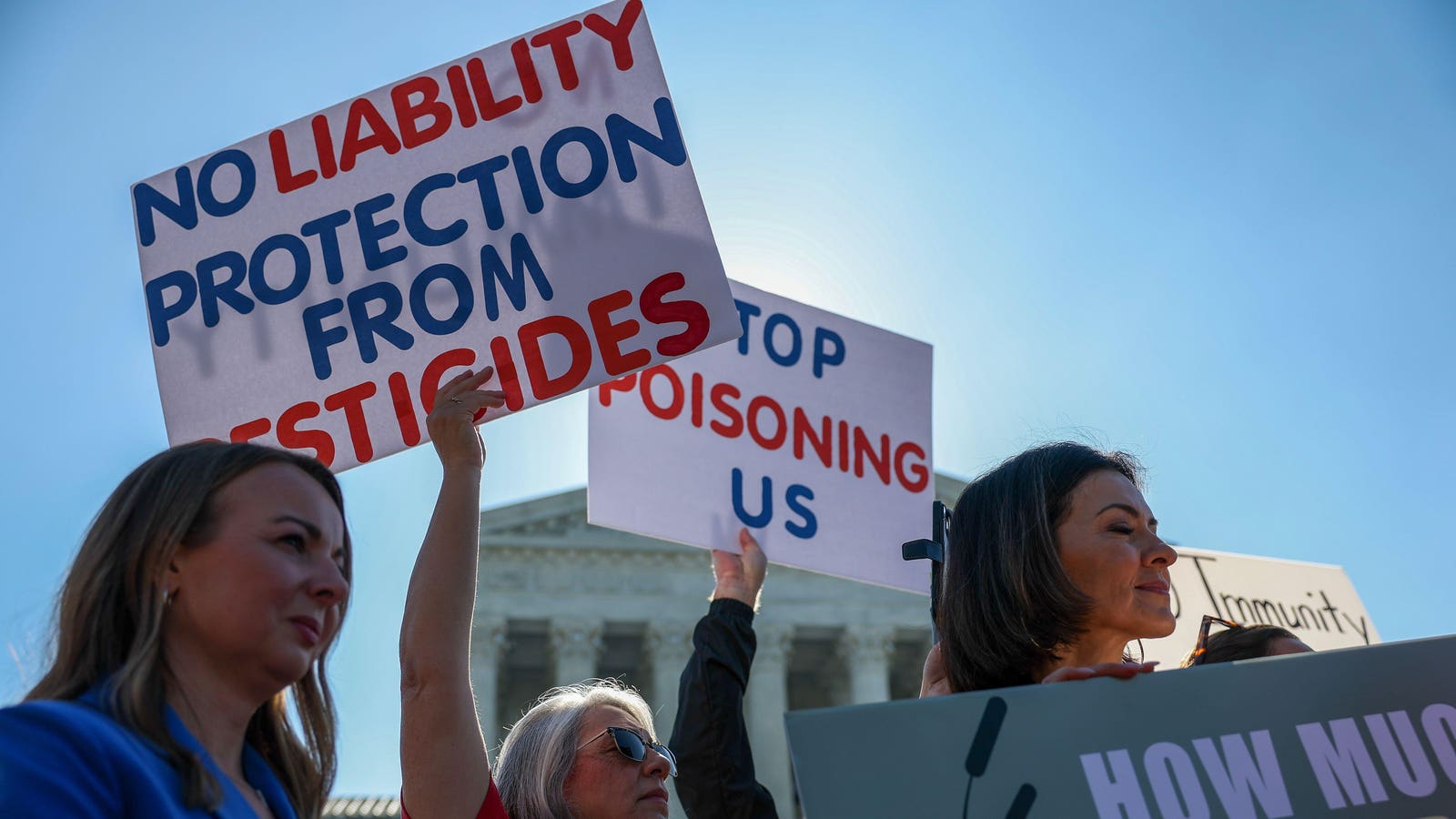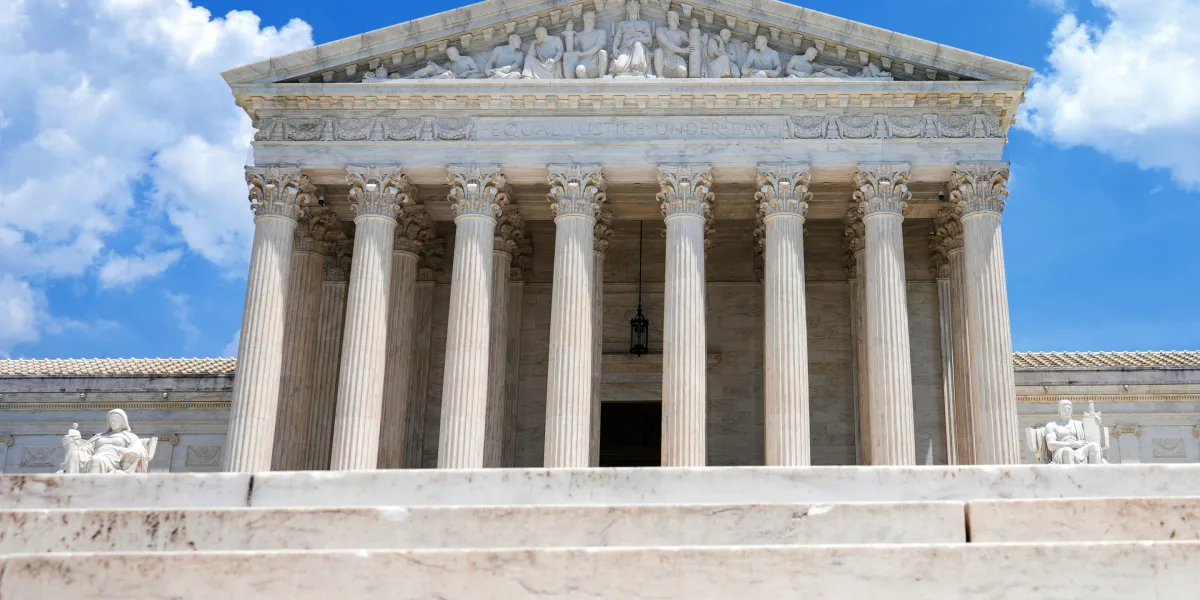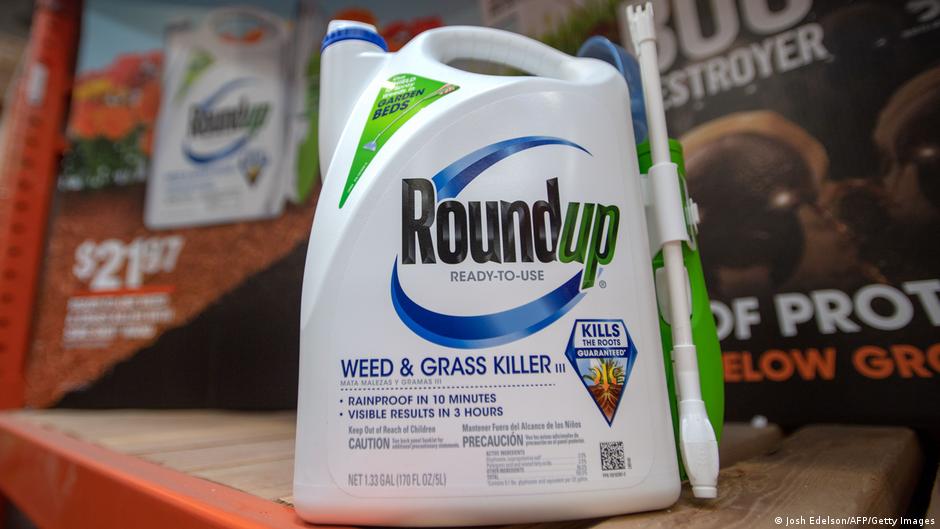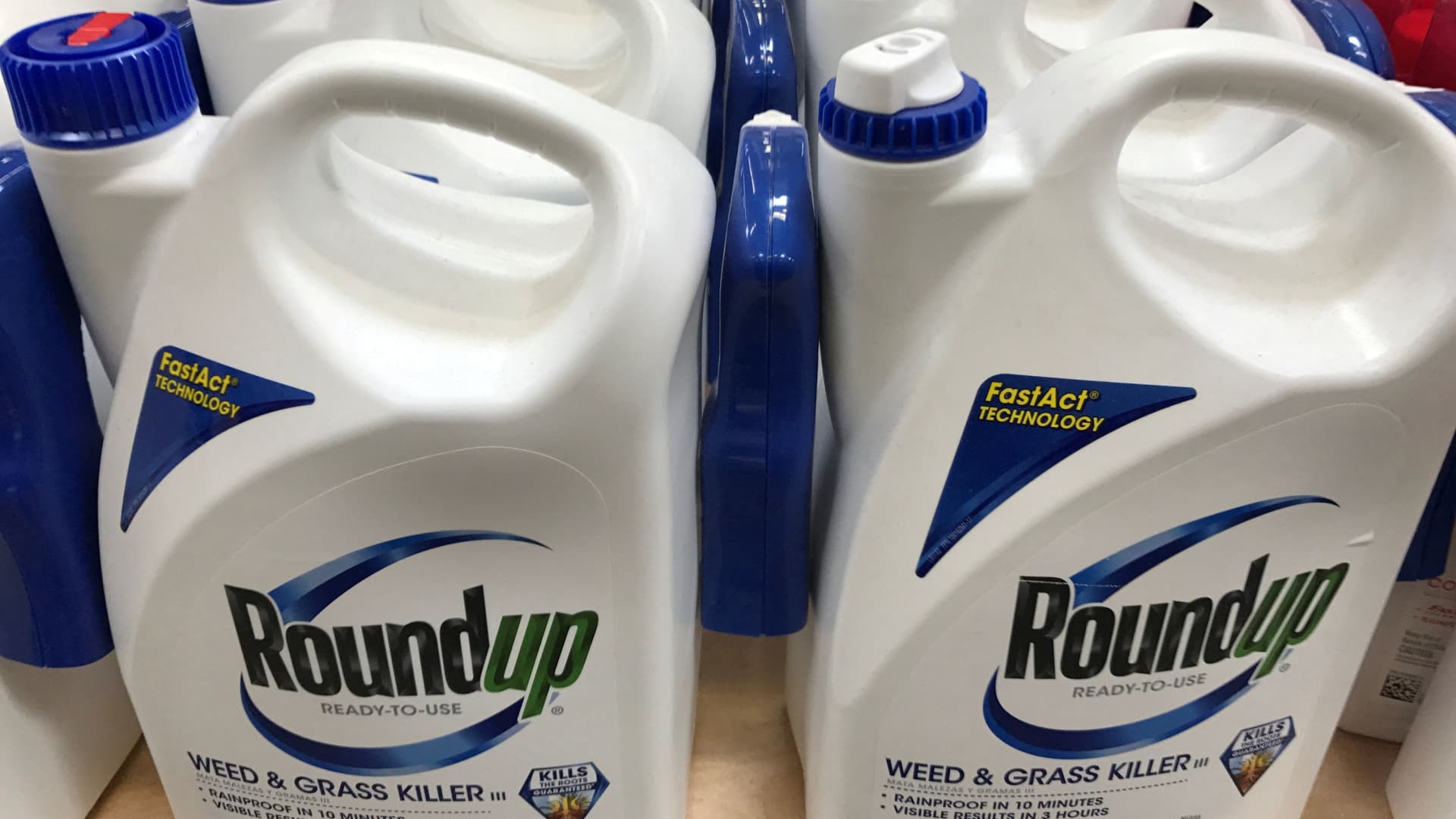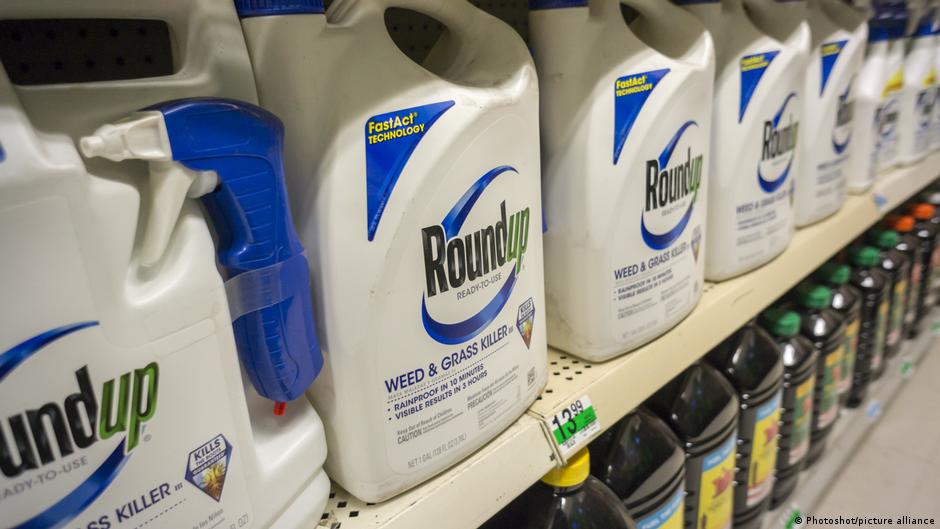
For Bayer AG, the morning of June 25, 2026 looked very different from most mornings of the past eight years. The US Supreme Court ruled that federal pesticide law preempts state-level claims against the company for failing to warn consumers about alleged cancer risks linked to its Roundup herbicide. Shares jumped roughly 20% on the news.
The case, Monsanto v. Durnell, centered on a straightforward but enormously consequential legal question: can a consumer sue a pesticide maker under state tort law for not including a cancer warning that federal regulators never required? The Court said no.
What the ruling actually says
The Federal Insecticide, Fungicide, and Rodenticide Act, known as FIFRA, gives the Environmental Protection Agency authority over pesticide labeling requirements. The EPA has repeatedly concluded that glyphosate, the active ingredient in Roundup, does not carry carcinogenic properties. Because federal law already governs what warnings must appear on the label, the Court found that state-law failure-to-warn claims are preempted. In plain terms: if the EPA says no warning is needed, a plaintiff cannot go to a state jury and argue one should have been there anyway.
Oral arguments in the case were heard in late April 2026. The ruling now provides a direct precedent that affects not just Bayer, but any pesticide manufacturer operating under FIFRA’s framework.