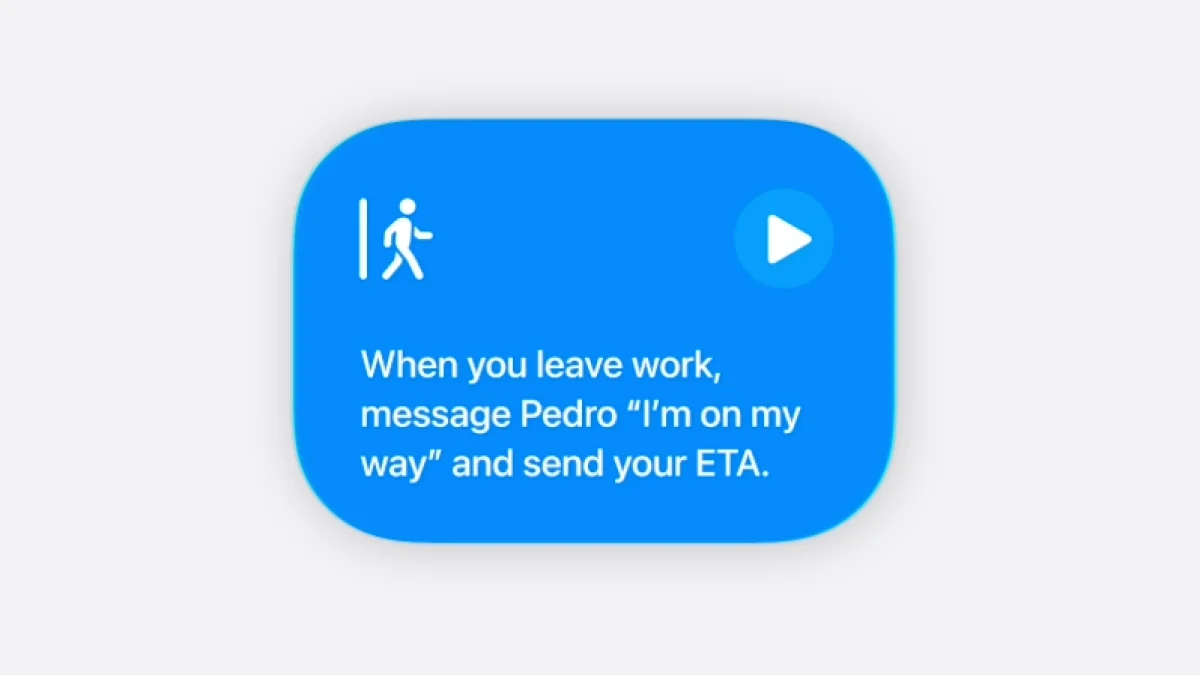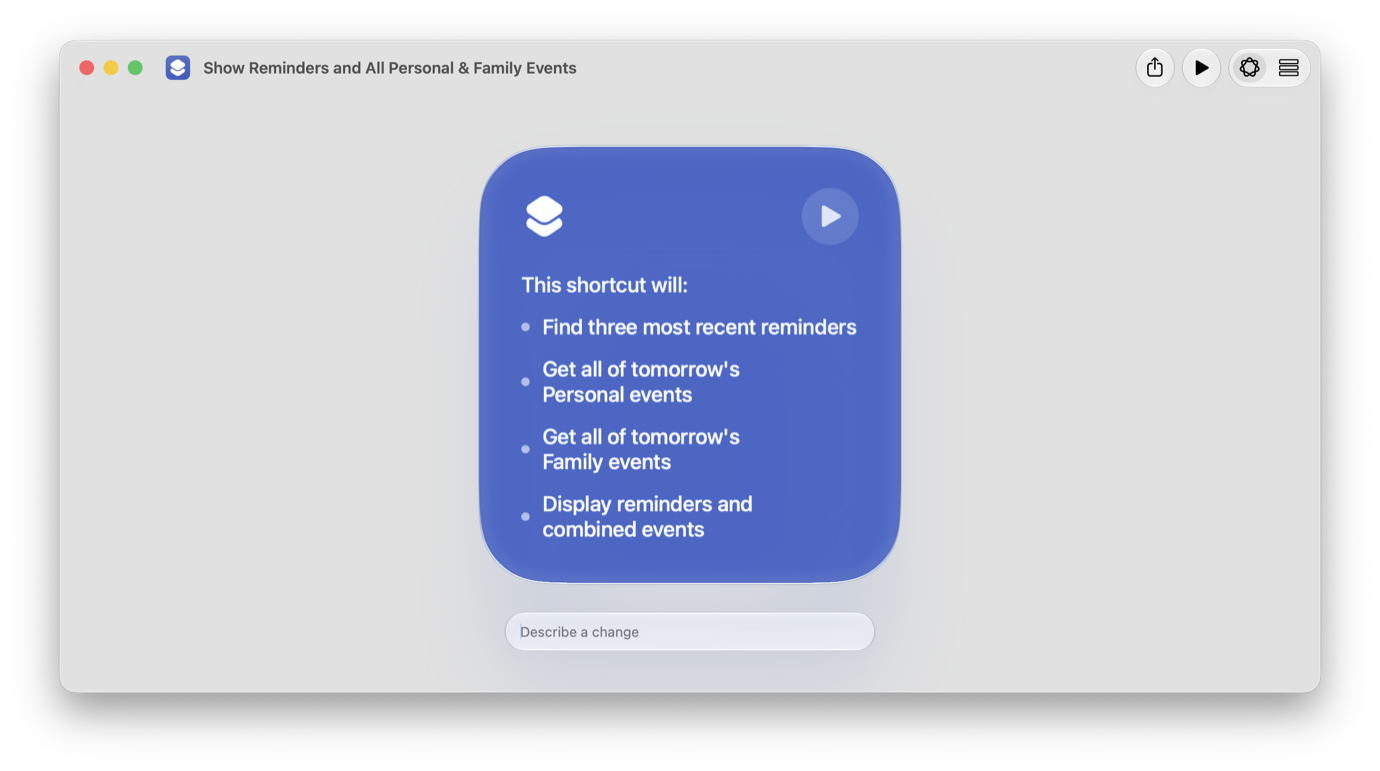
A result from the Describe a Shortcut feature in macOS 27.
Since the very beginning, it’s been clear that computers provide incredible power to those who know how to use them to get work done. The challenge has always been how small the group of “those who know how to use them” has been.
The Apple II included support for BASIC, a simplified programming language that was intended to let new computer users write programs. “In my opinion, the real thing [the Apple II] is doing right now is to teach people how to program the computer,” a young Steve Jobs told the New Yorker in 1977. The first computer programs I wrote were in BASIC.
There was also the Logo language, which helped introduce beginners to programming concepts through the manipulation of a virtual robot called a “turtle.” In the ’80s, HyperCard tried to broaden the programming community through its use of HyperTalk, another language designed to speak to beginners.
The (still!) current examples of this on the Mac are AppleScript, which used a format based on English-language sentence structure; and Automator and Shortcuts, two automation tools designed to create flow-chart-based programs.