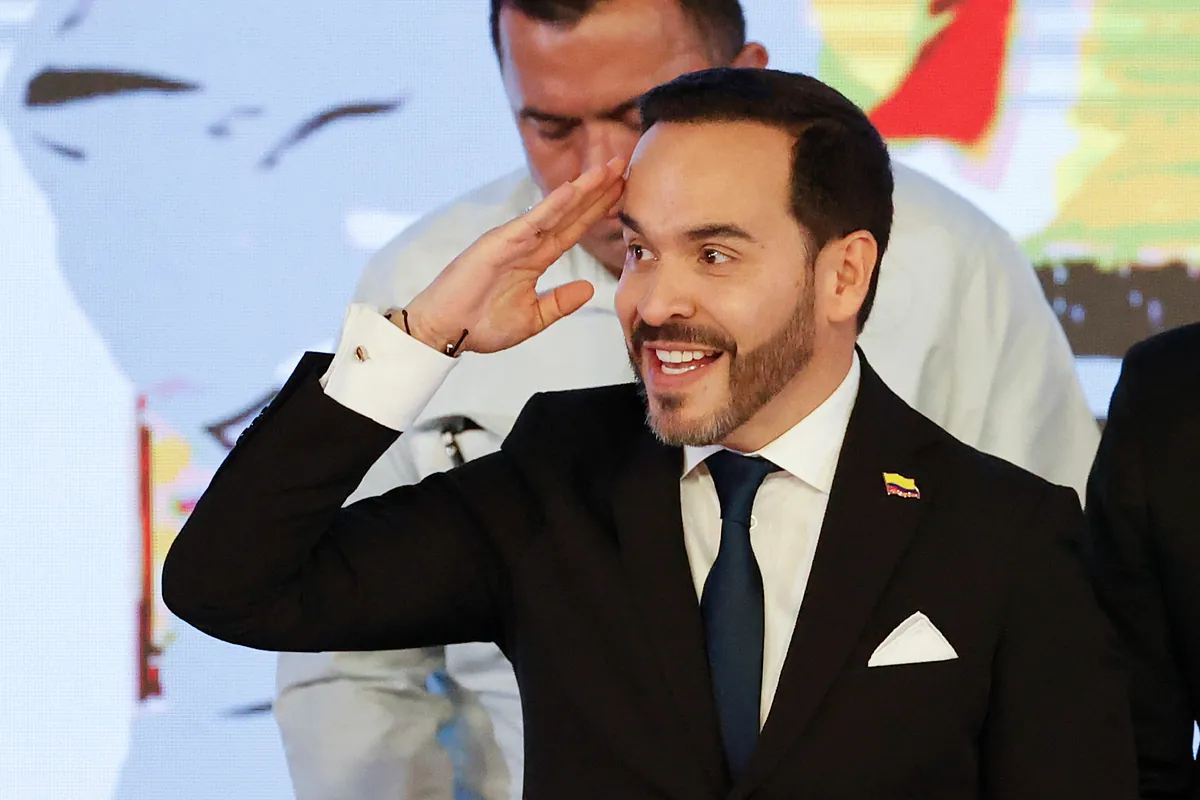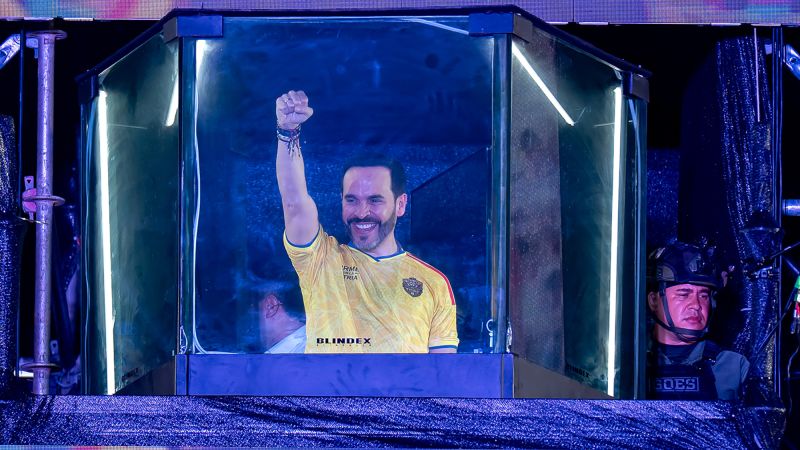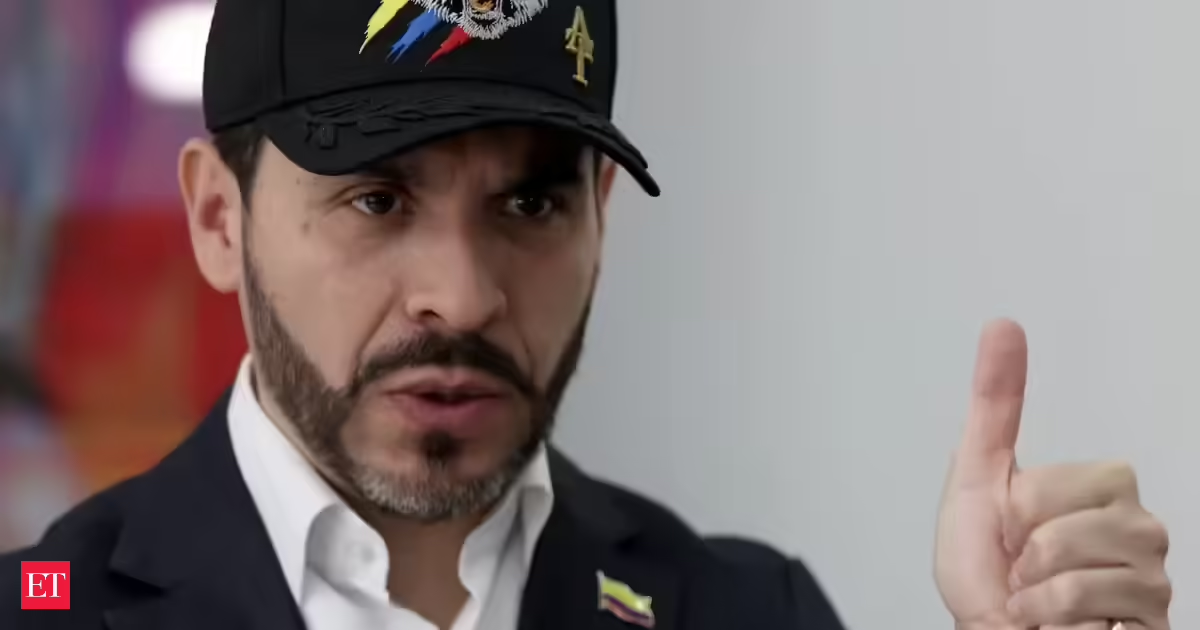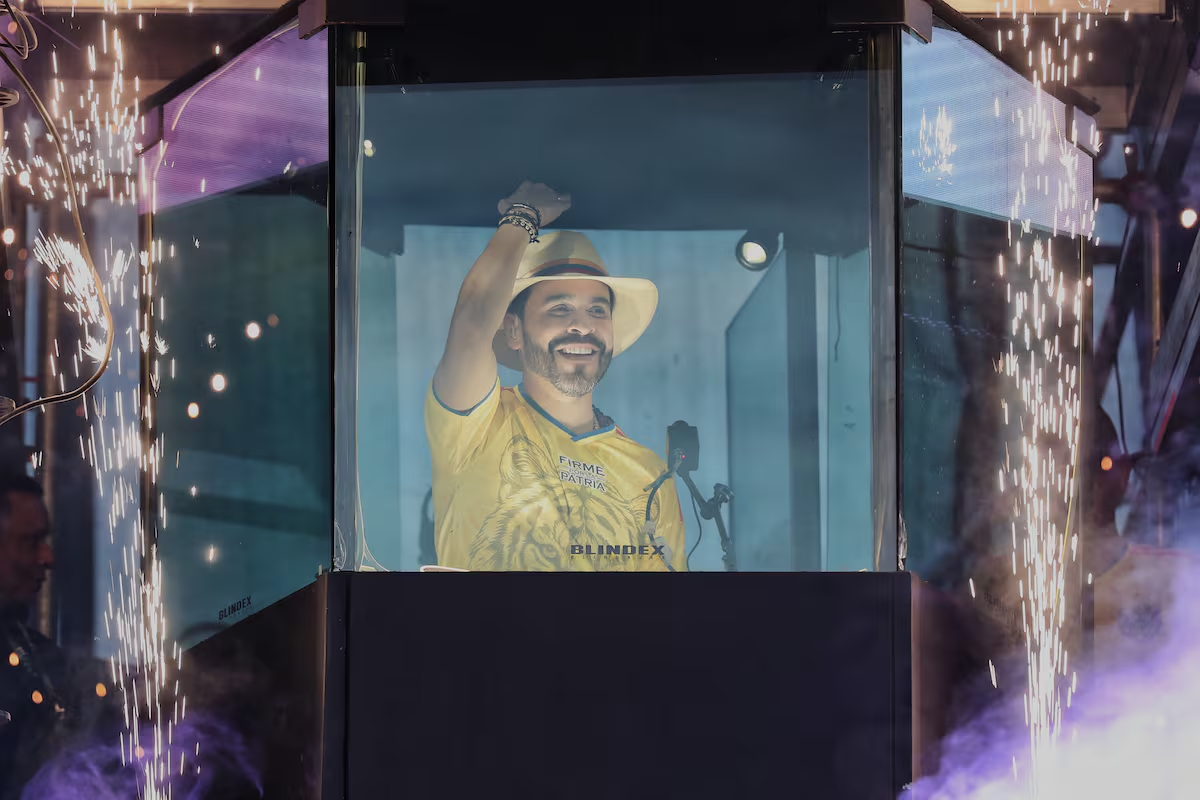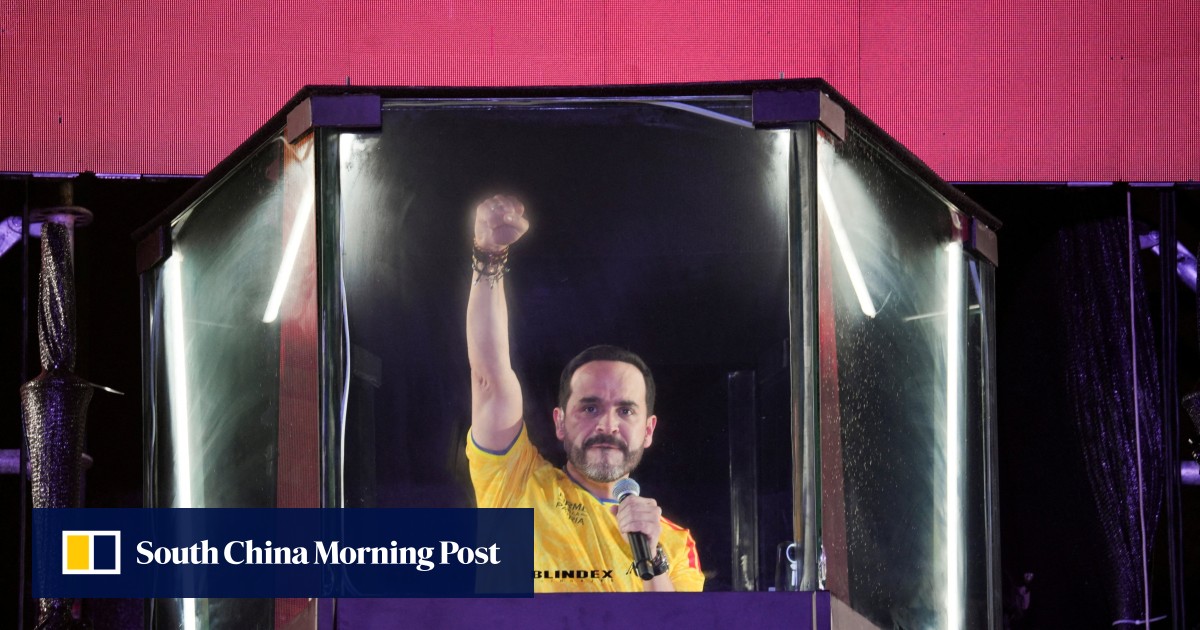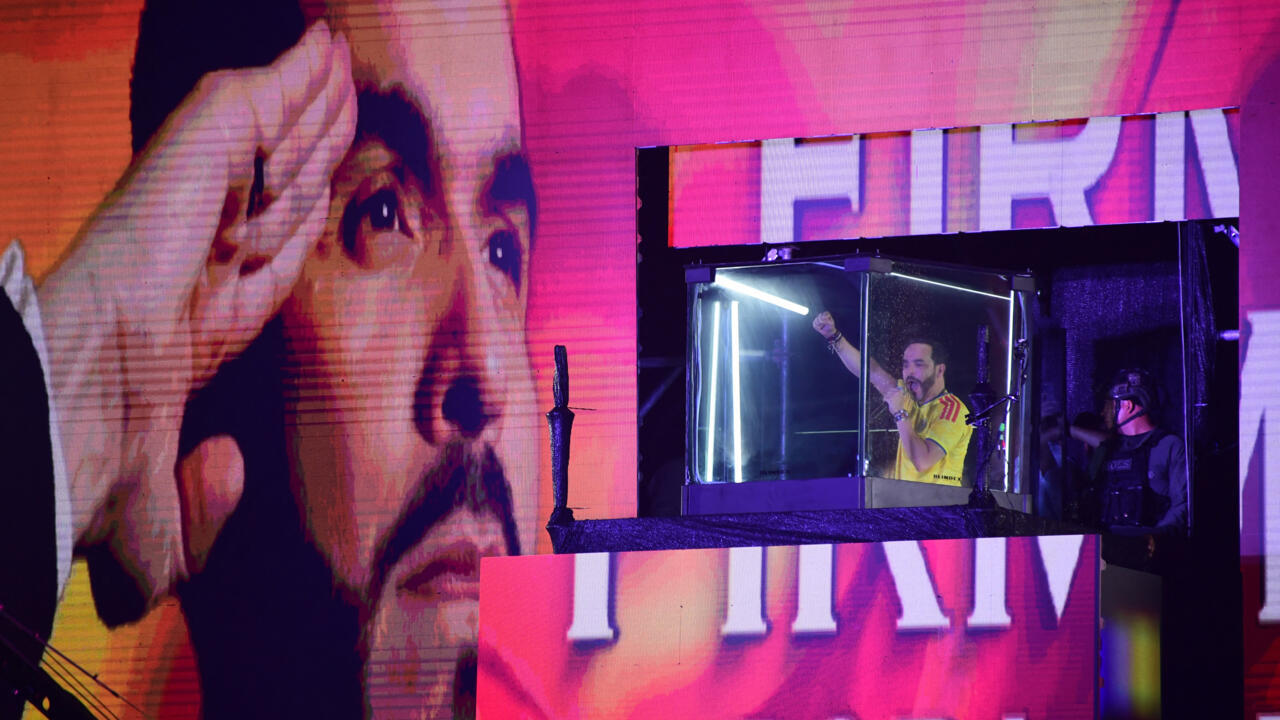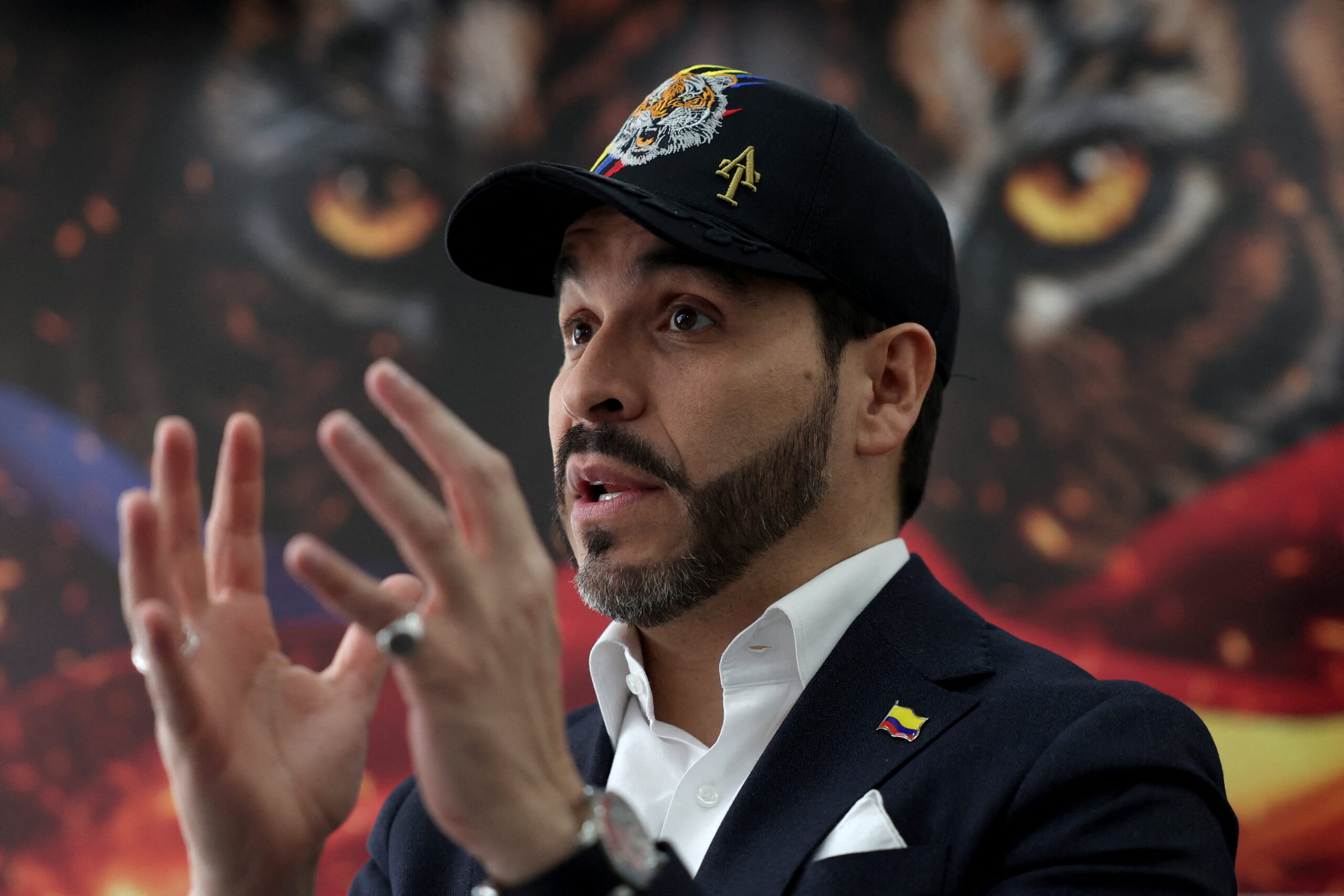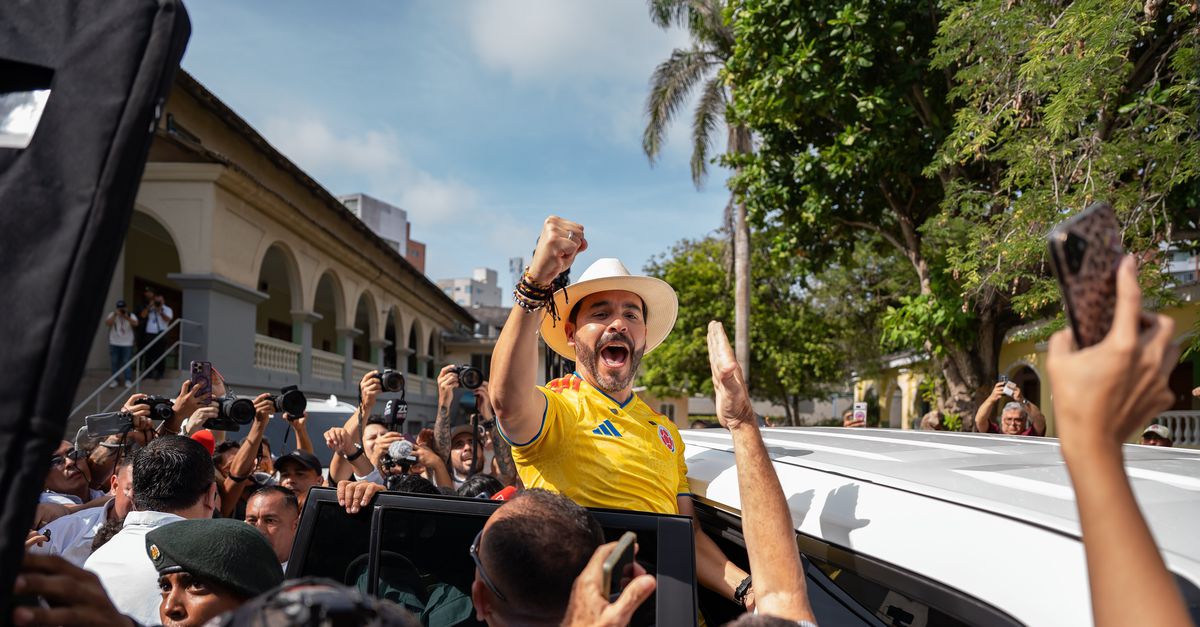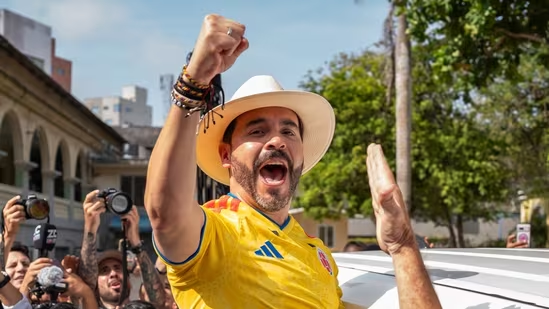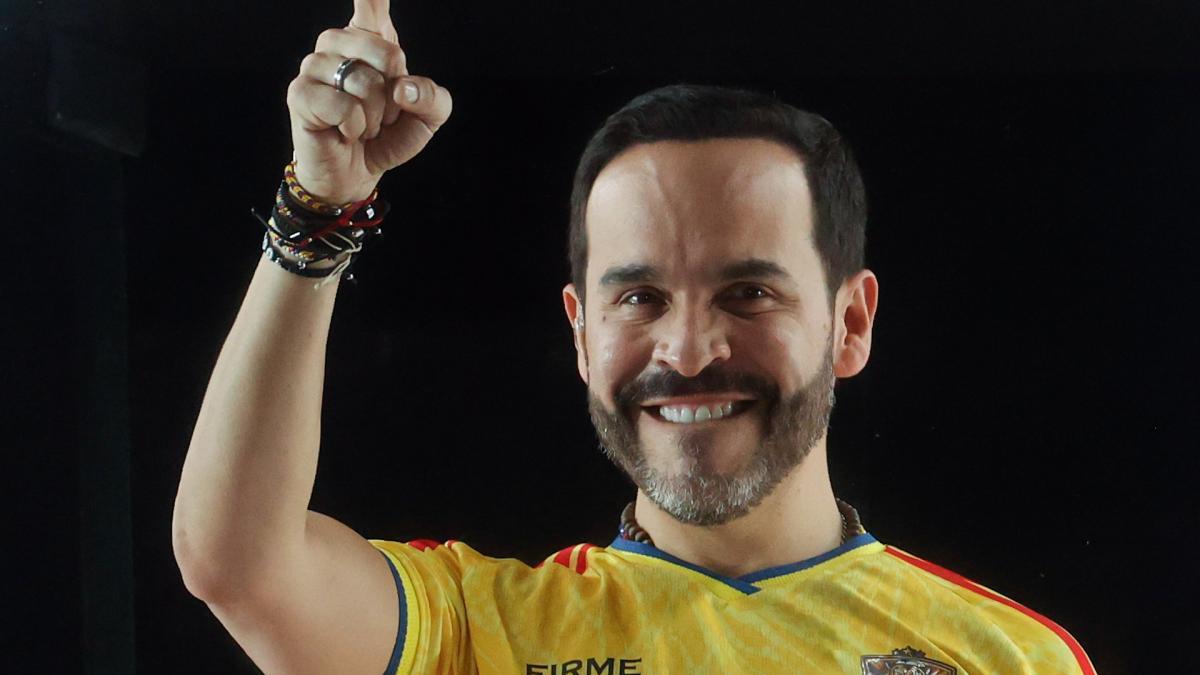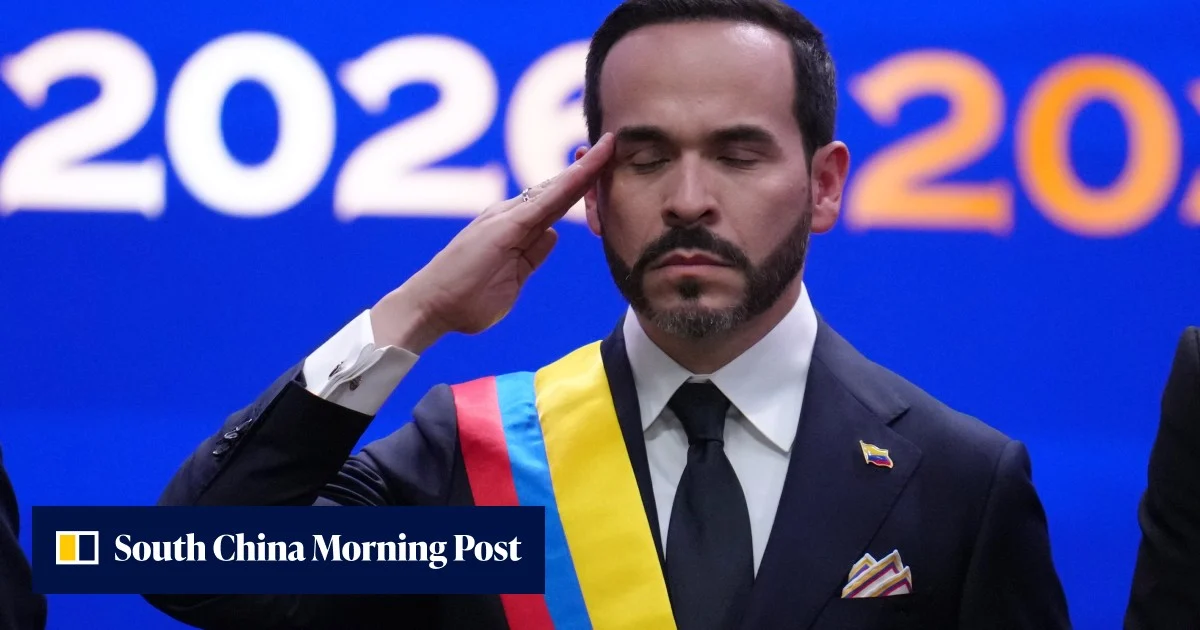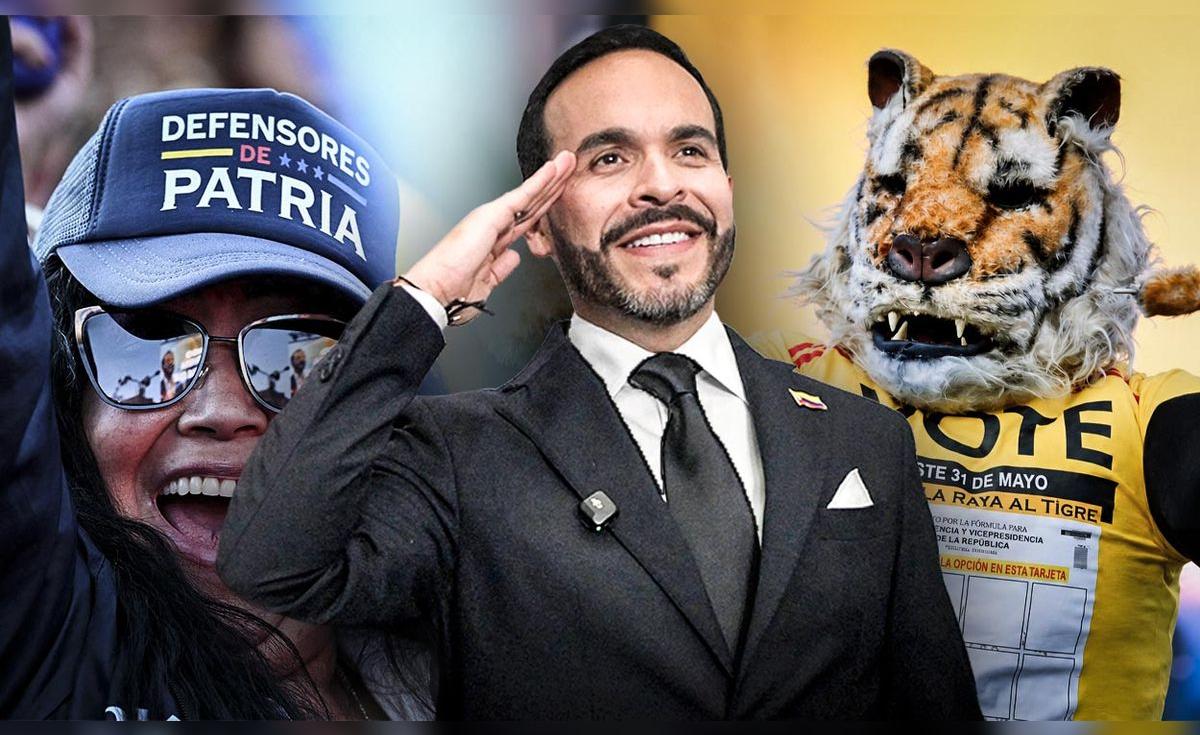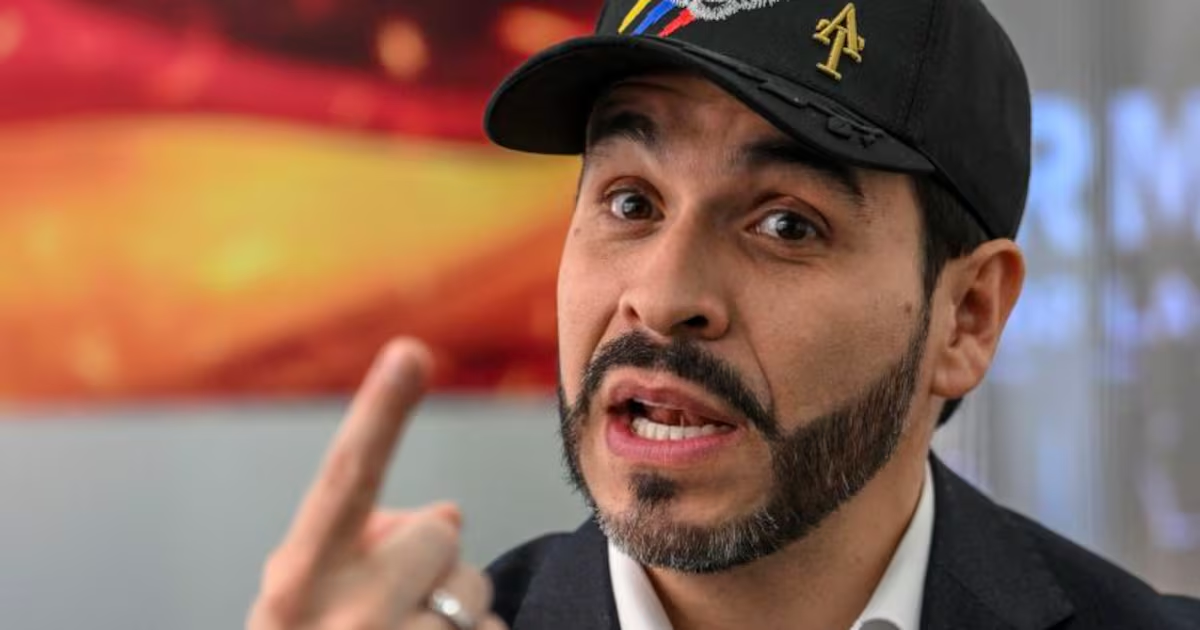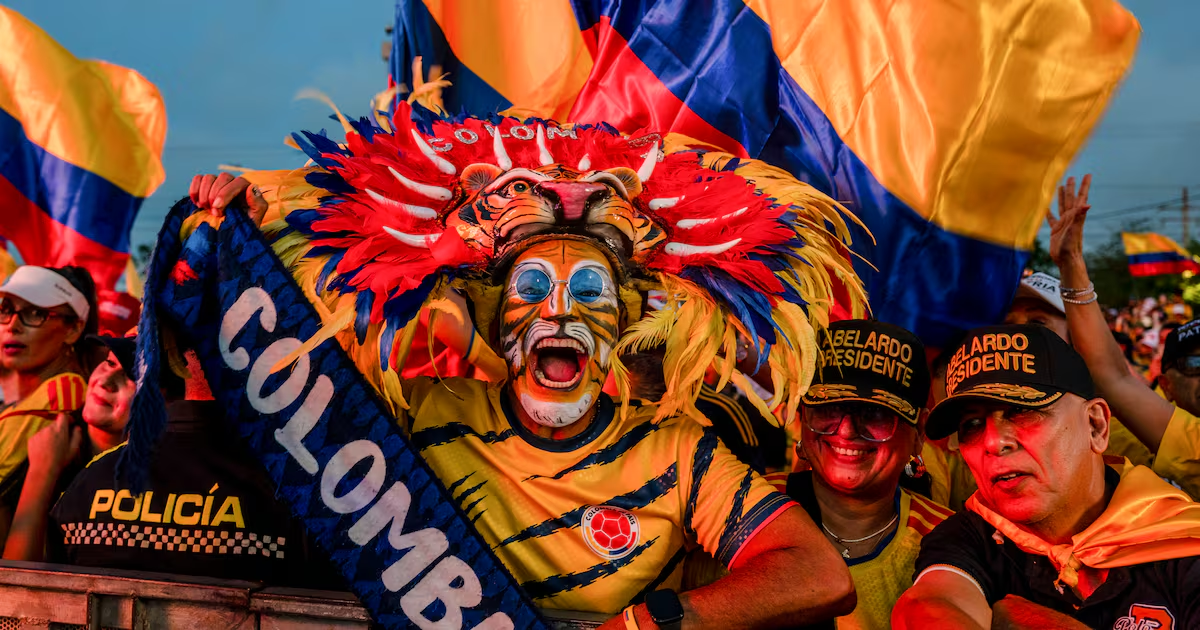
Abelardo de la Espriella, Colombia’s brash president-elect, wants to model his government on the two most high-profile right-wing leaders in Latin America.Like El Salvador’s Nayib Bukele, he has promised to build mega jails to tackle surging crime. And similar to Argentina’s Javier Milei, he is promising to bring a chainsaw to slash the size of the Colombian state.“Today marks the beginning of the Miracle Nation,” de la Espriella, who calls himself “El Tigre” (The Tiger), roared during his victory speech on Sunday night in the coastal city of Barranquilla. “Colombia, here is your tiger, and here is your president!”Yet the multimillionaire former criminal defence lawyer is likely to face hurdles at every turn. His mandate is slim, his plans are not clear and he has no experience of governing.De La Espriella, a political neophyte, won the narrowest election in modern Colombian history, with some 250,000 votes – a 0.9 per cent share – separating him from senator Iván Cepeda, the continuity candidate of Colombia’s outgoing leftist president Gustavo Petro.Tensions flared on Sunday as pro-Cepeda demonstrators clashed with police in Bogotá, the capital, and the south-western city of Cali, a potential harbinger of discontent to come. Petro has claimed that “irregularities” took place in the vote count, but Cepeda formally conceded on Wednesday.Police stand guard during the 2026 presidential runoff in Colombia. Photograph: Leonardo Castañeda/Getty Images Esteban Gonzalez Pons, chief observer of the EU's election observation mission to Colombia. Photograph: Raul Aeboleda/AFP via Getty Images The EU observation mission in Colombia on Tuesday said “we have not observed any irregularities” in the count.Without a major party behind him in Congress, where Petro’s coalition holds the largest number of seats but lacks a clear majority, De la Espriella will have to cut deals with the country’s traditional parties.“In the face of a potentially obstructionist opposition, a key question will be how De la Espriella builds and maintains governability,” said Nicholas Watson, managing director at Teneo. “Although he spurned traditional parties during the campaign, he will need their support to advance legislation.”Chief among voters’ concerns in the election, according to pollsters, was security. Violence and cocaine production have surged across the countryside, 10 years after the government signed a peace deal with the Revolutionary Armed Forces of Colombia rebel group.He has pledged to deploy the military to fight guerrillas and drug traffickers head-on, a reverse of Petro’s policy of seeking disarmament from armed groups via negotiations. De la Espriella, a US citizen, has pledged to deepen Colombia’s military relationships with Washington and Israel, in another rebuke to Petro’s policies.Taking a page out of Bukele’s book, he has said he will build mega-jails in the Amazon rainforest to tackle surging crime. The Salvadoran strongman has overseen mass incarceration, locking up about 2 per cent of the adult population in order to cut murder rates to record lows.Earlier this year, De la Espriella acknowledged that policing Colombia – a country 50 times the size of El Salvador with a population of more than 50 million – would require a complex approach.“Bukele shows that when the state acts, it doesn’t lose,” De la Espriella said at the time. “I want to implement those prisons in Colombia and hand them over to private operators under long-term concessions, located deep in the jungle, in the middle of nowhere.”Abelardo de la Espriella during an election night rally in Barranquilla, Colombia last Sunday. Photograph: Carlos Parra Rios/Bloomberg But many of De la Espriella’s policy announcements are light on detail and “unworkable”, according to Óscar Naranjo, a former vice-president and retired general who headed Colombia’s national police.“Hopefully the new government will start to introduce a dose of realism about a subject where there is no silver bullet,” Naranjo said.De la Espriella also faces economic challenges, inheriting a fiscal deficit that last year ran at 6.4 per cent of GDP after Petro abandoned the country’s fiscal rule, aimed at controlling debt. Public spending also boomed under Petro, who spent heavily on social programmes and raised the minimum wage by 23 per cent in January.“We will return Colombia to its historic position of macroeconomic stability, before Petro tore it apart,” José Manuel Restrepo, De la Espriella’s running mate and a former finance minister, said in advance of Sunday’s run-off.Aping Argentina’s Milei, who has slashed subsidies since winning election in 2023, De la Espriella has said he will reduce the size of the state by 40 per cent through merging ministries, phasing out redundant agencies and overhauling the government’s payroll. De la Espriella’s adoption of the “El Tigre” moniker also appears a homage to Milei, who calls himself “El León” (The Lion).Marcela Meléndez, executive director of economic think-tank Fedesarollo, said that while “it is good that the new government is clear that there has to be a fiscal adjustment, the challenge is enormous because public spending in Colombia is incredibly inflexible”.“If anyone thinks that there are things that are superfluous and can simply be cut, this will not work,” Meléndez said.
Colombia’s ‘El Tigre’ aims to mimic right-wing firebrand Javier Milei
President-elect Abelardo de la Espriella wants to take a chainsaw to the state and build mega-prisons in the Amazon
1,045 words~5 min read