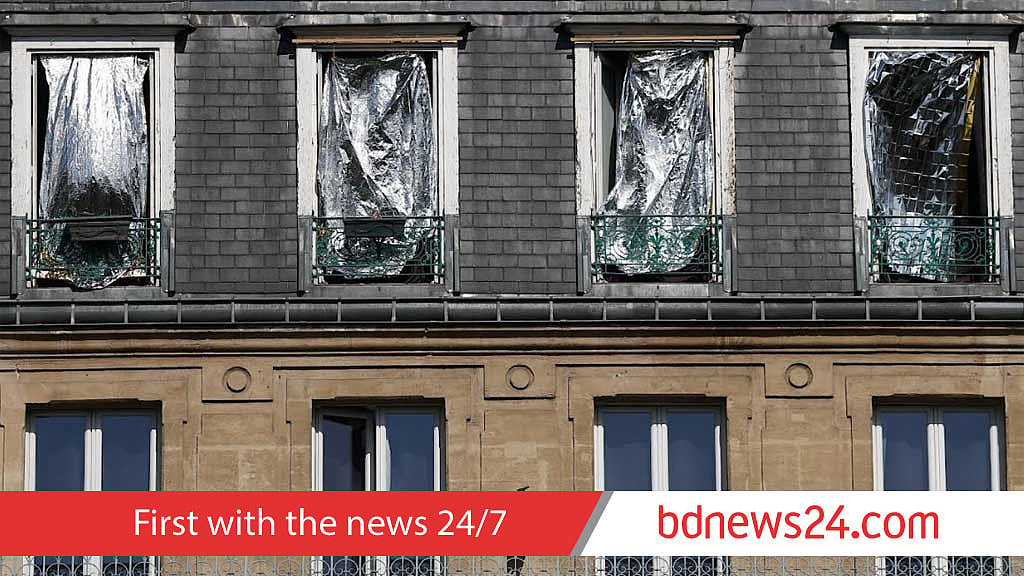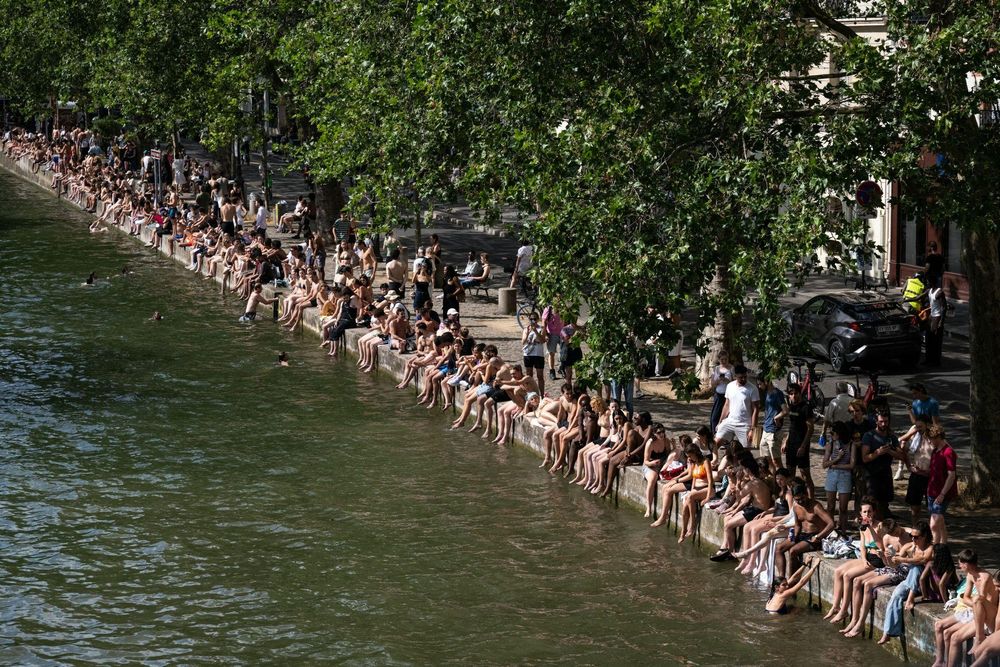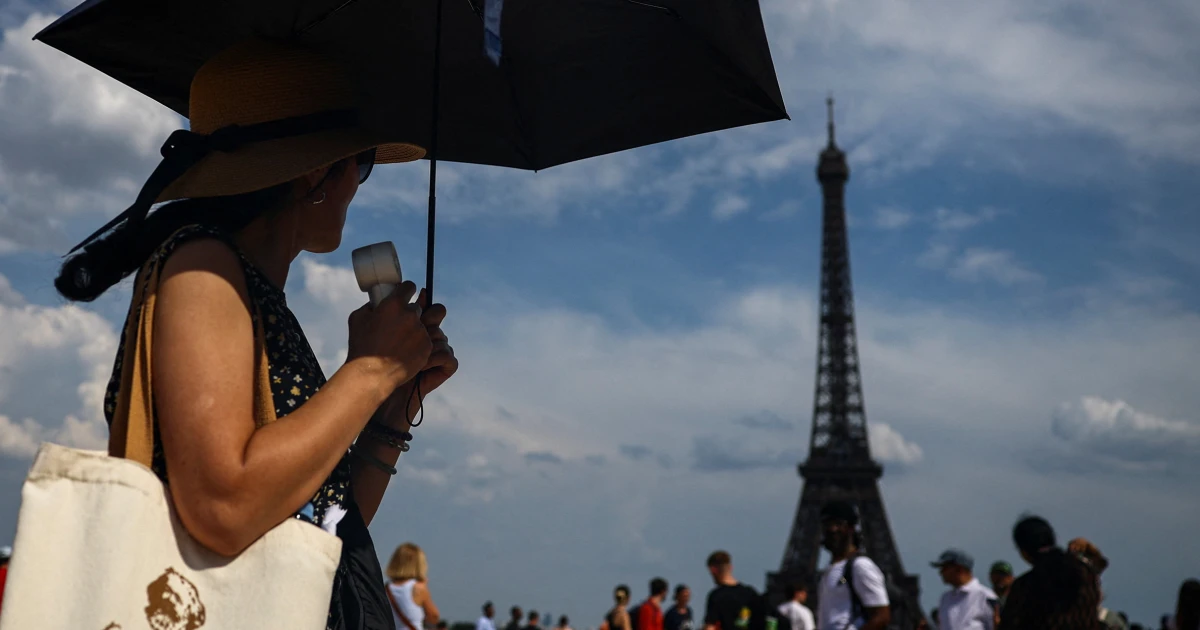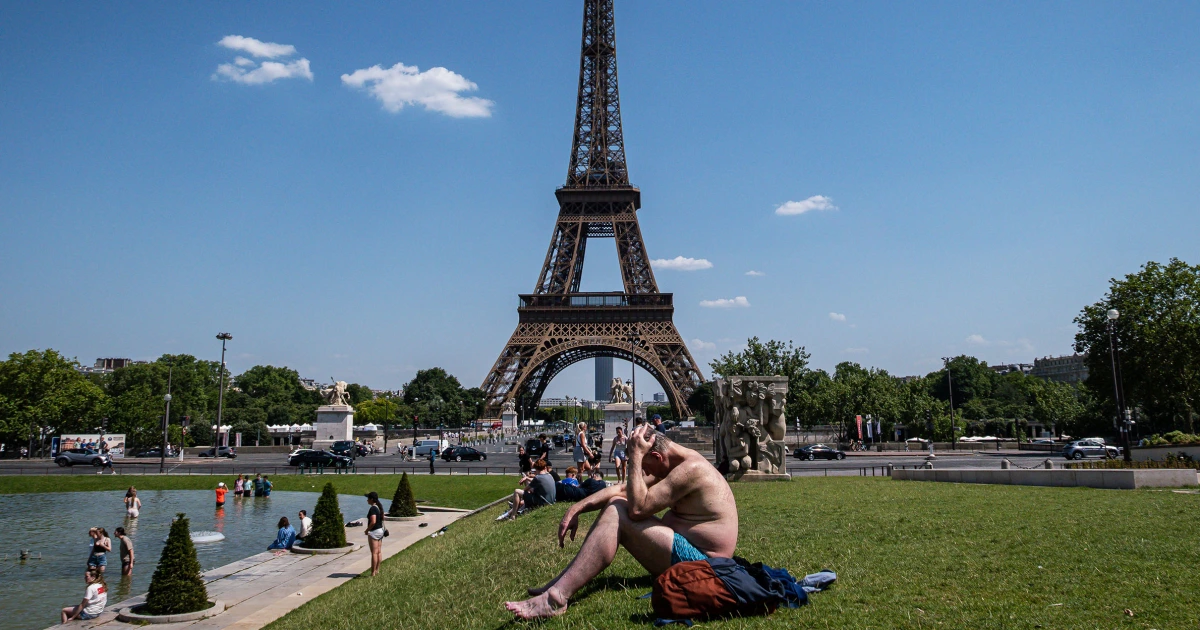
June 25, 2026, 8:45 AM EDTBy Daniele Hamamdjian and Alex HolmesPARIS — Paris, along with much of the rest of Europe, is scorching.Gripped by a record heat wave that has killed dozens of people, closed schools and knocked out power for thousands, the French capital has enforced early closures of iconic landmarks such as the Eiffel Tower and the Louvre museum. Temperature records across the continent have tumbled, with France experiencing its hottest day ever, Spain reaching its highest daily average since 1950 and the United Kingdom experiencing record heat for June. Extreme heat warnings were also in place in Germany, Poland and the Balkans. A hand-held fan cools King Charles III as he attends a London Climate Week reception in London on Wednesday.Yui Mok / Getty Images“It’s been incredibly hot,” Matt Mcleavy from FairFax, Virginia, told NBC News in Paris, which he was visiting with his family. His family is among many currently sweltering on this continent to experience just how ill-equipped Europe is for the soaring temperatures it increasingly faces.The Airbnb he originally booked “had air conditioning, but the air conditioning was not anywhere near sufficient,” Mcleavy said Wednesday. “No one slept,” he said, so the family booked into a hotel. However, they then discovered the hotel didn’t have any air conditioning at all. Their trip, he said, had ended up costing “a lot more” than planned. “But we’re going to think about that later. We’re enjoying Paris right now, trying to.”Many people, meanwhile, were jumping into the city’s rivers, canals and other waterways for relief from the sweltering temperatures. At Canal St. Martin, one of the city’s most popular, there was a festival-like atmosphere as thousands of people jumped, backflipped and dove from bridges into water that’s normally off limits to swimmers. But for some, this practice has proven deadly, with at least 48 people having died in France from drowning as they tried to escape the crippling heat, authorities said.People sit in the shade on the banks of the Canal Saint-Martin in Paris on Tuesday.Dimitar Dilkoff / AFP via Getty ImagesIn the streets near the canal, people were walking in their bathing suits, many seeking refuge from their small apartments. While picturesque from the outside, these iconic Parisian homes can prove hazardous to health in this new climate change-fueled reality. Few private apartments have air conditioning, particularly those in the densely populated city center.About three-quarters of Paris rooftops use sheets of zinc as covering, a trade recognized by the United Nations cultural agency UNESCO as a valued cultural heritage for humanity. But while the metal is malleable, recyclable and weather-resistant, it also absorbs and conducts heat. The national weather service, Météo-France, said that the country had this week hit the hottest day since measurements began. Paris itself hit a June record of 40.9 degrees Celsius (105.6 Fahrenheit) Wednesday, it said.And Thursday, the forecaster was still warning of “exceptionally high temperatures,” both day and night for most of the country, which remained under red alerts for heat. As a result, French Prime Minister Sébastien Lecornu said that he had decided to “activate the highest level of public health mobilization, called ORSAN level 3.” He said this would “bolster hospital staffing levels.” People shelter from the sun behind a wall in London on Wednesday.Toby Shepheard / AFP via Getty ImagesIn the U.K., which experienced its hottest June day on record Wednesday when temperatures hit 36.1 C (97 F), forecasters at the Met Office were warning that temperatures could be even higher Thursday and Friday. More than 1,200 schools have shut and transport has been disrupted, while train passengers have been advised to avoid non-essential travel. Temperatures could hit 38 C (111.7 F), the Met Office said, “though there’s still a chance of this being exceeded.” Elsewhere, Spain’s state meteorological agency, Aemet, reported that Monday and Tuesday were the hottest June days on record on the country’s mainland since at least 1950. It said on its website that numerous records had been broken, especially in the north “where this heat wave has been most exceptional, not only for its intensity but also for its duration and persistence.” Meanwhile in Germany, the Deutscher Wetterdienst meteorological service warned Thursday that “severe heat” would hit all of the country Friday and over the weekend.
Temperature records smashed as extreme heat wave grips Europe
French Prime Minister Sébastien Lecornu said that he had decided to “activate the highest level of public health mobilization” in a bid to boost staffing levels.
712 words~3 min read