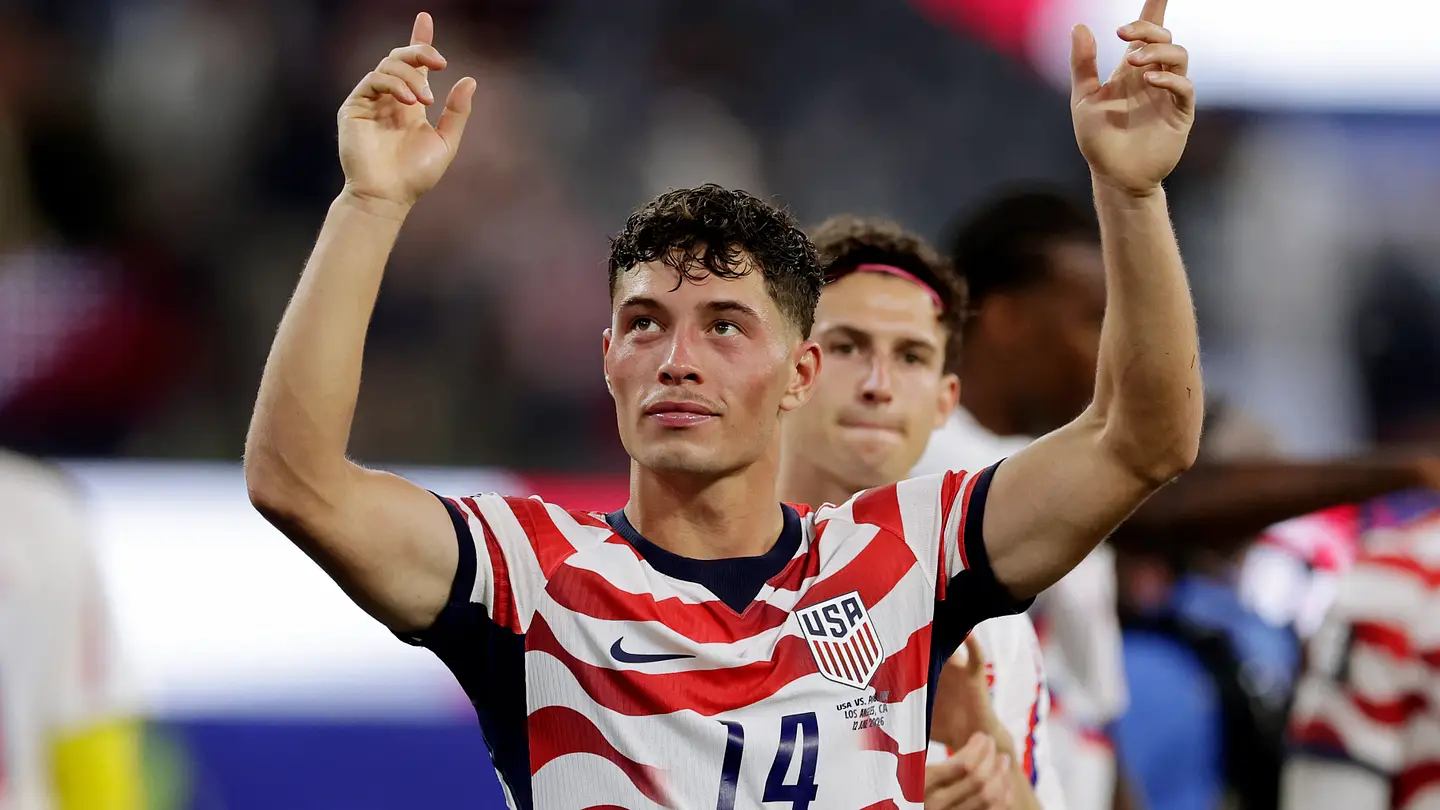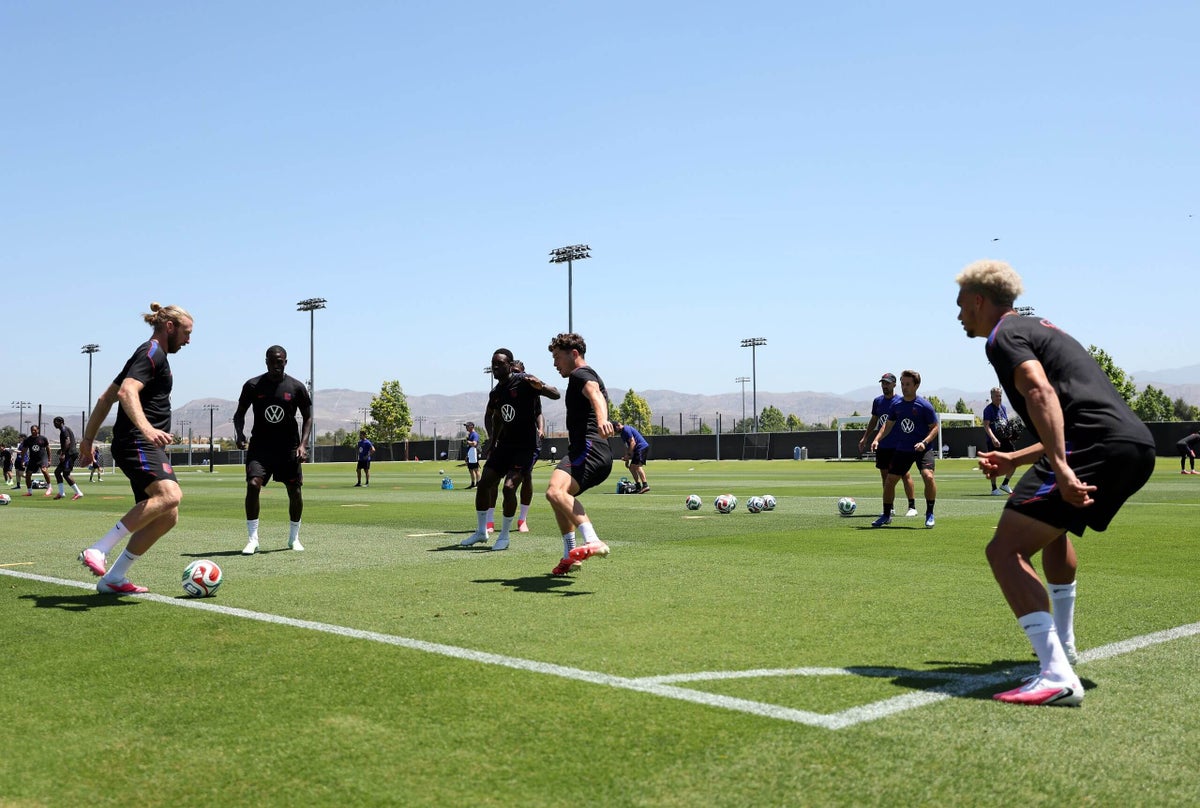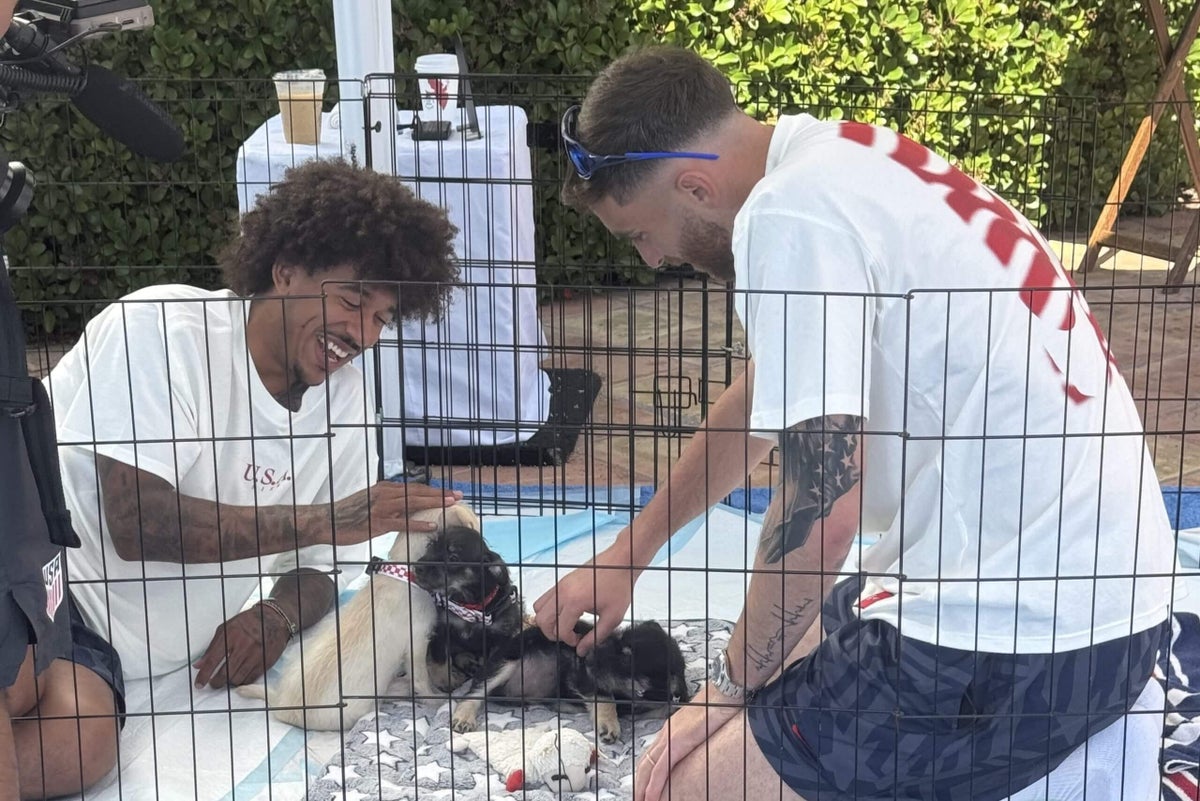
On the morning after the United States men’s national team opened their World Cup campaign with a 4-1 demolition of Paraguay, they received a visit to their California training base from three special guests: Bud, Dew Drop and Bloom.As the team set about their usual high-performance recovery routines, blending active recovery, massages and refueling, a group of USMNT players partook in a different form of relaxation altogether.The surprise visit, by three terrier/mixed breed puppies, was attended by a host of USMNT stars, including forward Christian Pulisic, goalkeeper Matt Freese, defender Chris Richards and playmaker Gio Reyna. The puppies, born nine weeks ago from the same litter, arrived, to a certain extent, due to a marketing activation with Purina, the first official pet care partner of the U.S. Soccer Federation.Pulisic holds up one of the puppies (Credit: US Soccer)But this activity was also approved by the U.S. coach Mauricio Pochettino and, according to both Purina and U.S. Soccer, the visit from the puppies went down so well with the players that “active discussions” are under way for a follow-up session as the team progress into the knockout stages.The puppies for the next visit may be different. Bud, Dew Drop and Bloom were brought in to the training center by Wags and Walks, a non-profit which works to reduce euthanasia in local shelters and encourage the adoption of rescue dogs. Bud and Dew Drop have now been adopted, but Bloom, pictured below and weighing 5lbs at two months old, is still in search of her “home team.”Bloom was with the U.S. players but is still looking for a home (Credit: Wags & Walks)The visit to the U.S. team’s Irvine base made for shareable and adorable social media clips, as the U.S. team decompressed with puppy love, but the inclusion of dogs in the workplace is part of an expanding trend across soccer teams.Arsenal’s coach Mikel Arteta most famously recruited a chocolate labrador in 2023, which he named Win. Arteta told Arsenal’s website that Win made the club’s training base feel more like a family setting.“There are still things at the club that can be done to connect with people. To be more caring with people, to show love,” he said.“I carefully chose the dog and it’s the perfect representative of who we are right now. She is one of us. It’s something that changes your mood like this (he clicked his fingers). She gives you all the love and suddenly you feel the energy of the place. It’s just beautiful and to me those things are very important.”Pochettino is himself a dog lover, often spotted out for 90-minute long walks during his time at Chelsea with Sansa, his Rhodesian Ridgeback. Sansa has its own Instagram account and is named after the Game of Thrones character Sansa Stark, who is crowned Queen of the North in the TV show.When the U.S. team trained at the University of Washington in Seattle before beating Australia, Pochettino posted an Instagram story raising up Polo, a four-month-old border collie. Polo belongs to Nick Mortell, the director of sports turf and grounds at the college, and, Mortell says, it was a spontaneous meeting between Pochettino and Polo, with the latter often on hand to help the grounds crew to “prevent geese activity.”Pochettino posted a picture with Polo (Credit: Instagram)At U.S. Soccer’s new training base in Atlanta, a process is now underway to establish “a more permanent pet presence”, which means there will soon be a full-time federation dog to greet staff and players at the complex. There is merch, too, with $19.99 USMNT dog jerseys on sale and U.S. dog tees and flying disc toys.Purina, which also sponsors MLS side St. Louis City, has previously helped train, certify and identify the team’s first pet dog. The team says Petey, in his first full season, was chosen ahead of six other dogs in contention, “because of his easygoing nature and ability to adapt to large groups and crowds.” The team added: “Friendly with a ‘calm under pressure’ demeanor, Petey loves naptime and playtime.”In a high-pressure and high-performance sports setting, academics increasingly vouch for the virtues of dogs. Dr. Kerri Rodriguez, is an assistant professor at the College of Veterinary Medicine at the University of Arizona. She recently published a study demonstrating that interactions with dogs is “effective at reducing heart rate and anxiety symptoms during stressful experiences.”She added: “Interestingly, dogs were more effective at reducing heart rate during stressful situations than being with another person, such as a friend or family member. We think this is because dogs offer non-judgmental support — they show their love unconditionally, and that can be really impactful during stress.”Interactions with dogs are also a different way for athletes to engage with one another.“What we know from research is that dogs are really great neutral conversation starters,” Dr. Rodriguez tells The Athletic. “They can break down barriers between people and really help foster a better team environment. That small talk can be really important. Part of our changing society is recognizing that dogs are impactful in many ways, not only decreasing stress, but also helping us connect with others, helping improve mood and provide laughter and joy, and all of these really great benefits that other mental health interventions might be falling short at.”She says that academics are able to “confidently” say that “dogs alter our brain and body chemistry”, adding that encounters with dogs may be impacting both oxytocin and cortisol levels. Oxytocin is often known as the love hormone.Dr. Annie Valuska, a pet behaviorist with Purina, tells The Athletic: “We have been co-evolved with dogs for thousands of years, and that is really apparent when you look at the way that dogs react to being with people. One of my favorite fun facts about dogs is the existence of the oxytocin loop.“When people look into the eyes of the dog, the hormone oxytocin is released in us. That’s called the cuddle hormone. It’s these warm, fuzzy good feelings. You may see it with a mom looking at her newborn baby, or two people who love each other. So when we look into the eyes of a dog, we release that hormone. But it’s also released in the dogs, so they get those warm, fuzzy feelings because of their relationship with us and we know they form very deep bonds with us.”Dr. Katherine Houpt, who has worked at the Department of Clinical Sciences at Cornell University’s Department of Veterinary Medicine, says that humans are particularly enamored by puppies because people tends to have more goodwill towards “pedomorphic” things. “It is because they look like infants,” Dr. Houpt says. “That means they have a very short nose or a flat face and more of a round head. That’s why people are probably more comforted by a puppy than by an adult German shepherd or a greyhound.”The men’s team is not the first international U.S. sports outfit to bring in dogs for extra support. U.S swim teams and gymnastics teams have had support from therapy dogs at Olympic trials, allowing them a calming moment before some of the highest-pressure moments of their sporting lives. The U.S. women’s soccer team had a puppy yoga session organized by Purina last month.Dogs are increasingly called into high-stress environments.Dr. Rodriguez points to another study, which proves “just 10 minutes of interaction with a therapy dog can reduce cortisol in university students.”“Final exams aren’t quite the same as a World Cup game,” she says. “But it shows similar patterns in that the dogs are a great distraction and offer a time to be present and feel relaxed in a time of extreme stress.”
How USMNT’s World Cup campaign is being helped by puppies Bud, Dew Drop and Bloom
USMNT has followed soccer sides like Arsenal in using dogs to help athletes facing high-pressure moments
1,273 words~6 min read