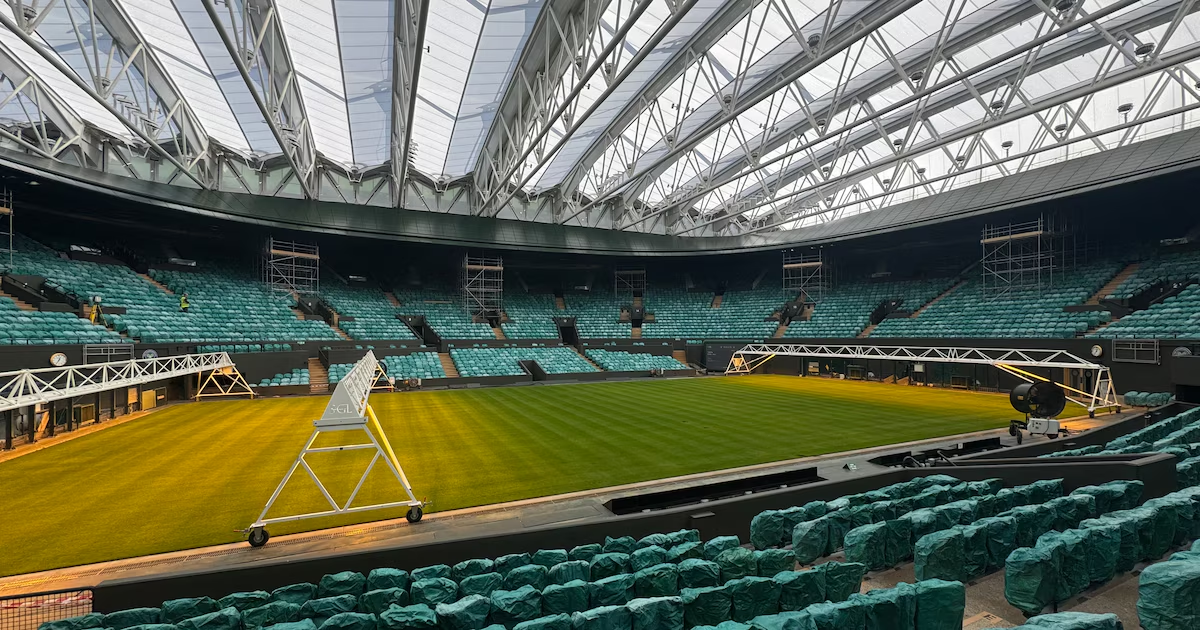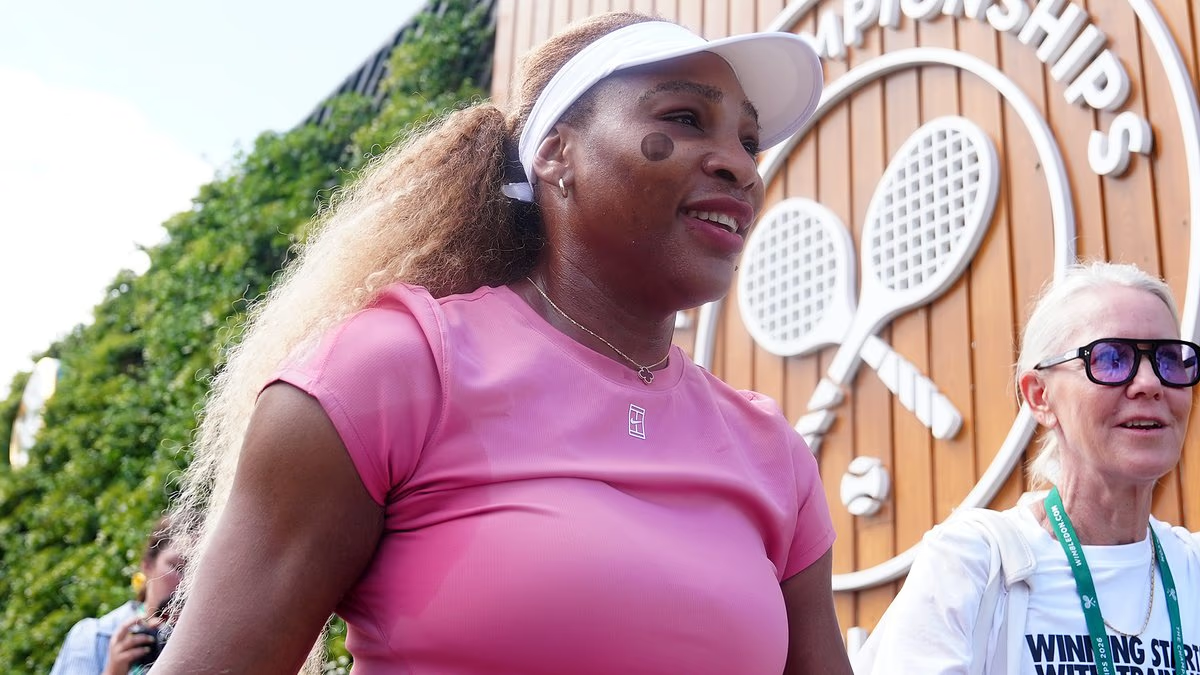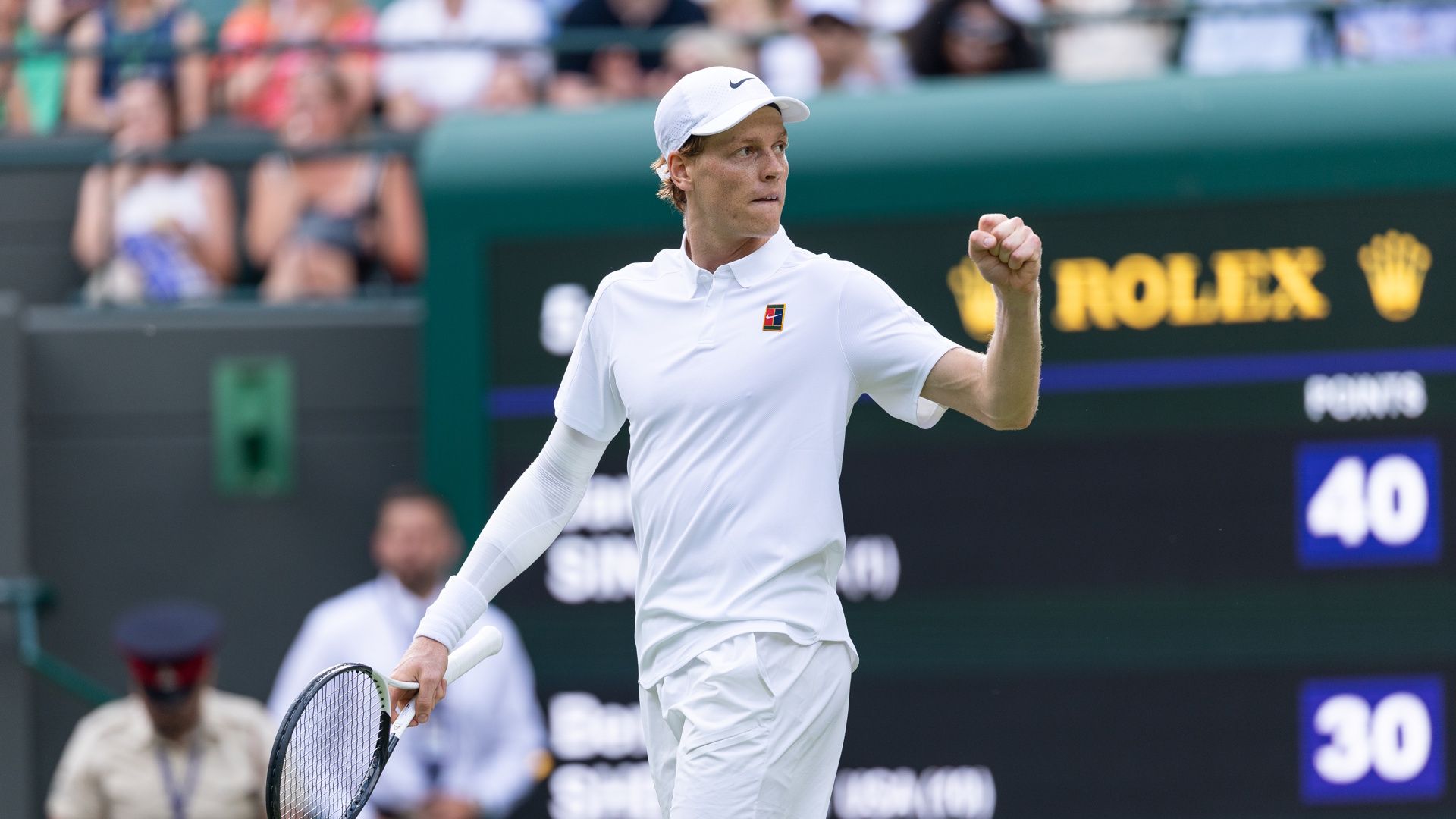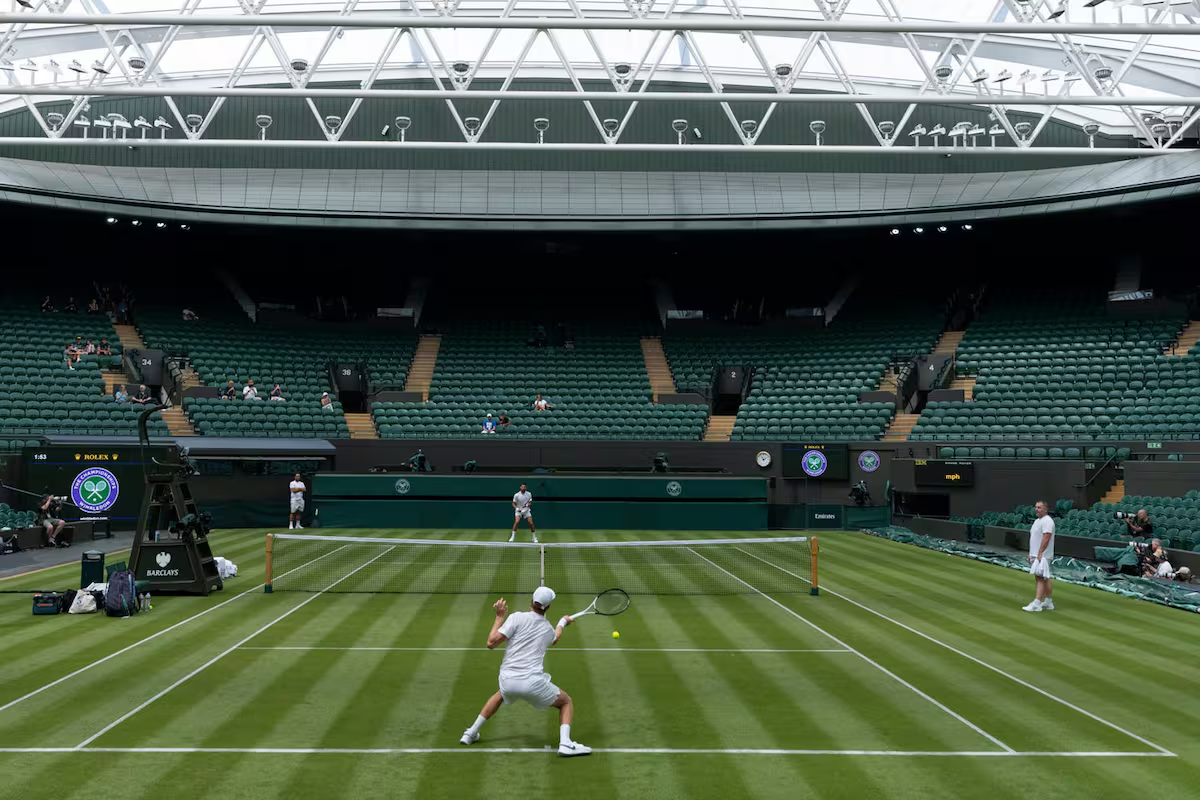
Editor’s note: This feature was originally published in June 2025.THE ALL ENGLAND CLUB, London — As two robins hop on and off the pristine Centre Court grass, Neil Stubley looks relaxed. Five days out from the first tennis racket being swung at Wimbledon, the head of courts and horticulture for the All England Lawn Tennis Club (AELTC) and his team are already in full swing.Managing 88 grass courts across three venues means they have to be. The 18 match courts at Wimbledon are quiet, but to the north west, the 34 courts at the qualifying tournament complex in Roehampton are full of players bidding to make the main draw. Then there are the 16 extra practice courts at AELTC Community Centre in Raynes Park, and the 20 practice courts at Wimbledon itself.Novak Djokovic, the 24-time Grand Slam champion, might get out of a Range Rover shuttle car shortly after 11 a.m. to start gym work before heading out to practice. In 2025, Two-time Grand Slam champion Coco Gauff trained with fellow American Amanda Anisimova, while men’s world No. 1 Jannik Sinner warmed up against Bulgaria’s Grigor Dimitrov. Anisimova would ultimately reach the final; Sinner and Dimitrov would meet again in one of the most shocking matches of the tournament.While the twang of ball on racket soundtracks player preparations for the third Grand Slam of the year, it’s the noise of ladders being unfurled, pressure washers blasting floors clean and an occasional bit of drilling in the distance that stands out. This is the sound of Wimbledon’s green and purple wonderland, getting ready for edition No. 139.Why is Wimbledon still played on grass?Tifo Sports2026 will be Stubley’s 31st tournament. He started as an apprentice, taking over from his predecessor the year before the All England Club hosted the Olympic tennis events at London 2012. He and his team of 18, which grows to 31 during the event, are responsible for “anything that grows” — including weeds. He prefers it when they don’t grow at all.At 9:30 a.m. on a Tuesday in the third week of June, the Centre Court grass has just had its daily cut before some in-house performance checks. World Tennis, formerly the International Tennis Federation, will test it out for compliance.“Every day we test the ball bounce height and the hardness of the surface,” Stubley says.“If they’re getting too hard, we can add a little more water. If they get too soft, we can just hold off on irrigation and let Mother Nature dry it out a little more.“At this stage, we’re ready. Last week, it got its final liquid fertilizer on to give it the right color that we need.”Stubley says the right color is less green than people expect.“Player perception is if it’s green, then it’s greasy,” he says. “You get the green color from nitrogen, but for nitrogen to be used up by the plant, it needs to take water in to break it down, which means there’s more water in the plant and that makes it kind of juicy.”To make it darker and more grippy, the grass gets fertilized with iron. Compliments on its condition are always welcome, but Stubley and his team are OK with the courts not being a topic of conversation.“We always talk about the grass being the canvas and the players paint the picture. If there’s a problem with the canvas, that’s when our work gets highlighted.”The baselines of each court will look dusty by the end of the two weeks, but not much can be done to prevent the churning up of the grass under the weight of elite athletes serving the ball at over 100 miles per hour. The grass itself does not die; two weeks after the tournament, it has all but grown back.Grass is not all that grows at Wimbledon: it is head gardener Martyn Falconer’s job to embed and bloom 28,000 new plants right on cue for the start of each tournament.He and a team of 12 full-time gardeners take care of the 42-acre members’ club, and eight seasonal staff act as support in the run-up to the fortnight. Falconer estimates there are between 14,000 and 15,000 petunias on site, with the bright perennials quintessential to Wimbledon, along with the arbour roses, the ivy that wraps around the outside of Centre Court, and the hydrangeas that have been there for decades.Maintaining the Wimbledon flora is just as important as tending to the grass courts. (Caoimhe O’Neill / The Athletic)“Our ethos is tennis in an English garden,” Falconer, now in his 26th year of service, says. When the tournament begins, the 20 staff on duty clock in at 5 a.m, all with “their own area of responsibility. So they go out watering, deadheading, pruning, weeding — whatever needs doing to make sure each area looks good. Day 14 should look as good as day one.”The 28,000 plants and 170 hanging baskets brought in each year are sold in aid of the Wimbledon Foundation at the end of the fortnight. Any remaining plants are gifted to the local community and charities, and then preparation for next year begins — immediately.It never ends. In winter alone, Falconer and his team plant 10,000 bulbs, which need to bloom for the end of June, every June. To his relief, they have.Andy Chevalier is an actor and writer. But every summer since 2018, he has paused his career in the dramatic arts to become master of tennis balls at Wimbledon. His official title is ball distribution manager, and with 64,500 small, fuzzy yellow spheres to keep track of, Chevalier, his deputy, Esme Gritten and their small team must make sure each one is always where it needs to be.Each morning, at least 2,000 balls are delivered to the practice courts by buggy. On the match courts, the system is even more refined.“We bring the balls down at the start of the day in a cylinder drum,” Chevalier explains.“Each court starts with 21 cans of unopened balls. Throughout the day, as the matches are going on, the ball boys and girls are collecting up the used cans. Every nine games you’ll hear the chair umpire say, ‘New balls please,’ and the ball boys and girls will open two fresh cans. The two cans that have been used will be put into a bag and at the end of the match, they bring that back to my team on the corner of Centre Court.“There’s a constant turnover.”Each box of Slazenger balls contains 24 cans and the team will go through 24 boxes each day. But Chevalier’s most complex job has nothing to do with new balls.“Throughout my day, I’m doing something called ‘ball grading,’ where I’m trying to work out which balls have been used for three games, five games, seven games and nine games.“The nine-game balls get sent down to be sold as souvenirs. But each umpire will have a secret tin. In that tin will be a ball that has been used for three games, one that’s been used for five and one for seven.“I’m judging on the fluffiness, the wear of the logo and how much pressure is left in the ball with a squeeze test. So if a ball is lost during a match, the umpire can go to their 3-5-7 tin, take one of the balls that’s in the current rotation and try to match it with the closest ball. That way, there’s not a brand new ball in the rotation of six when you’re on an eight-game ball.”A line of tennis balls in various states of use ready for the ball grading system. (Caoimhe O’Neill / The Athletic)The AELTC ultimately wants the quiet hum of activity to be replaced by the chatter of thousands of spectators. It wants the qualifying tournament in Roehampton to be staged on site, in line with the other three Grand Slams.That requires more space and more courts, and plans for the club to expand into Wimbledon Park, adding 39 grass courts and an 8,000-capacity stadium, were approved by the Greater London Authority (GLA) in September last year.For the next few years at least, this week of earnest but calm preparation will continue.“All of this is really similar to putting on a stage show,” Chevalier, cherishing the part he plays, says.“You’ve got all these different departments coming together for this amazing live event, where you never know what is going to happen. It is world-class live theatre.”With TV cameras being wheeled into position, scoreboards being plugged in and the giant screens overlooking ‘Henman Hill’ being switched on, in a matter of days, the curtain will be raised on this theatre production with its supporting cast in the hundreds.For now, all is quiet.
How Wimbledon gets its grass courts, flowers and tennis balls ready for Grand Slam action
While Centre Court is quiet, a team prepares for two weeks of sporting theater. In the future, this time will be taken over by fans.
1,449 words~7 min read