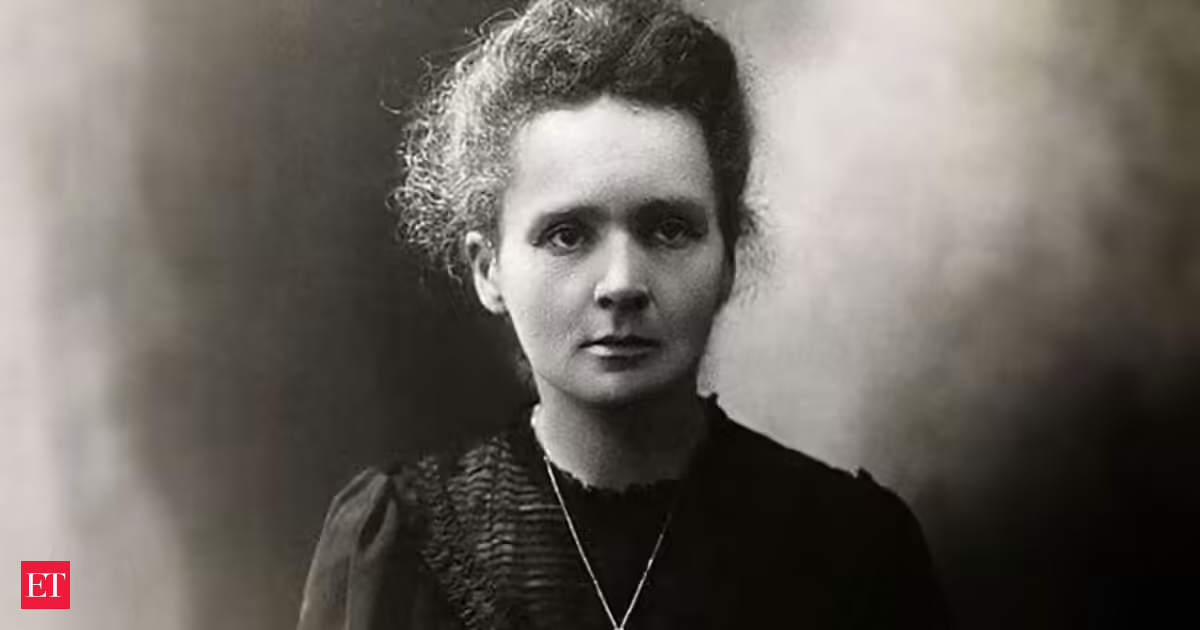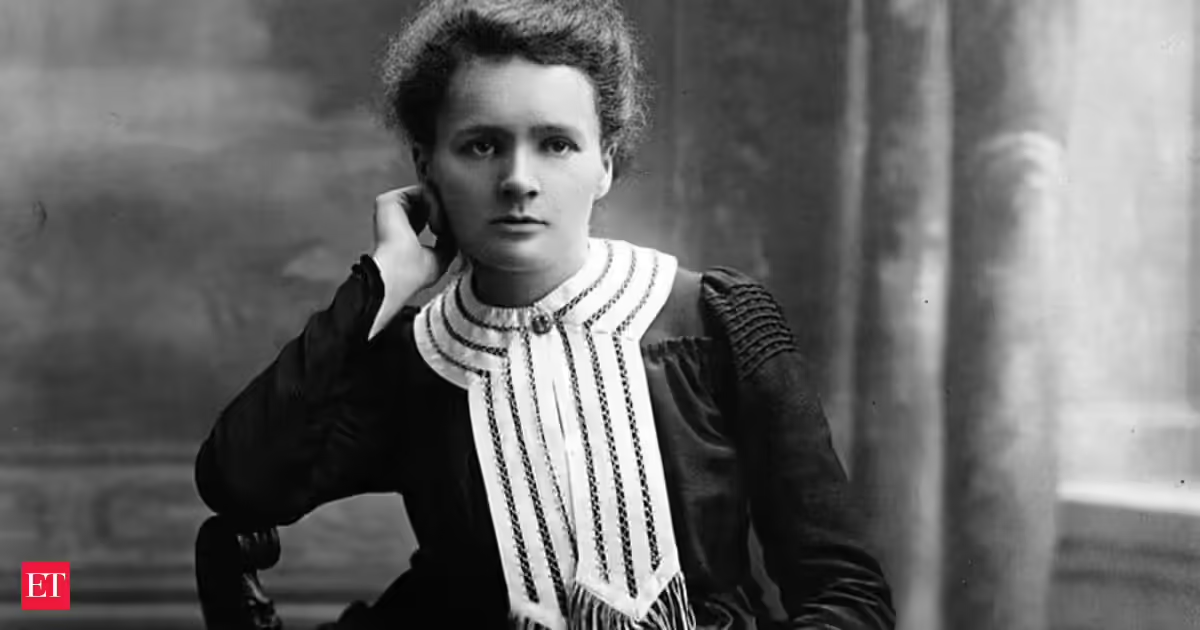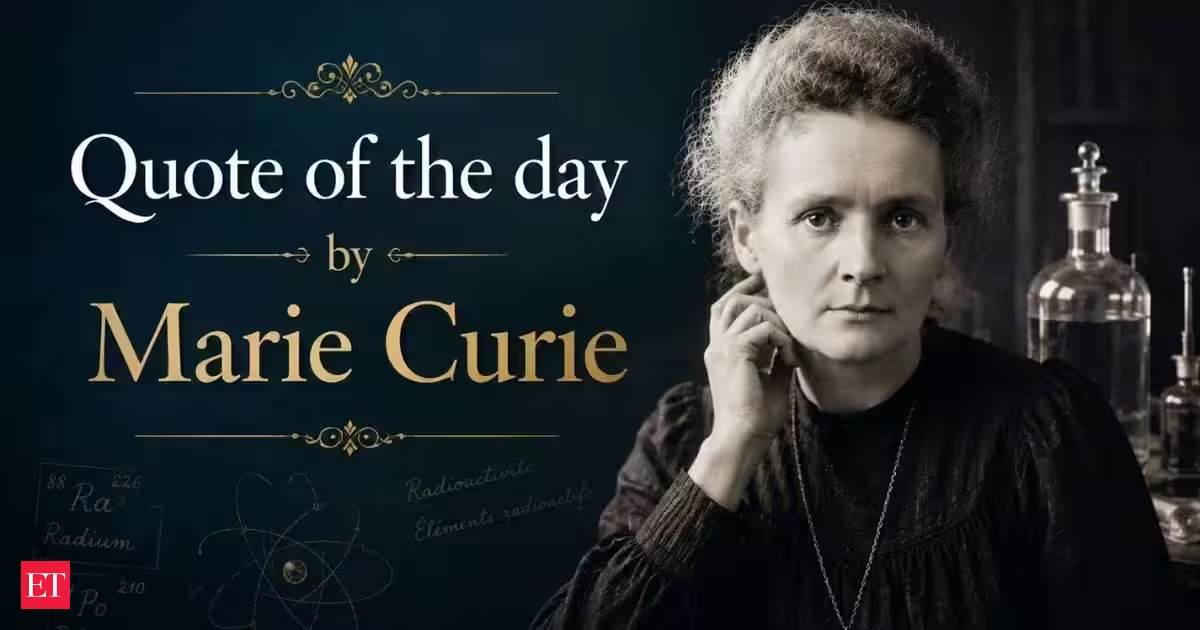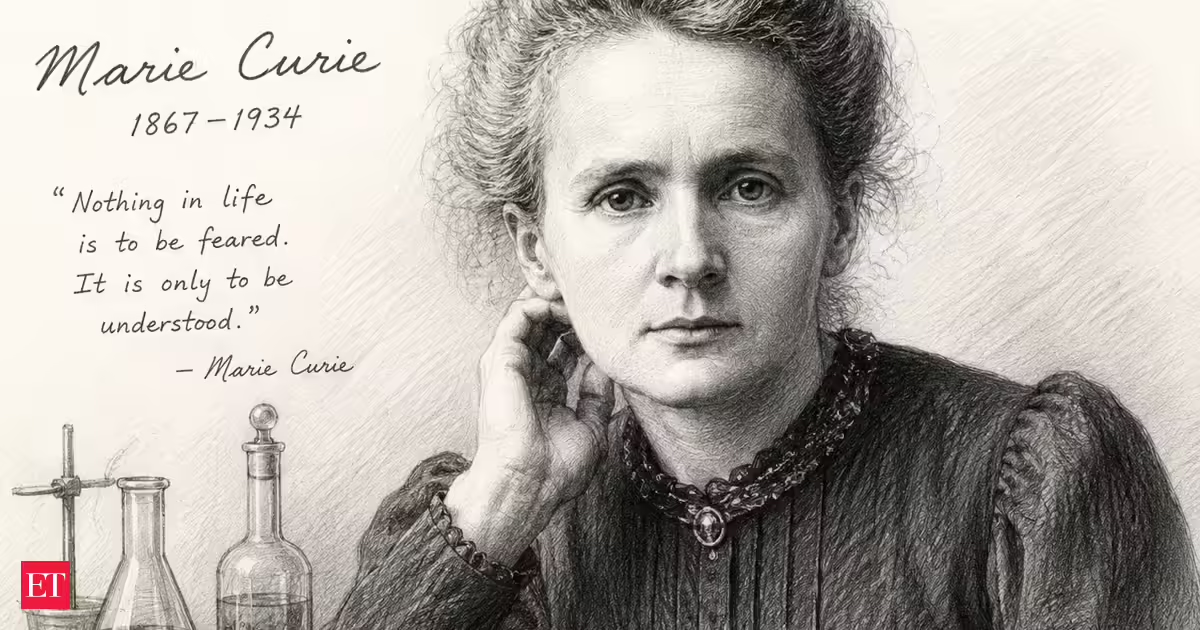
Marie Curie is remembered as one of the most important scientists in history. Her groundbreaking discoveries helped transform science and medicine and opened new doors for future generations of researchers. She became known not only for her intelligence and dedication but also for overcoming barriers at a time when women had limited opportunities in higher education and scientific fields. Decades after her work changed the world, her name continues to inspire students, scientists, and people who admire determination and curiosity. Marie Curie was born as Maria Sklodowska in Warsaw, Poland, in 1867. During her early years, educational opportunities for women were limited, but she remained determined to pursue learning. Later, she moved to Paris, France, where she studied physics and mathematics at the University of Paris.Marie's life changed when she met fellow scientist Pierre Curie. The two developed a strong partnership and worked together on scientific research. Their studies focused on unusual energy coming from certain materials, a phenomenon later known as radioactivity. Marie and Pierre discovered two important chemical elements: polonium, named after her home country Poland, and radium. Their discoveries helped scientists better understand atomic science and opened new possibilities in research and medicine. Her achievements brought worldwide recognition. In 1903, Marie Curie shared the Nobel Prize in Physics with Pierre Curie and physicist Henri Becquerel for their work on radioactivity. She later made history again by winning the Nobel Prize in Chemistry in 1911 for her continued research and discoveries. She became the first woman to receive a Nobel Prize and remains the first person ever to win Nobel Prizes in two different scientific fields.Quote of the dayLife lesson quote - "I was taught that the way of progress is neither swift nor easy," is widely attributed to Nobel laureate Marie Curie.You Might Also Like:Meaning of the quoteMarie Curie’s quote highlights an important truth about success and personal growth. The quote reminds people that meaningful achievements usually take time, effort, and patience. Progress rarely happens overnight, and reaching important goals often involves challenges along the way. The message also suggests that setbacks and difficulties are a normal part of the journey. Many people expect quick results and become discouraged when success does not come immediately. However, real progress often happens through small steps taken consistently over time. Marie Curie herself experienced many obstacles during her life and career, yet she continued working toward her goals with determination and persistence. Her words encourage people to keep moving forward even when the path feels difficult.During World War I, Curie also helped develop mobile X-ray units that assisted doctors in treating injured soldiers. Her work allowed medical teams to identify injuries more quickly and improve treatment.You Might Also Like:Her life story continues to show that curiosity, persistence, and hard work can create discoveries that change the world. Even many years later, Marie Curie's influence can still be seen in science, medicine, and education.
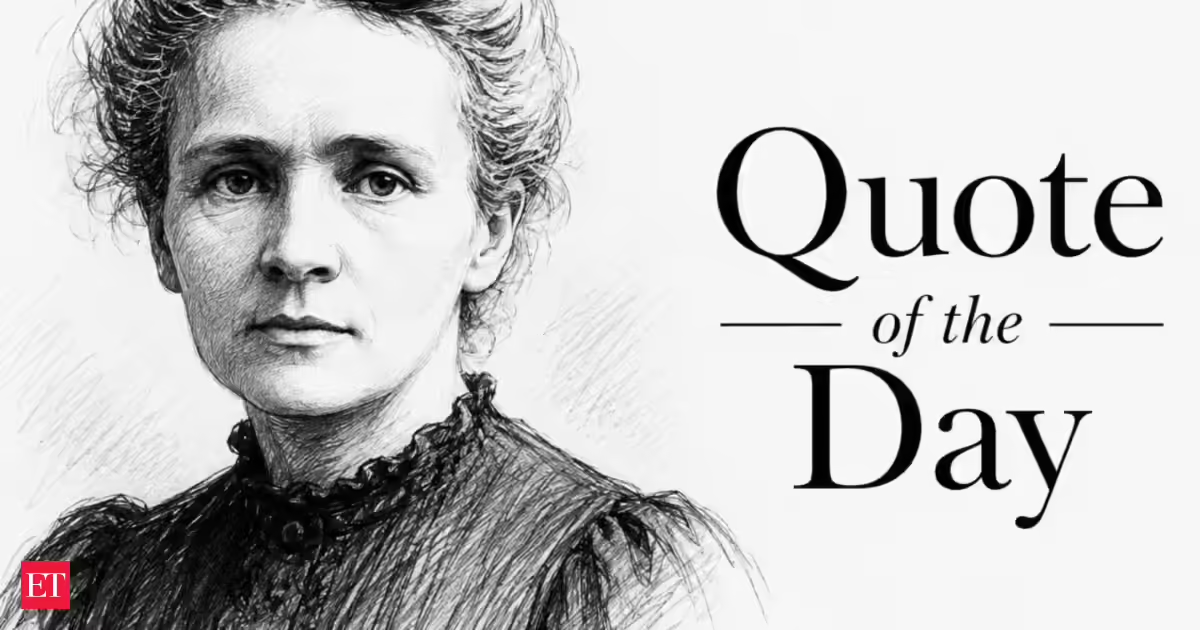
Life lesson quote by Marie Curie: 'I was taught that the way of progress is neither swift nor...' - Nobel laureate's powerful message on perseverance
Life lesson quote by Marie Curie: Marie Curie, a pioneering scientist born in Poland, shattered barriers for women in science. Her relentless pursuit of knowledge led to groundbreaking discoveries in radioactivity, including the elements polonium and radium. Curie's exceptional achievements earned her two Nobel Prizes, a feat unmatched in two different scientific fields. Her legacy continues to inspire, proving that dedication and curiosity can indeed change the world.
483 words~2 min read