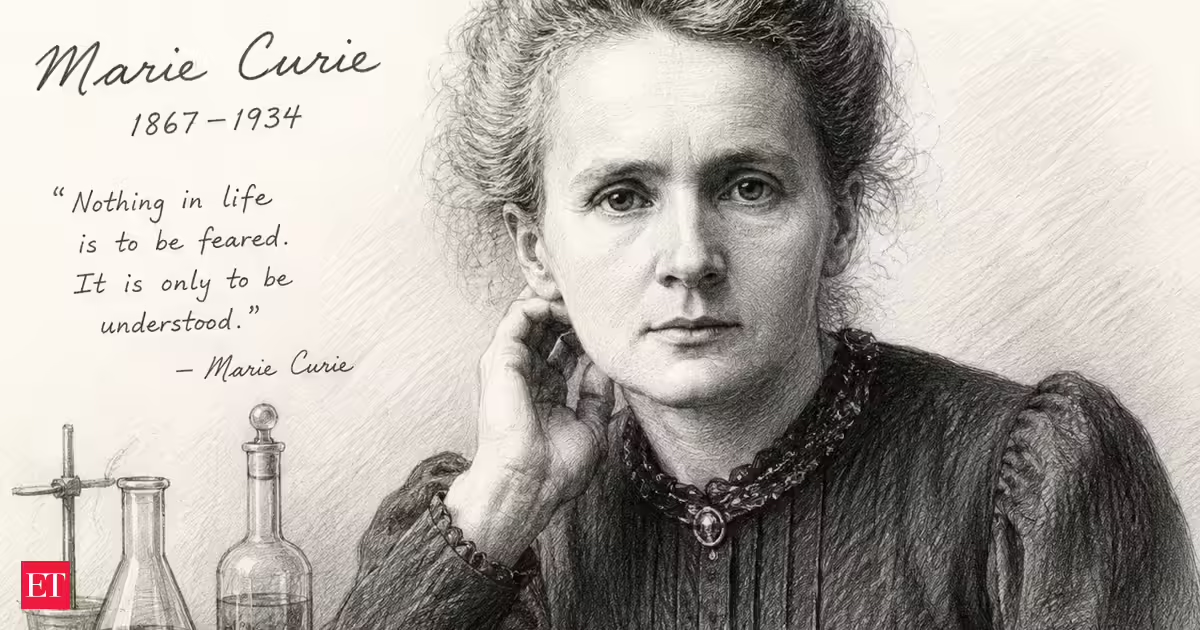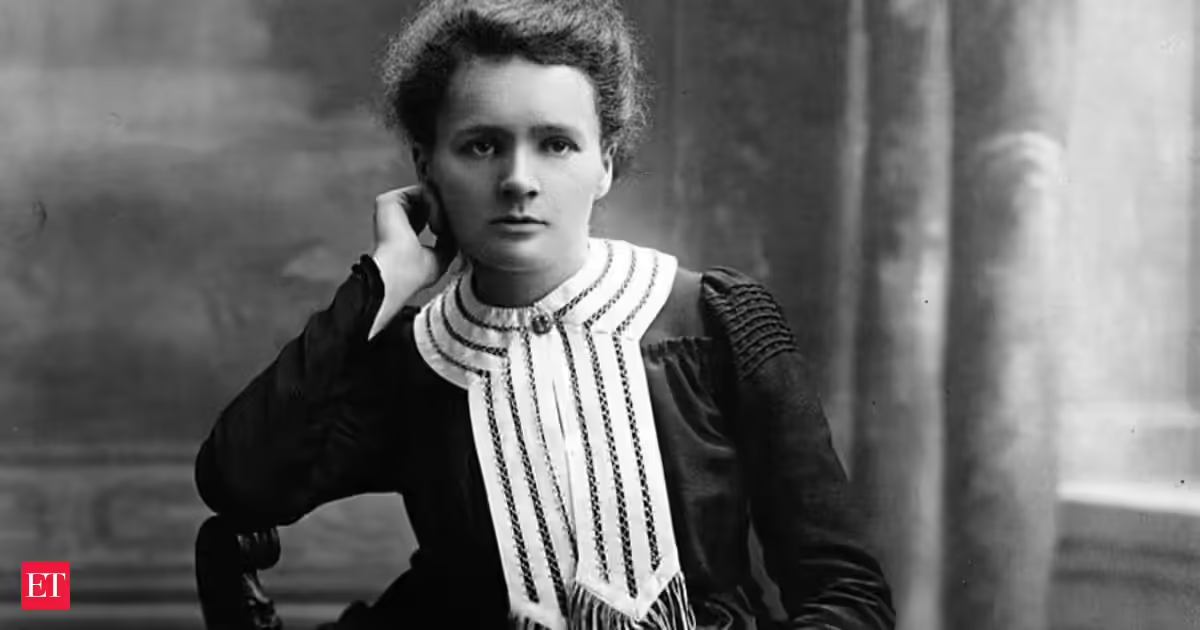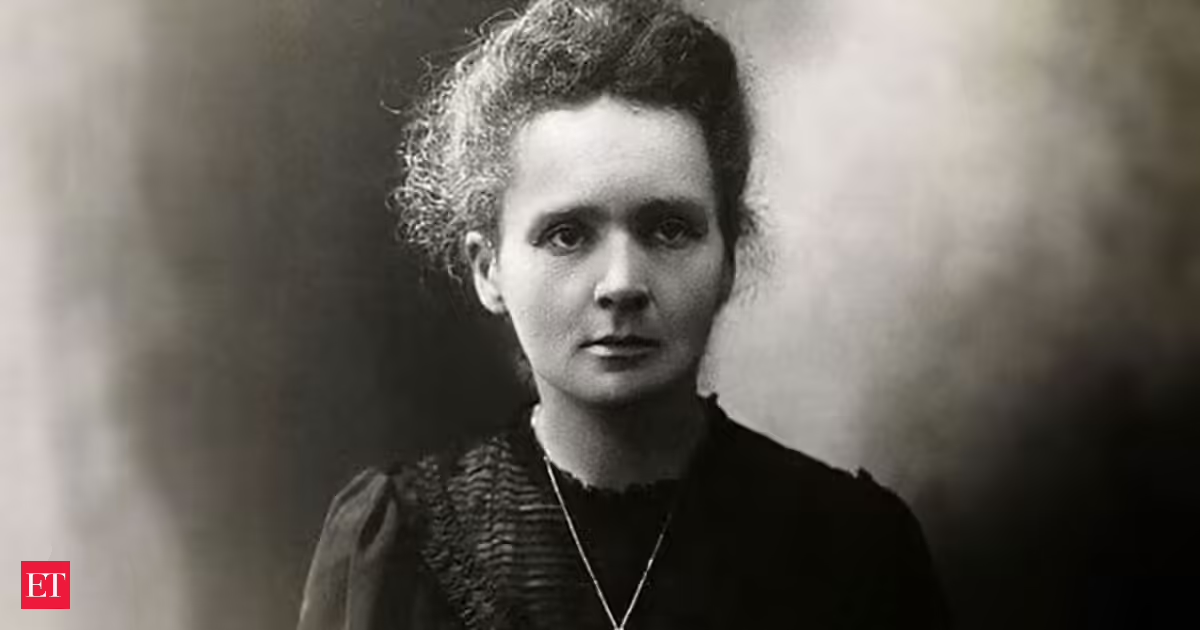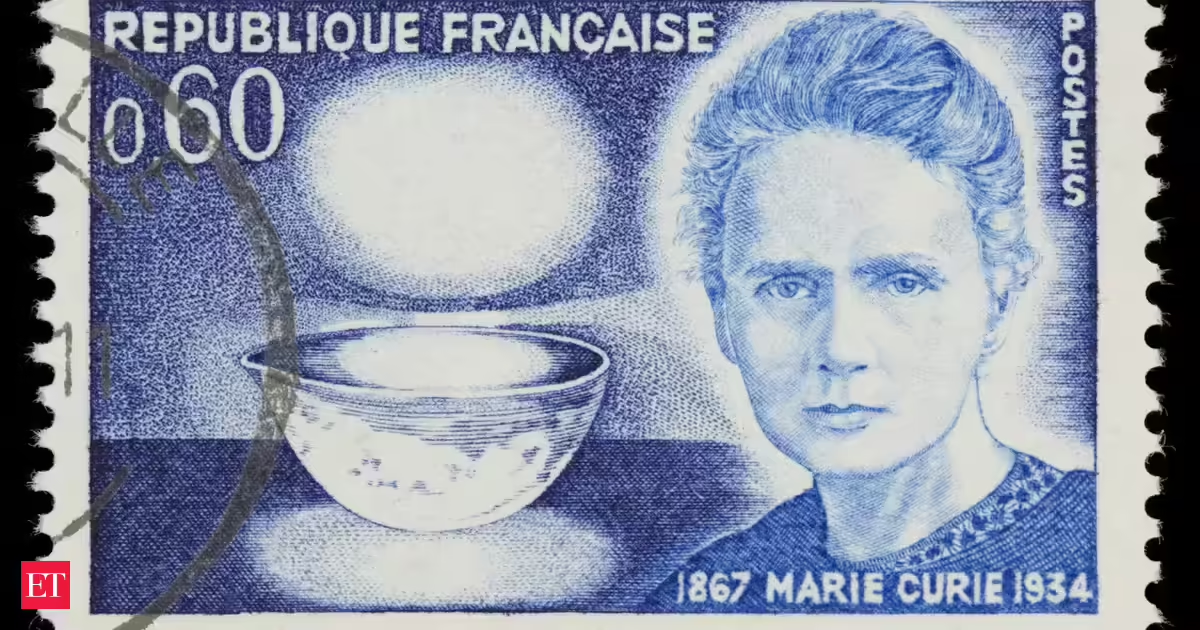
Marie Curie’s motivational quote, "I was taught the way of progress was neither swift nor easy," carries a powerful message about success and personal growth. The quote reminds us that meaningful achievements do not happen overnight. Reaching important goals often takes time, patience, and hard work. Marie understood this better than most people. She faced many struggles in her life, including financial problems, limited opportunities for women, and difficult scientific work. Even with these challenges, she kept moving forward and never gave up on learning or discovering new things. The quote also teaches that progress is rarely a straight path. There can be setbacks, failures, and difficult moments along the way. However, these experiences can help people become stronger and wiser. Marie Curie changed science forever, but her journey started with big challenges and even bigger dreams. She became one of the most important scientists in history and proved that determination and curiosity can change the world. Born in Warsaw, Poland, in 1867, Marie Curie grew up in a family that valued education. However, opportunities for women were very limited at the time. She loved learning and wanted to study science, but it was difficult for women to attend universities. She worked hard, saved money, and eventually moved to Paris to continue her education.Life in Paris was not easy. Marie lived in small rooms and often struggled with money while studying. But she stayed focused on her goals. She attended the University of Paris and quickly became known for her intelligence and dedication. Marie later met Pierre Curie, a scientist who shared her passion for research. The two married and worked together on scientific studies. Their work led to a major discovery that would change science forever. The couple studied unusual materials that released energy naturally. Their research led to the discovery of two new elements: polonium, named after Marie’s home country of Poland, and radium. Marie also helped develop the idea of radioactivity, a term she created to describe the energy released by certain materials.You Might Also Like:Her discoveries opened new doors in science and medicine. Radiation later became useful in treating diseases, especially cancer. During World War I, Marie also helped bring mobile X-ray machines, called a 'Little Curie', to soldiers on the battlefield, allowing doctors to quickly diagnose injuries.Marie Curie made history when she became the first woman to win a Nobel Prize. She later became the first person ever to win two Nobel Prizes in different scientific fields. Even today, her work continues to influence medicine, physics, and scientific research around the world. Schools, laboratories, and research centers still honor her legacy.Marie Curie’s story is about more than science. It is about persistence, courage, and believing in possibilities. She faced obstacles, worked through difficult times, and never stopped learning. Her life continues to inspire people who dream of making a difference in the world.You Might Also Like:
Friday Motivation by Marie Curie: 'I was taught the way of progress was neither swift nor...' - Nobel laureate's timeless lesson on why success takes time
Marie Curie's journey to scientific breakthroughs was neither swift nor easy, marked by financial struggles and limited opportunities for women. Despite facing numerous challenges, her unwavering determination and curiosity led to the discovery of polonium and radium, and the development of radioactivity. Curie's legacy continues to inspire, demonstrating that persistence and a belief in possibilities can profoundly change the world.
481 words~2 min read