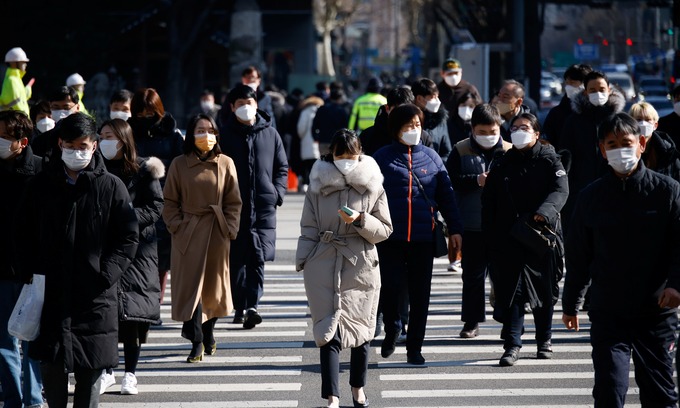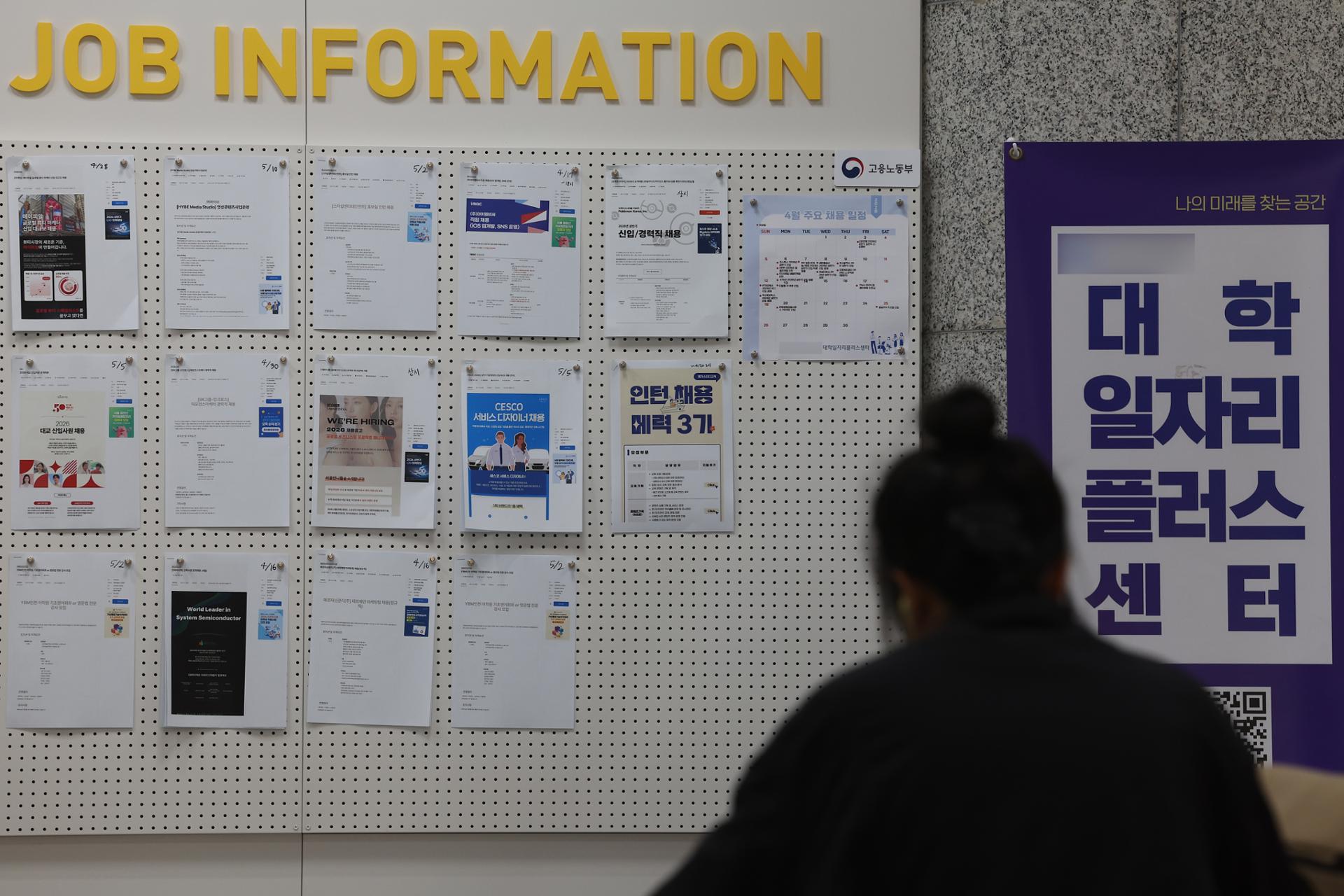
Prestige is losing ground as some young Koreans seek autonomy, peace of mind and work that fits who they are (Getty Image) For generations, South Korea offered young people a clear bargain: study hard, enter a prestigious university, land a secure job at a major conglomerate and climb the corporate ladder.More young Koreans are now questioning whether that bargain still pays off — in money, autonomy, mental well-being and the ability to build a life that feels livable.When Lee Seung-jun graduated from one of South Korea’s top engineering schools and landed a job at Samsung Electronics, he appeared to have achieved what many young Koreans spend years striving for.The 29-year-old, a graduate of Hanyang University’s College of Engineering, joined Samsung’s semiconductor division with an annual starting salary of around 80 million won ($52,000), including performance bonuses worth 30 million won and generous employee benefits.Yet six years later, he walked away. Today, Lee drives a city bus in his hometown of Daegu.“My salary has gone down somewhat,” he said during a recent television appearance on “You Quiz.” “But I’m much happier now.”Lee recalled feeling suffocated inside the office. Frequent management changes, uncertainty over long-term job security and a rigid workplace culture gradually outweighed the financial rewards. The final push came after hearing discriminatory remarks about his hometown from supervisors.“Leaving Samsung felt like becoming a failure in society,” he admitted. “But I also felt that if I stayed, I wouldn’t survive.”His story has resonated with many young Koreans not because it is extraordinary, but because it reflects a broader shift among a generation increasingly questioning South Korea’s traditional definition of success.The shift is taking place in one of the world’s most highly educated societies. According to the OECD, South Korea has one of the highest rates of tertiary education among member countries, with roughly three-quarters of high school graduates continuing to university.Yet the economic payoff from higher education has become less certain, with many university graduates working in jobs unrelated to their field of study or earning relatively low wages.The changing labor market has also reshaped young people’s priorities. In a survey by the Korea Chamber of Commerce and Industry, work-life balance ranked as the most important factor in choosing a job, while 82.6 percent of job seekers said they would consider working for small and medium-sized enterprises if working conditions met their expectations.At the same time, faith in the traditional success ladder appears to be fading. OECD analysis shows that younger Koreans are significantly less likely than older generations to believe hard work alone leads to success, reflecting declining confidence in upward social mobility.For Han Ga-young, 30, leaving what many considered a prestigious career was less about rejecting success than realizing that the life she had imagined did not fit who she was.Growing up, she believed attending a top university was necessary to become a journalist, the profession she had dreamed of since childhood.“Looking back, I sometimes wonder whether I genuinely chose that path or simply didn’t know there were other options,” said Han, whose name has been changed at her request.She eventually became one of the company’s youngest reporters, following precisely the path she had envisioned. But after entering the profession, she realized the work demanded a kind of social energy and constant relationship-building that did not suit her.“The biggest reason I quit was simple: I no longer wanted to be a journalist,” she said. “Prestige meant nothing to me.”During the COVID-19 pandemic, when remote work became more common, Han began to understand what she valued most.“While many people found working from home isolating, I felt liberated,” she said. “Having an empty calendar, not needing to meet people every day, made me realize the kind of life I actually wanted.”Today she works remotely, has volunteered overseas and has embraced a lifestyle that prioritizes flexibility over conventional career advancement.She defines happiness with a sentence she once encountered in a book: “Happiness is not feeling like I have to become someone else in order to live my life.”For Choi Jae-in, 32, the realization came more gradually.Unlike Han, Choi still believes South Korea’s conventional success route remains the safest path for many people. She spent years preparing for university, internships and recruitment exams because she believed that was the correct path.After joining a large corporation, however, she found that adapting to corporate life required something different from academic achievement.“The limit of my effort ended with getting the job,” she said. “What came afterward wasn’t something I could fix simply by trying harder.”Choi later became a licensed real estate agent before deciding the work also did not suit her personality, largely because of the constant interaction with clients.Now she is studying to become a train operator, drawn to work she hopes will be quieter and more independent.“Happiness, for me, is when nothing happens,” she said with a laugh. “No difficult customers, no office politics. Just being able to focus quietly on my work.”Her career path may appear unconventional, but she says it reflects a better understanding of herself rather than repeated failure.“I’ve accepted that corporate life simply isn’t for me,” she said. Choi Jae-in decided to become a train operator and began studying at the age of 32. The picture shows the book she is studying on Railway Acts. (Choi) Experts say the stories reflect a broader shift in how younger generations define success.“In previous generations, success was largely measured through external indicators such as educational credentials, employer prestige and income because those markers generally translated into greater stability and upward mobility,” Yoon Yin-jin, a sociology professor at Korea University, said.“But younger Koreans entered adulthood during a period of slower economic growth, intense competition and weakening social mobility. Many no longer believe that following the traditional path necessarily leads to a happier or more secure life.”Yoon added that younger workers increasingly evaluate careers based on autonomy, psychological well-being and whether a job fits their personality, rather than solely on salary or social status.“This is not a rejection of hard work,” Yoon said. “Rather, it reflects a shift from pursuing socially recognized success to pursuing personally sustainable lives.”That does not mean elite universities or large corporations have lost their appeal. They remain among the country’s most competitive destinations for students and job seekers.But increasingly, reaching those milestones is no longer seen as the end of the journey.For some, success means driving a city bus rather than designing semiconductors. For others, it means working quietly from home or studying for another career that better matches who they are.“As South Korea’s younger generation rewrites the country’s long-held success formula, fulfillment is becoming less about climbing society’s predetermined ladder and more about deciding where to place it in the first place,” Yoon added.
Why are more young Koreans walking away from elite careers?
For generations, South Korea offered young people a clear bargain: study hard, enter a prestigious university, land a secure job at a major conglomerate and cli
1,116 words~5 min read