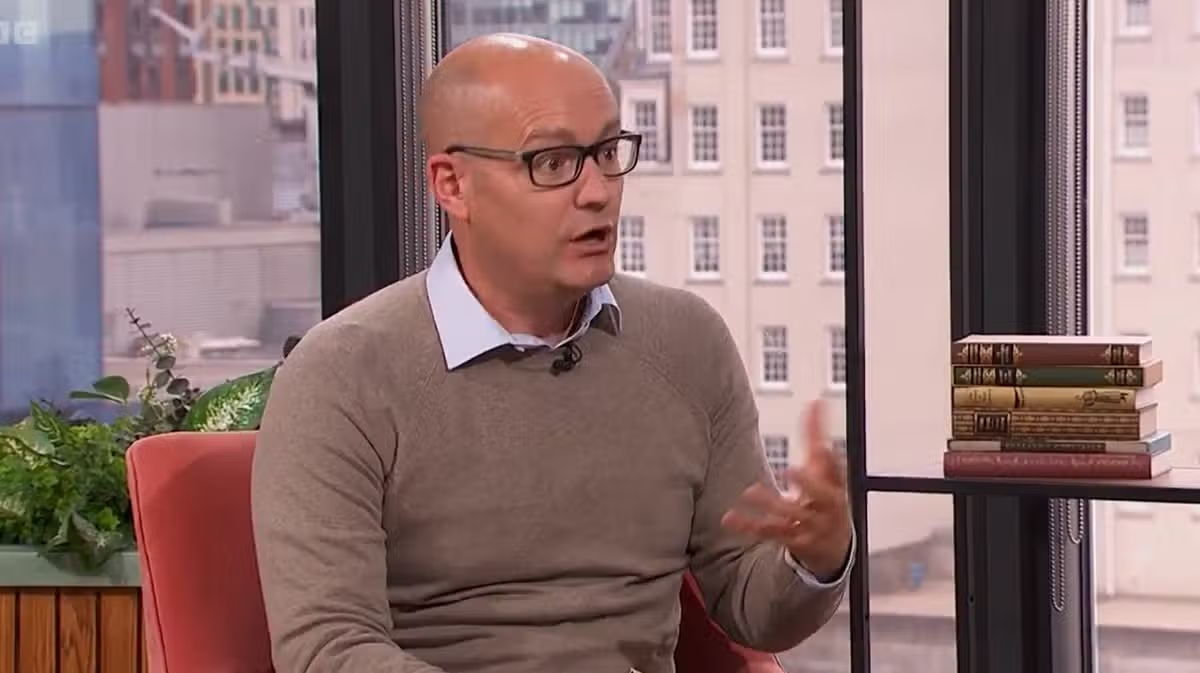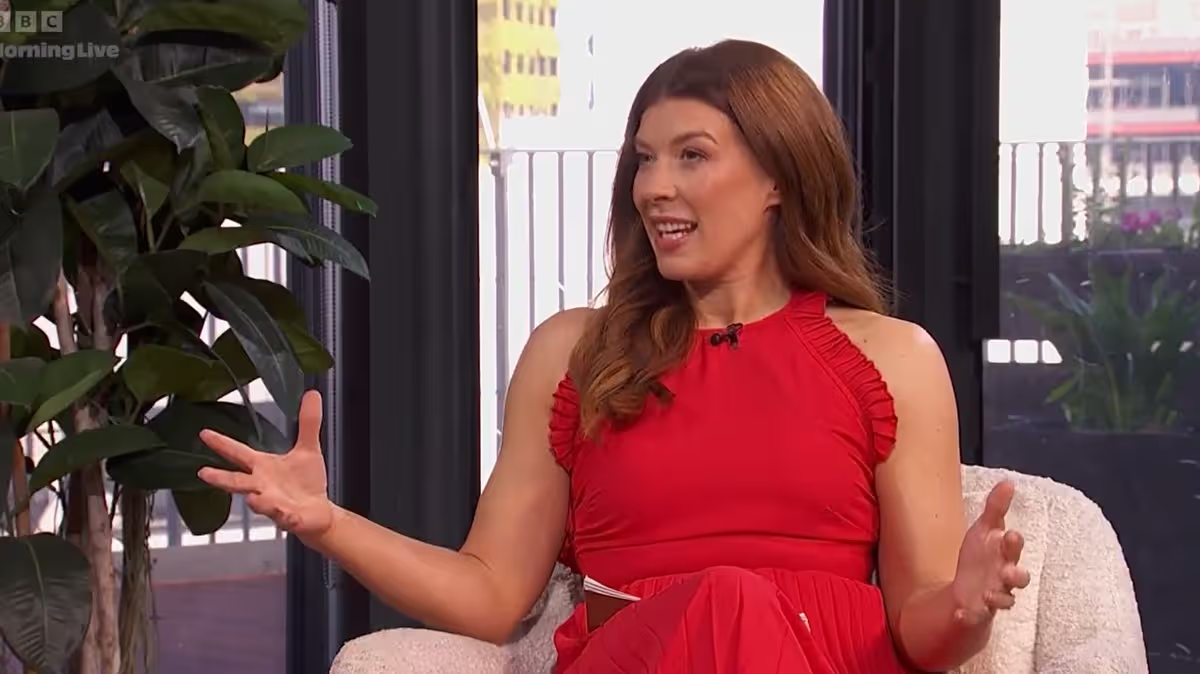
People buying items online from places like Apple, Dyson, Currys, IKEA, Very, Booking.com will change, says BBC expert07:07, 25 Jun 2026Major new rules are coming in within weeks which could impact anyone buying from major online retailers like ASOS, boohoo, Gymshark, H&M, Nike, Selfridges, and Charlotte Tilbury. On BBC Morning Live personal finance expert Laura Pomfret explained that from July 15 the laws will be in place - meaning changes for customers at the checkouts.Buy now, pay later customers (BNPL) will have clearer information and must undergo proportionate affordability checks under stronger protections coming into force from July, the City regulator has said. The sector will come under the Financial Conduct Authority’s (FCA) regulation from July 15 2026, and lenders will need to be authorised by the regulator to provide BNPL products.BNPL firms will also be subject to the Consumer Duty, which the FCA oversees. Klarna, Clearpay, PayPal and Zilch are the biggest BNPL providers in the UK.Other retailers using the services include Apple, Dyson, Currys, IKEA, Very, Booking.com, Trainline, and Cult Beauty. Ms Pomfret said there had been a massive expansion in the last few years: “The growth has been massive. £60 million was spent using buy now, pay later in 2017. In 2024 that was £13 billion. So it just shows how much people are using this product and using it to kind of cash flow everyday purchases.And according to the financial conduct authorities financial lives survey in 2024, one in five UK consumers were using it. That’s 10.9 million adults who used it in the 12 months up to that survey. But the main issue with this growth is that it has outpaced the protections that consumers need. When they are using a product like this, and so from the 15th of July next month, by now, pay later is going to be regulated fully and authorised by the FCA.”She said some of the problems arose from people using the service, without even realising they’re getting into debt. She explained: “So, they see it in the checkout. It’s just a payment method. There are lots of, you know, fancy logos and brands that you’re aware of. So, you use that as a payment option, and you’re just spreading the payment out. You don’t actually realise you’re borrowing to pay for that item.”“Sometimes consumers can build up multiple buy now, pay later agreements. This is called like loan stacking. So, you may use one provider on one website and a different provider on a different website, and you’re not conscious that you’re building up debt.”Affordability checks have not been universal, she said, so people could get into debt they were not able to afford. People also complained that the repayment rates weren’t clear, and also that the timings of when the money needed to come back.Content cannot be displayed without consentBNPL options often appear at online checkouts and they enable people to spread the cost of purchases, which for some people, could make their payments easier to manage. But the products have been controversial, with concerns that some people could be overstretching themselves financially and making borrowing problems worse.The FCA said that, under its supervision, consumers should receive clear, upfront details about their agreement, including when payments will be due, amounts, and what happens if they miss a payment. Lenders must also carry out proportionate checks to make sure customers can afford to repay what they borrow before offering BNPL.BNPL firms will also need to offer support to customers in financial difficulty, and, where appropriate, direct them to free debt advice. If something goes wrong, consumers will also be able to complain to the Financial Ombudsman Service (FOS).Ms Pomfret said some people might suddenly find they can’t pay in that way. She said: “ There will be extra checks and balances. And so, for someone that uses it a lot, you may suddenly find you maybe refused it. You may suddenly find that there are extra steps in that process. For people on tight budgets, it is going to make sure that you can, or it’s going to do its best to ensure that you can afford it.“And so if you are stacking different buy methods, you may find you get refused on one. You may not find it as easy to use as a payment option at checkout. But for confident occasional users, you might use it for one-off big purchases. You may not see any difference because if it is a payment method you use and if you can afford it, it’s perfectly fine to use and you’re just going to, you know, it’ll feel like a regular a regular purchase compared to other people.”Sarah Pritchard, deputy chief executive at the FCA, said: “We want the buy now, pay later sector to thrive – it provides an important source of credit to many – and we will continue to support firms who want to develop innovative new products.“But crucially, no-one should be lent to if they’re unable to repay because that could worsen their financial situation. Now Parliament has given us the powers, we’re putting in place proportionate protections for the 11 million people who use it.”Rocio Concha, Which? Director of Policy and Advocacy, said: “Buy now, pay later has become a popular payment method for many consumers – especially for those managing tighter budgets.“However, because it has so far been unregulated, consumers paying this way haven’t been made sufficiently aware of the risks attached with this form of credit, such as the late fees which may apply and the potential of getting into debt.“Which? has campaigned for years for BNPL to be regulated and clearer information, proper affordability checks and access to redress when things go wrong should give shoppers proper protections should they choose this payment method.”A spokesperson at BNPL provider Clearpay said: “We welcome regulation, which will establish a consistent operating environment and clear compliance standards for all providers.”A Klarna spokesperson said: “These new rules will raise standards across the market.”Article continues belowAnd a spokesperson for banking and finance body UK Finance said: “It’s right that the product is regulated and our members welcome the application of more flexible regulation through the FCA.”
Rule change in weeks for ASOS, boohoo, Gymshark, H&M, Nike customers
People buying items online from places like Apple, Dyson, Currys, IKEA, Very, Booking.com will change, says BBC expert
1,030 words~5 min read