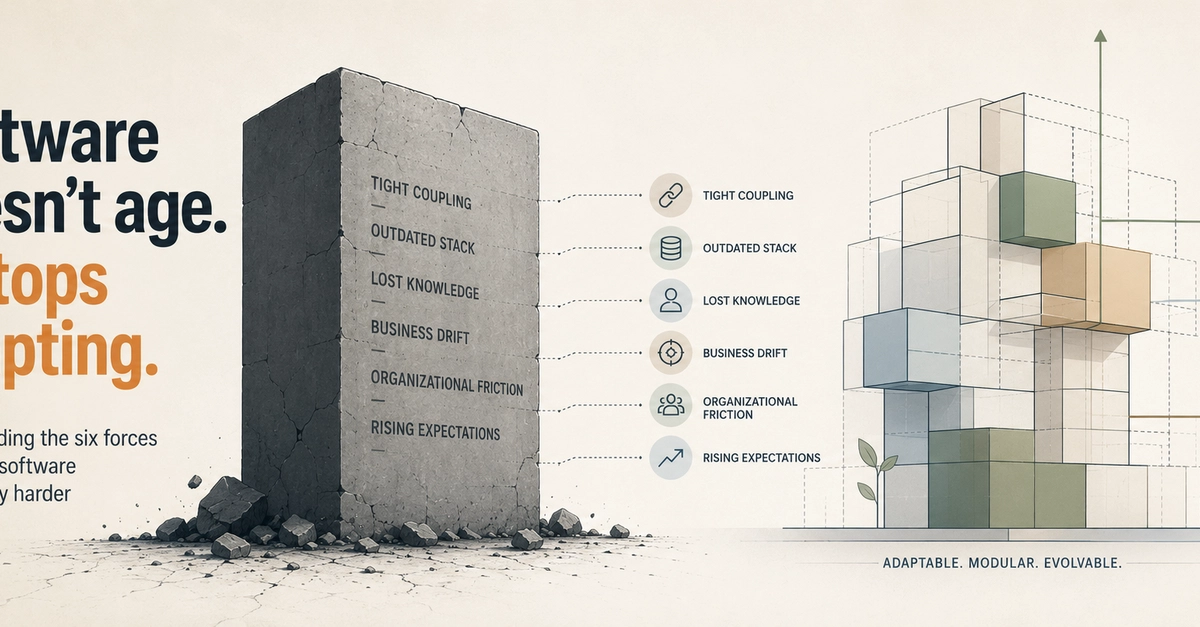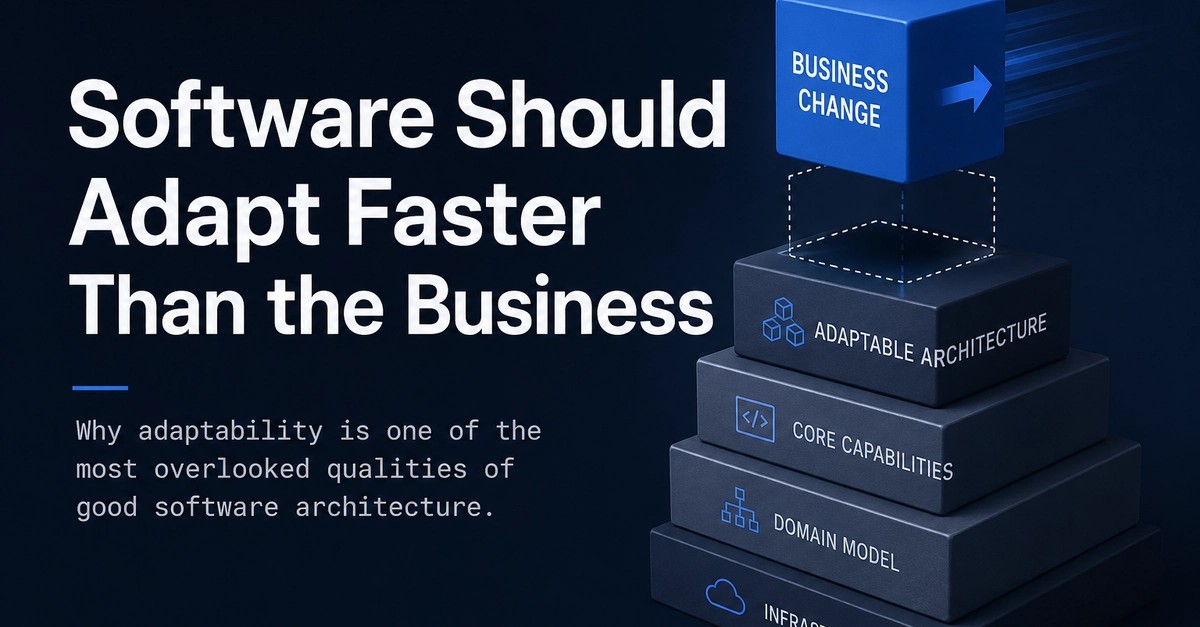
Why adaptability is one of the most overlooked qualities of good software architecture
One of the easiest ways to recognise software that was designed around today's requirements is to watch what happens when the business changes.
A new pricing model requires changes across multiple services. Supporting customers in another country suddenly means rewriting validation logic, modifying database schemas and introducing exceptions throughout the application. A simple organisational change affects permissions, workflows and reporting because those assumptions have become deeply embedded within the codebase. None of these changes are particularly unusual, yet they often demand far more engineering effort than anyone expected.
The problem is rarely that the business is changing too quickly. Businesses are expected to evolve as they grow, respond to customers and adapt to new markets. The challenge is that many software systems are designed around the way the organisation operates today rather than around the capabilities it will continue needing tomorrow. Processes become hardcoded, workflows reflect temporary organisational structures and business rules gradually spread throughout the application until even small operational changes require significant redevelopment.