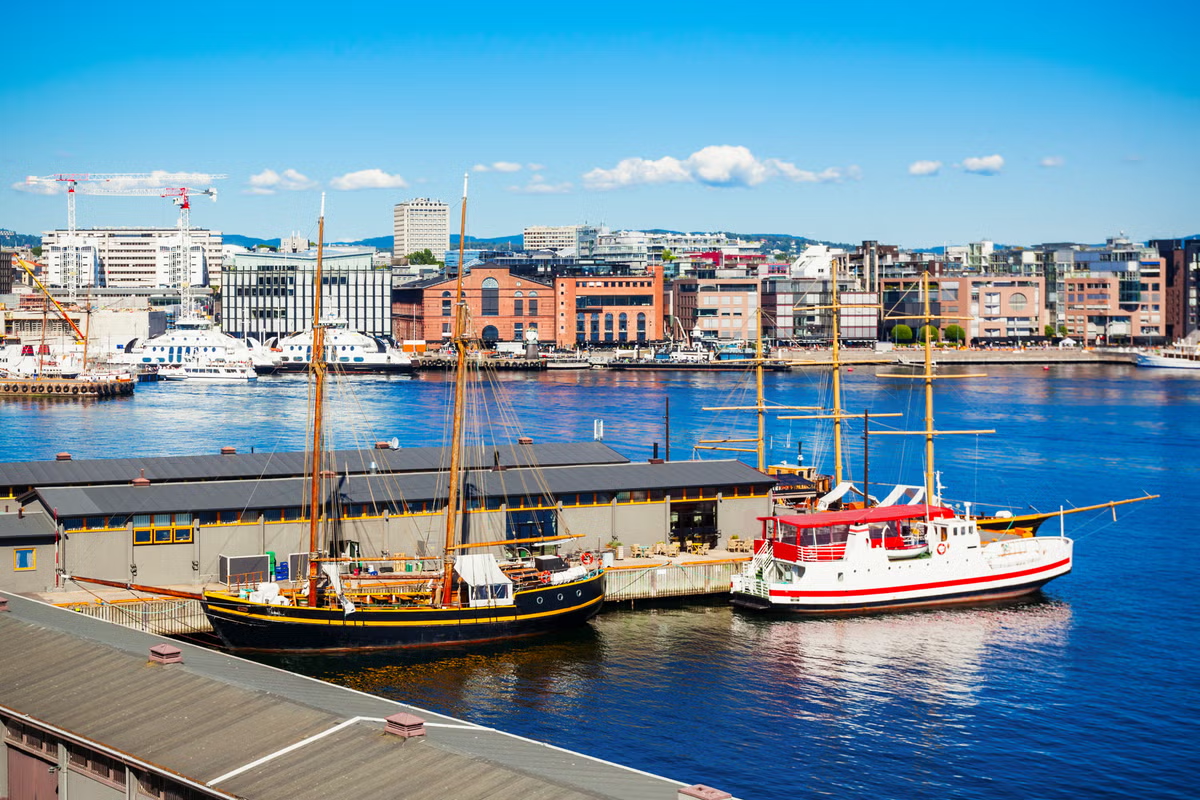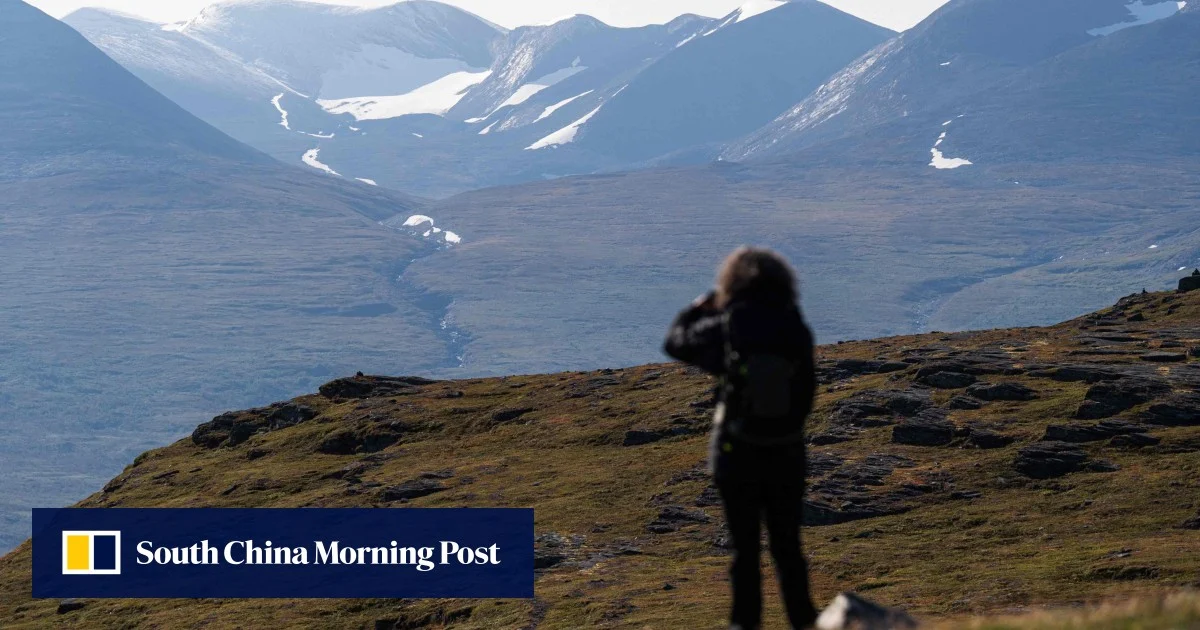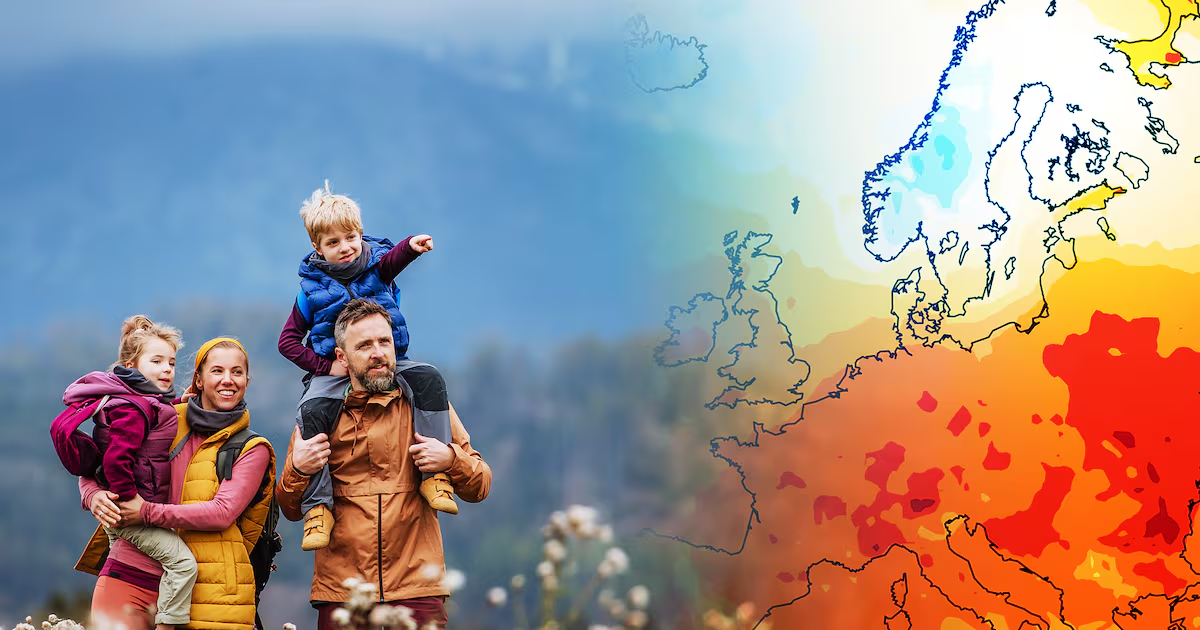
Some Irish holidaymakers are looking to cooler destinations in Europe to escape intense heatwavesIllustration: Paul Scott Thu Jun 25 2026 - 06:00 • 4 MIN READCatherine Clancy, a primary schoolteacher from Carrigaline, Co Cork, has long been an advocate for a “coolcation”.“I wouldn’t like anything above 30 degrees anyway. I suppose since Covid people are more aware of it, but now I just would not go to the south of France or the Mediterranean for July or August,” Clancy says.As a teacher, she cannot choose when she goes on holidays, but she can choose where she goes, and this year Clancy has booked a mountain holiday in the French Alps for the first week in August with her partner and two of her adult children. “We’re going to a village on the French-Swiss border and we are hoping that because we are up in the mountains and it’s near a lake that it will be a bit cooler,” she says. Clancy says she has turned down trips in the past because of rising temperatures. “There are a group of teachers going away to Nerja [in southern Spain] in July and they invited me along and I said no because of the heat. I would go in October maybe, but I would not go away in July and August,” she says.“I know other teachers who are going to Reykjavík this summer who aren’t going to the Mediterranean any more.“I think when I stop teaching I won’t be going on holiday in July and August.“I would think that if you have experienced a holiday that is 35 up, you’re not going to go back again.”Catherine Clancy on holiday in Gdansk, Poland Ian O’Sullivan, a 28-year-old doctor from Castlemagner, Co Cork, has booked a holiday to Madrid with his parents and two siblings at the end of June, and says he is “not particularly” worried about the heat.“The plan is to relax – the hotel has a pool, and then experience the city of Madrid. My brother will want to go to the football stadiums and I believe there are a few Unesco heritage towns outside the city so the plan will be to get the train to see them as well as some shopping.”He says that having lived in Australia until recently, he does not mind the heat and that “the place we are staying in has air-conditioning which makes a big difference”.“Main thing I think is not being outside in the heat in the middle of the day. That is key. If you are on holidays you can just chill out. I don’t think we’ll be doing any of the city centre sightseeing on the really hot days – we’ll be sticking to the mornings and the evenings.”Ian O'Sullivan The heat in Madrid is something O’Sullivan expected when booking the holiday. “I think when you go to Madrid in June you run the risk, I think you’d be more concerned if you were heading to somewhere like Brittany and it’s 40 degrees.” However, O’Sullivan says he can see the appeal of a coolcation.“A coolcation is a nice idea. Having lived somewhere like Australia you can see the benefit of going somewhere cool. It doesn’t have to be Ireland it can be somewhere like Scandinavia, not just a sun holiday.”Sharon Harney, general manager at Cassidy Travel, says she has noticed a rise in customers seeking summer holidays with less intense heat. “Over the last two years we’ve seen a noticeable shift in the types of summer holidays our customers are looking for,” Harney says. “With hotter temperatures across traditional beach destinations and our typically fair Irish skin, we are seeing growing demand from them for cooler climates and activity-based holidays, where they can enjoy their time away without the worry of overheating.” Demand is so high that Cassidy Travel has put together a list of destinations for coolcations which include Bergen and Oslo in Norway, Copenhagen in Denmark, Stockholm in Sweden, Reykjavik in Iceland and Helsinki in Finland. “Interest in Iceland has continued to grow. There is so much to explore and experience such as geothermal lagoons, volcanic landscapes and, of course, the Northern Lights. Iceland continues to be a bucket-list trip for many people,” Harney says,In addition to booking holidays in cooler climates, Irish consumers are booking more last-minute breaks, according to recent data. “The lead-in window for holiday bookings has significantly shortened, and this could be as a result of increasing heatwaves in Europe as well as broader geopolitical uncertainty and cost-of-living concerns,” says Gerardo Larios Rizo, head of hospitality with Bank of Ireland.“Everyone who works in hotels that I have talked to has said they have noticed a reduction in the lead-in time for bookings.“Traditionally people book six/seven weeks before they travel – this year it has been substantially lower, where it’s two or three days before that you fill the hotel.”IN THIS SECTION
Irish holidaymakers: ‘When I stop teaching I won’t be going on holiday in July and August’
Some Irish holidaymakers are looking to cooler destinations in Europe to escape intense heat waves
815 words~4 min read