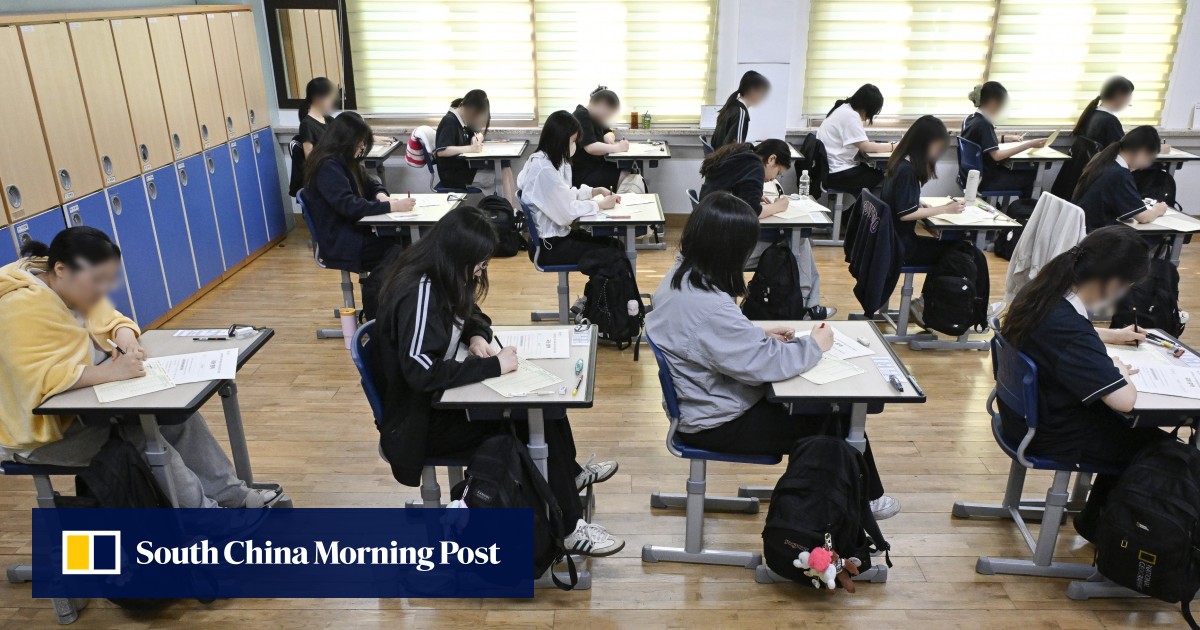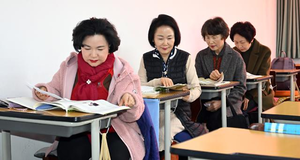
Adult learners risk losing classrooms as legal restrictions threaten schools built for those denied formal education Students at Ilsung Women's Middle and High School flip through their textbooks in 2024. (Lee Sang-sub/The Korea Herald) For many students at Ilsung Women’s Middle and High School, going to school is a dream they had to postpone for decades.The Seoul school, which offers middle and high school-level education to women who missed out on formal schooling, is now facing possible closure after the death of its founder, Lee Seon-jae, in May exposed a legal gap threatening its future.“We hope the government will pay closer attention to the reality faced by people like us, who fall through the cracks,” Ko Yeon-hee, a 65-year-old second-year student, told local broadcaster MBN.Ko is one of about 950 students currently enrolled at Ilsung. While she is set to graduate at the end of the year, students in lower grades say it would be difficult for them to find another school to transfer to.“It’s over for me because I am graduating, but it’s sad that those in lower grades may no longer be able to continue learning,” said Kim Yeon-sook, a 70-year-old senior.Ilsung was established in 1953 as a lifelong education facility for women who were denied formal education opportunities. Over the past 74 years, it has produced more than 60,000 graduates.Lee Seon-jae, the school’s late founder, was recognized by the education minister in 2015 for his contributions to women’s education and for providing learning opportunities to those who had been deprived of formal schooling.But the school now faces an uncertain future because of legal restrictions on who can operate lifelong education facilities that grant academic credentials.The problem stems from a 2007 amendment to the Lifelong Education Act, which allowed only existing schools and incorporated foundations to establish and operate such facilities.Under the current legal framework, Ilsung must transition into an incorporated foundation to continue operating after Lee’s death. School officials say, however, that such a transition is difficult in reality.“Some schools are closing because they do not have enough students,” said Cho Hyun-boon, head of academic affairs at the school. “But we have 950 students. It is heartbreaking that the school could disappear when students are so passionate about learning.”The school said there are major hurdles to becoming an incorporated foundation, including securing a campus that meets legal standards and contributed assets worth 1 billion won ($647,000).Students and faculty members have filed a public petition asking the government to find an alternative, such as entrusting the school’s operation to a public-interest foundation or revising the relevant laws, instead of forcing its closure.Ilsung is not alone. Ten other academic credential-granting lifelong education facilities in the greater Seoul area are also facing possible closure due to similar legal restrictions.The Seoul Metropolitan Office of Education said it would work with relevant ministries to revise laws governing public-interest corporations.The Ministry of Education, however, said it is not immediately considering an amendment to the Lifelong Education Act.“The reason the Lifelong Education Act was amended in 2007 to allow only incorporated foundations to establish such institutions was to ensure greater public responsibility,” an Education Ministry official told The Korea Herald.
Women’s school for second-chance learners faces closure after founder’s death
For many students at Ilsung Women’s Middle and High School, going to school is a dream they had to postpone for decades. The Seoul school, which offers middle a
527 words~2 min read