CVE-2026-20230 under exploitation, while an earlier SD-WAN 0-day looks even worse than we thought
It’s looking like another tough week (month? year?) for Switchzilla amid reports of new serious vulnerabilities under attack. First up is a server-side request forgery bug in its Unified Communications Manager tracked as CVE-2026-20230. Cisco disclosed and patched this flaw in early June. The comms control platform doesn’t properly validate some HTTP requests, and an attacker could exploit this bug to gain root privileges on a compromised device.
At the time, Cisco said that a proof-of-concept exploit was available – and now it seems unknown miscreants are putting that exploit code to use, with threat intel company Defused warning that it observed miscreants exploiting CVE-2026-20230 over the weekend.
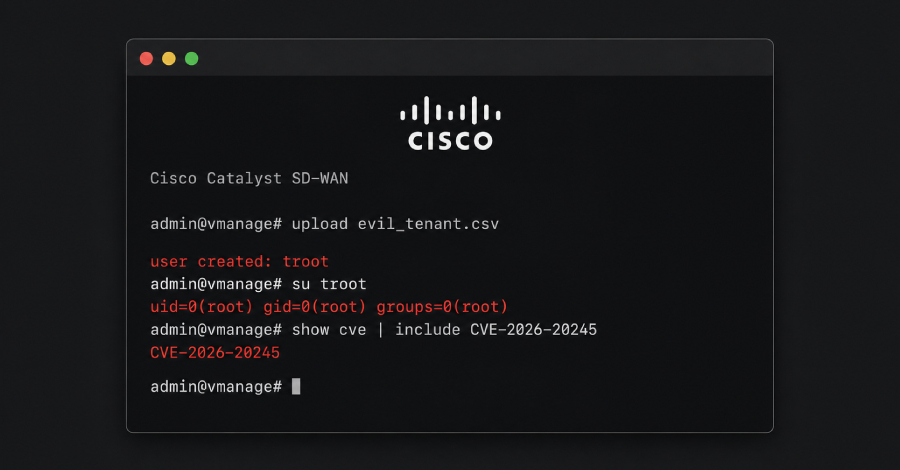
“The observed chain abuses the WebDialer SSRF to deploy a rogue Apache Axis service, uses that service to write a first-stage JSP file-writer, then drops a second-stage command-execution shell under /platform-services/axis2-web/,” the firm noted on LinkedIn.Cisco Catalyst SD-WAN zero day Then, a Mandiant advisory on Wednesday warned that a Cisco SD-WAN zero-day tracked as CVE-2026-20245 was exploited much earlier than initially disclosed, including at a communications service provider where the attacker elevated a compromised admin account to full root-level access.While the Google-owned threat hunting biz said it can't assess the full scope of the intruders' post-compromise activity, this SD-WAN device compromise could have been dire, potentially giving the attacker total visibility across an entire corporation's internet traffic. This is what makes SD-WAN zero-days such a hot target for government-sponsored spies looking to set up shop for long-term snooping activities. It also explains the rash of attackers battering Cisco SD-WAN devices since the start of the year.