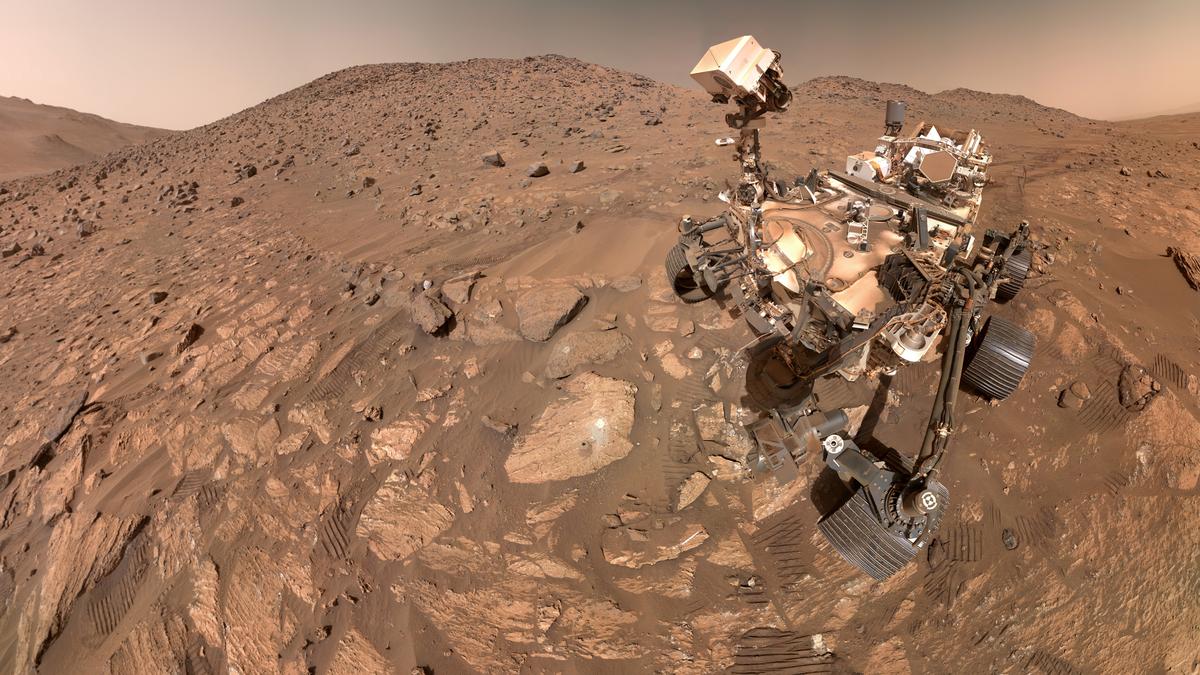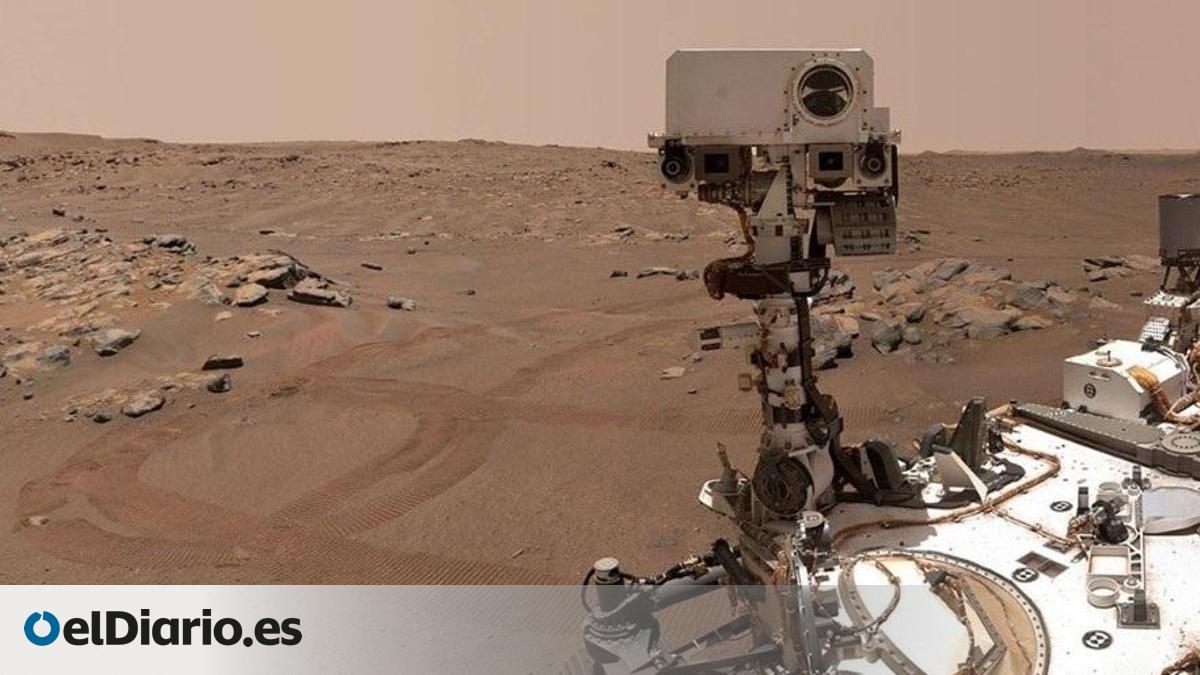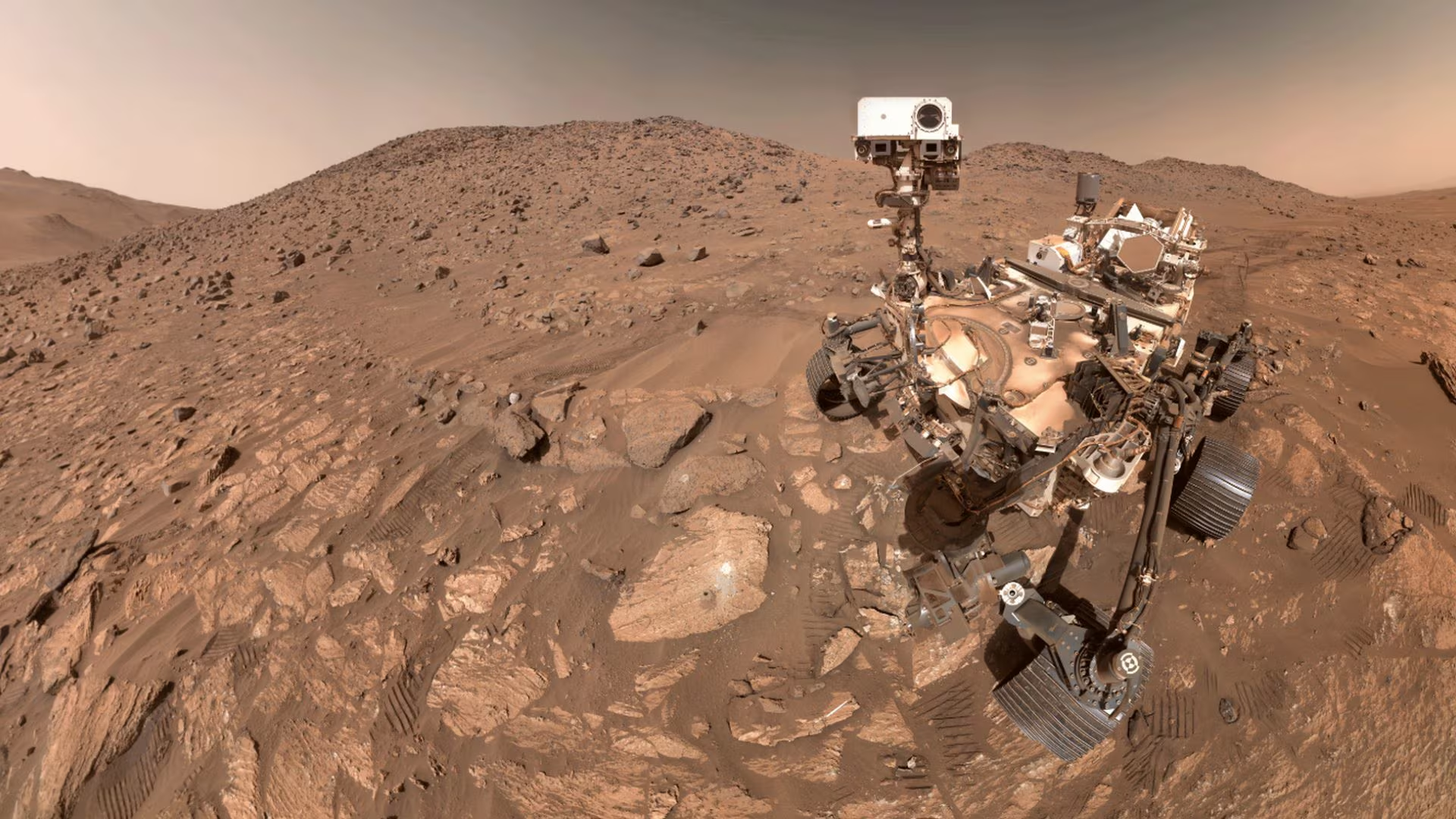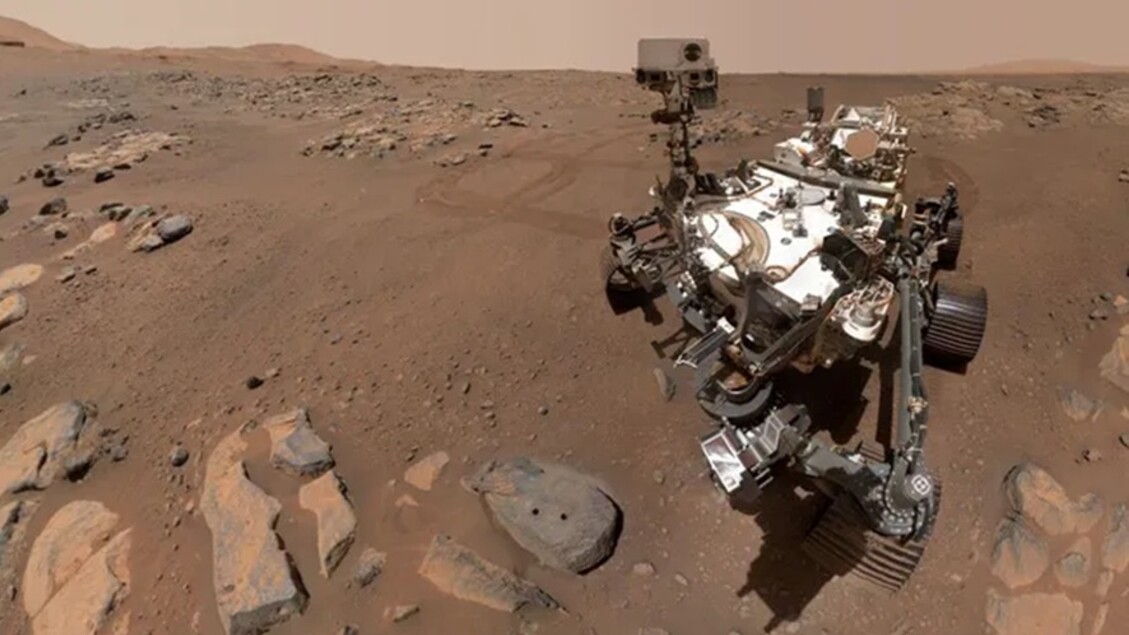
NASA’s Perseverance Mars rover alongside a rock with markings that resemble features made by microbesNASA/JPL-Caltech/MSSS
NASA’s Perseverance rover has found complex carbon compounds in a Martian crater that had previously shown tantalising possible signs of ancient life. On Earth, these compounds are typically associated with dead organisms, but scientists say it is too early to draw the same conclusion here as these compounds are also found in lifeless environments, like on meteorites.
In 2024, Perseverance entered a rocky outcrop, called Bright Angel, near what appeared to be an ancient riverbed that once fed a lake inside Jezero crater. Several rocks photographed by the rover displayed unusual spotted patterns, which NASA scientists called “leopard spots” and “poppy seeds”. These markings, which are largely or entirely formed of dark, circular blots of up to a millimetre in size, look very similar to the patterns left behind by ancient microbial activity on Earth.
Although non-biological sources couldn’t be ruled out, the markings are some of the best candidates we have for potential ancient life on Mars. But scientists lacked comprehensive information on the chemical make-up of these patterns or how widely distributed they were in the Bright Angel formation.