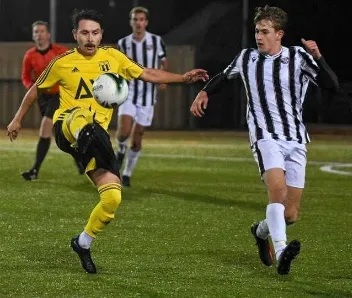
Skip to Content Subscribe Our Offers My Account Manage My Subscriptions FAQ Newsletters Canada Canadian True Crime Canadian Politics Health World Israel & Middle East Financial Post NP Comment Longreads Puzzmo Diversions Comics NP News Quiz New York Times Crossword Horoscopes Life Eating & Drinking Style Sponsored Play for Ontario Travel Travel Canada Travel USA Travel International Cruises Travel Essentials Culture Books Celebrity Movies Music Theatre Television Business Essentials Advice Lives Told Tails Told Shopping Buy Canadian Home Living Outdoor Living Kitchen & Dining Tech Style & Beauty Personal Care Entertainment & Hobbies Gift Guide Travel Guide Amazon Prime Day Deals Savings National Post Store More Sports Hockey Baseball Basketball Football Soccer Golf Tennis Driving Vehicle Research Reviews News Gear Guide Obituaries Place an Obituary Place an In Memoriam Classifieds Place an Ad Celebrations Working Business Ads Archives Healthing Epaper Manage Print Subscription Profile Settings My Subscriptions Saved Articles My Offers Newsletters Customer Service FAQ Newsletters Canada World Financial Post NP Comment Longreads Puzzmo Diversions Life Shopping Epaper Manage Print Subscription HomeLifeReal Canadians: Soccer remains a passionate sport in Indigenous communities You can save this article by registering for free here. Or sign-in if you have an account.Mateo Kostering, who devotes himself both professionally and personally to help young Indigenous people use soccer to improve their lives in myriad ways, playing for Cowichan FC Division 1. There are places and cultures where soccer rules supreme and some of them are closer to home than you might imagine. Soccer culture dates back over a hundred years for the First Nations communities of Vancouver Island — introduced by early settlers as well as Catholic and Anglican Priests who operated residential schools there. For many Indigenous children who suffered while attending these schools, soccer became an outlet and it remains a passionate community-driven sport today.Enjoy the latest local, national and international news.Exclusive articles by Conrad Black, Barbara Kay and others. Plus, special edition NP Platformed and First Reading newsletters and virtual events.Unlimited online access to National Post.National Post ePaper, an electronic replica of the print edition to view on any device, share and comment on.Daily puzzles including the New York Times Crossword.Support local journalism.Enjoy the latest local, national and international news.Exclusive articles by Conrad Black, Barbara Kay and others. Plus, special edition NP Platformed and First Reading newsletters and virtual events.Unlimited online access to National Post.National Post ePaper, an electronic replica of the print edition to view on any device, share and comment on.Daily puzzles including the New York Times Crossword.Support local journalism.Create an account or sign in to continue with your reading experience.Access articles from across Canada with one account.Share your thoughts and join the conversation in the comments.Enjoy additional articles per month.Get email updates from your favourite authors.Create an account or sign in to continue with your reading experience.Access articles from across Canada with one accountShare your thoughts and join the conversation in the commentsEnjoy additional articles per monthGet email updates from your favourite authorsSign In or Create an Accountor“We have Indigenous soccer tournaments that go up and down the coast,” says Mateo Kostering, an Indigenous soccer player and founder of Indigenous Athletics Academy (iaasoccer.com), a non-profit organization focused on creating meaningful opportunities for Indigenous youth through sport. “What started out as an outlet for residential school students has become modern day warfare. Every village runs fundraisers to support soccer, and the best players become local legends.”Kostering is a proud member of the Musgamagw Dzawada’enuxw First Nation, but he grew up playing soccer on the ’Namgis First Nation on Northern Vancouver Island. He credits his involvement in the sport with motivating him to finish high school and complete a university degree majoring in First Nations Studies and Physical Education. Kostering briefly dropped out of high school, but soccer brought him back and the desire to play soccer for the Vancouver Island University (VIU), Mariners motivated him to attend university. “While I was playing soccer,” I worked on my degree,” he says. “I also met my wife at university and we started a family.” Mateo Kostering, who says soccer saved his life, coaching at Indigenous Athletics Academy. Jessica KosteringPlaying soccer helps youth become physically fit and mentally sharp and it also teaches lessons that extend far beyond the field such as the values of teamwork, resilience, sportsmanship and discipline. “Soccer saved my life,” Kostering says. “It brought me to places around Canada and North America, and it helped me complete my education.”In 2024, Mateo and Jessica Kostering founded Indigenous Athletics Academy with the goal of helping Indigenous youth grow as athletes and build life skills. With the help of Darian and Sarah Harris working as coaches, more than 700 youth participated in the organization’s soccer camps in 2024 and 2025 improving their soccer skills, building confidence and benefiting from community mentorship. “In addition to helping them become better athletes, we want to expose youth to the possibilities soccer can bring into their lives,” says Kostering. “It’s possible to live in both worlds — to be Indigenous and to play the game at an elite level.”Indigenous athletes are under-represented in professional sports in North America and while Canada’s senior men’s national team is very diverse, there are no Indigenous players on the team and none on the 2026 World Cup roster. “The issue isn’t talent,” Kostering says. “We have many talented Indigenous soccer players in Canada. Our people struggle to leave the reserve and play at higher levels. Players who have a lot of support in their community can feel lonely when they’re playing on elite teams.”“Soccer saved my life.The Indigenous Athletics Academy hopes to help more Indigenous soccer players bridge the gap between the traditionally community-based sports models that exist on Vancouver Island and elite soccer programs that can propel athletes into professional careers. They are also working to provide ongoing mentorship to help youth work with athletes like Kostering who have played and coached the game at higher levels.In addition to operating the Indigenous Athletics Academy, Kostering works as a social worker and coaches four different soccer teams including assisting with Nanaimo United Football Club, a Canadian semi-professional soccer club based in Nanaimo, B.C.It’s inspiring to see how soccer has become integrated into the culture of the coastal Indigenous communities of Vancouver Island. Traditional songs are sung at games, and the entire community comes out to cheer on their players. Kostering and the team at the Indigenous Athletics Academy are working together to ensure that soccer continues to transform lives and that more Indigenous players gain the confidence and skills required to play the game at elite levels.If you have an idea for a story that could be featured in Real Canadians, email realcanadians@wanderwoman.ca. Share your experiences taking action to make a difference in the world by visiting wanderwoman.ca/real-canadians.Debbie Olsen is an award-winning Métis writer and a national bestselling author. Join the Conversation This website uses cookies to personalize your content (including ads), and allows us to analyze our traffic. Read more about cookies here. By continuing to use our site, you agree to our Terms of Use and Privacy Policy.
Real Canadians: Soccer remains a passionate sport in Indigenous communities
There are places and cultures where soccer rules supreme and some of them are closer to home than you might imagine.
1,180 words~5 min read