Alibaba’s Qwen team just dropped a model that doesn’t do things. It predicts what would happen if it did things. That distinction sounds like philosophy-department wordplay, but it represents a meaningful shift in how AI agents interact with the real world, and it has direct implications for anyone building autonomous systems in crypto and beyond.
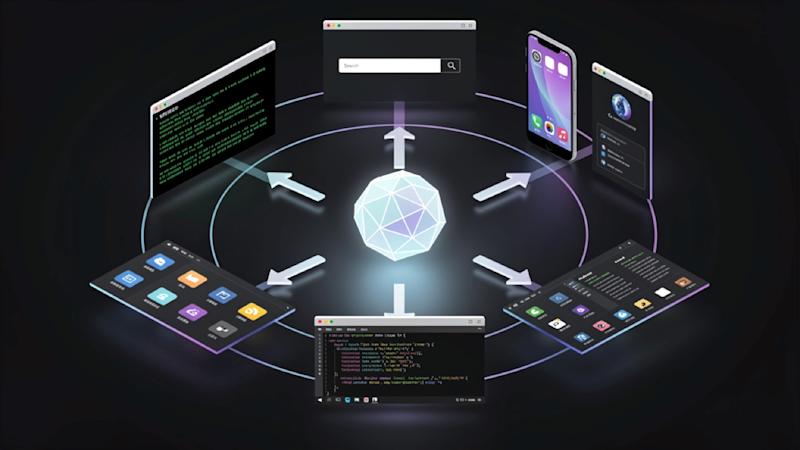
Qwen-AgentWorld, released Tuesday, is a language world model trained to simulate what tools and environments return when an agent takes an action. The flagship variant, Qwen-AgentWorld-397B-A17B, outperformed both GPT-5.4 and Claude Opus 4.8 on the AgentWorldBench, achieving the highest simulation quality across seven domains: MCP, Search, Terminal, Software Engineering, Android, Web, and OS.
What a “world model” actually means here
Think of it like a flight simulator for AI agents. Instead of letting an agent loose on a live terminal or a real web browser and hoping it doesn’t break anything, a world model predicts what the terminal or browser would return. The agent trains against those predictions, iterating thousands of times without touching a real system.
In English: Qwen-AgentWorld lets developers stress-test autonomous agents in a synthetic sandbox that behaves like the real thing. The model covers seven distinct domains under a single architecture, meaning one system can simulate command-line outputs, search engine results, mobile app interfaces, and full operating system responses.