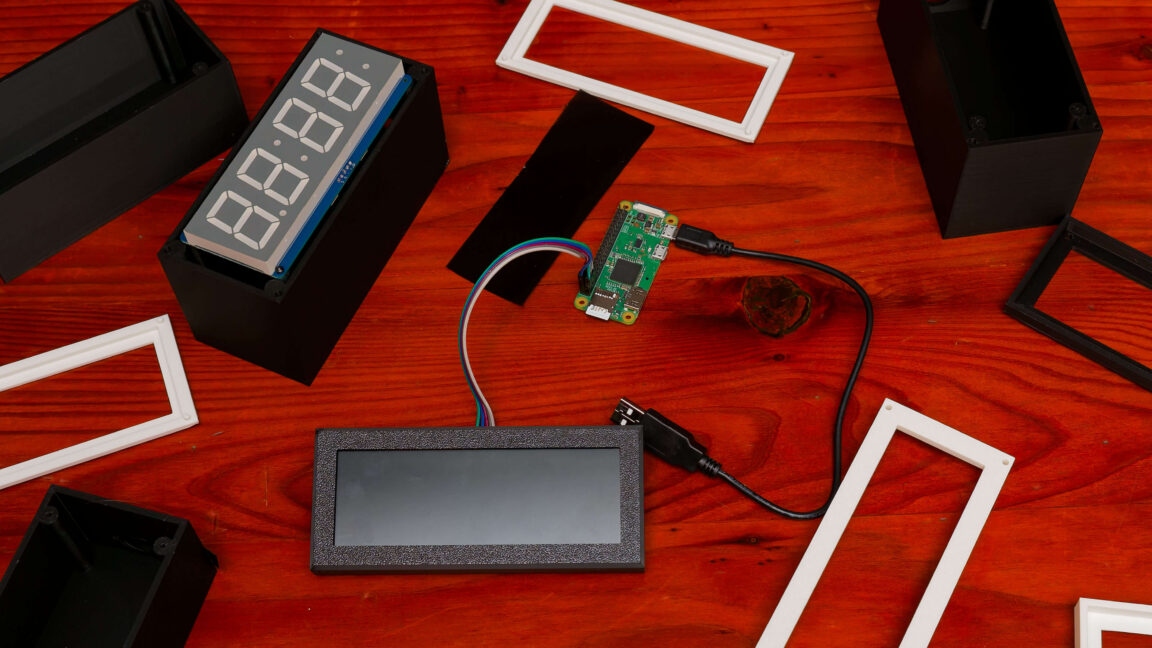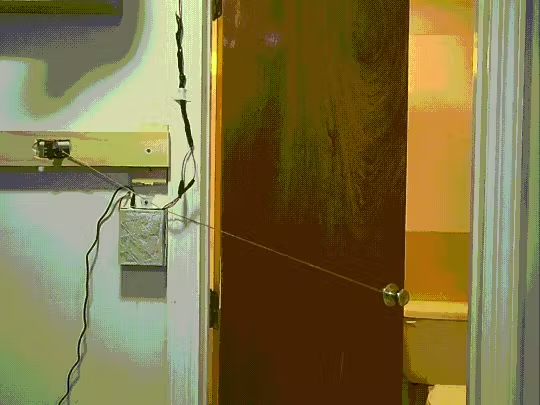
Things used in this project Hardware componentsRTC module×1PIR Motion Sensor (generic)×1Limit Switch×1Amazon Web Services Generic FDM Plastic 3d Printing Part Procurement×1Any Type of 3/4th-1in Thickness wood. Length and Width may vary based on Wall Placement×1Wood Screws & Wall Mounting Screws. (Wood screws should be long enough to penetrate chosen wood, Wall mounting screws as well+ extra length to mount to wall×1×1Breadboard (generic)×1Elegoo Mini Breadboard×1Dupont Wires (All three types)Having an assortment of all three types (M-F),(M-M),(F-F) at your disposal is recommended.×1Two Wire 22-24 AWG Wire Extension Cables×1Three Wire 22-24 AWG Wire Extension Cables×135KG Continuous 360° Servo + Aluminum Winch×15V Screw Terminal to AC Barrel Adapter + Power Cord×1Software apps and online servicesAlarmyHand tools and fabrication machinesDrill / Driver, 20VStory DedicationHello Everyone! This project is made for all the people who have trouble waking up in the morning!IntroductionI used to wake up every morning tired, groggy, and not the same person who had aspirations for a productive, healthy life and sleep schedule. I spent countless mornings finding loopholes to alarms I set for myself in the morning, just so that I could get back to bed, ANYTHING to feel the sweet embrace of my sleepy chambers. I frequently found myself staying in bed until the last minute, rushing to get ready for school, and as a result, not be able to achieve any of the tasks I set out for myself in the morning, making for a sluggish morning and mind in the process. I kept telling myself that I was going to fix this issue through sheer willpower, and EVERY. SINGLE. TIME., I failed. As someone with ADHD, it already takes an obscene amount of energy to get important tasks that I don't necessarily like done. Add sleep inertia to that mixture, and we weren't going anywhere. And so I moved to incorporating extraneous motivations and systems to forcibly wake myself up. My most successful system was that of a picture alarm system, where an app I downloaded on my phone set off an alarm at the time I wanted to wake up. This alarm would sound until I scanned a barcode on a deodorant bottle in my bathroom, which in the aftermath I would be "woken up" enough to get out of bed. This worked for me for a little bit, until I got used to the routine. Remember, me in the morning would do almost ANYTHING to get back to bed; no matter the energy cost. After a while, I began to scan the deodorant bottle, and then walk back to bed, continuing a deleterious cycle of continuous snoozes and hitting the snooze button and losing trust in my ability to take control of my life.RealizationI realized that the only thing that cold stop myself, an unstoppable force, was an immovable object, and what better immovable object than a door!ConceptionPart of fighting with your own internal machinery, your BRAIN, is finding ways to trick yourself. I won't lie, It was extremely difficult trying to create something new that could stop my spell of unadulterated slumber, so I decided to focus on things that had already worked for me in the past. I decided to keep the barcode-alarm app idea, but also add other measures to the plan.ConceptThe concept that culminated with this line of thought is as follows: I used the alarm-barcode system as bait to get myself into the bathroom, then I would use some sort of mechanism that would detect my motion and close + hold the door of my bathroom shut, so I wouldn't be able to leave for a couple of seconds without extreme effort. Since ADHD responds to cues, this lack of being able to complete my goal of going back to sleep could snap the real "me" to reality enough to wake up and start my day on time.V1This iteration was a failure, but not for the reasons one would think. The basic idea was to use an RTC and PIR sensor to detect my movement within the hours I wake up, propagating a cammed servo arm to push my bathroom door closed within a couple seconds. I CADded this design for HOURS on end, eventually coming up with a design that would allow for free rotation of the servo arm around the hinge axis, but allow for extra vertical support around the expanse of the arm to reduce its potential to sag or break off from its wall mount. A swivel caster wheel is used at the support arm tip to allow for the free rotation of the arm path, while allowing for adaptation to rotational angle mismatches. The issue with this mechanism is that my bathroom door is a "pull" to close and not a "push" to close, an easily preventable oversight that led to a whole lot of wasted time. I ultimately had to abandon this version of the system, but the public Onshape document is attached if anyone is interested in modifying it to their own interests/uses (warning it's a bit messy, but the actual mechanistic assembly is easily found by clicking through the tabs on the bottom).Initial Mechanical Push Design
Out the Door!!!- Morning Alarm System ***Concept***
Do you have trouble getting out of bed in the morning? Try this system! By A_Person_Who_makes_things.
1,751 words~8 min read