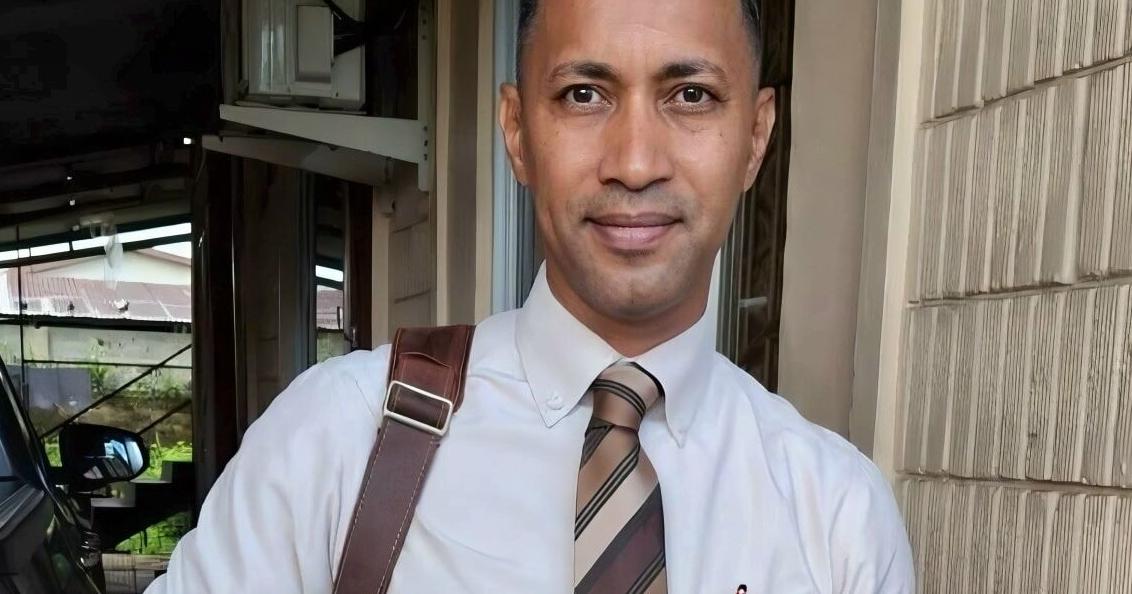
THE Trinidad and Tobago Unified Teachers’ Association (TTUTA) says it supports the reintroduction of the Continuous Assessment Component (CAC) in primary schools, but warns that adequate teacher training and staffing are essential if the initiative is to succeed.So said TTUTA’s first vice president Adesh Dwarika while speaking with the Express in a phone interview yesterday.
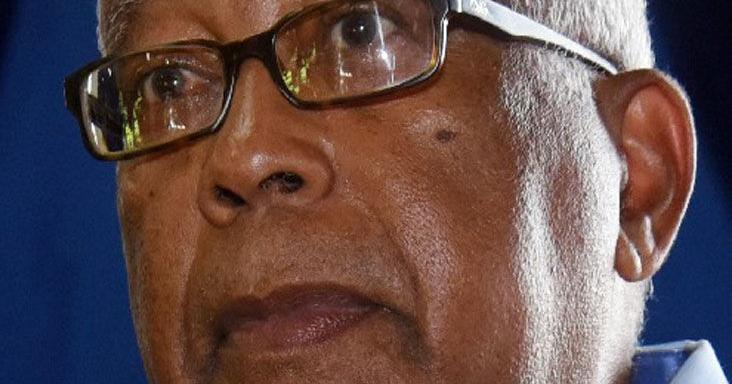
NPTA president: Walter Stewart
His comment followed a memorandum from the Education Ministry’s chief education officer Peter Smith calling on primary school principals, teachers and Standards Two and Three parents for virtual consultations on CAC.Dwarika said TTUTA met with the Education Ministry a few weeks ago on CAC and recommended that it also consult with primary school teachers and principals. He reported that Education Minister Dr Michael Dowlath was also present during that meeting and said that “CAC is coming back”.“We don’t have a problem if it is going to improve the education system, it’s going to improve the teaching/learning experiences of our students and it will be better for them and it would be less stressful. TTUTA does not have a problem with that; but we must learn from the mistakes of the first incarnation,” he said.He spoke about some of the issues that led to the CAC being scrapped the first time it was implemented.He said, “With the CAC component, you had to do creative arts and different skills and whatnot, and many of the primary school teachers needed some additional training to properly implement those skills.”“The second part of it was the moderation and the marking. So, there was no standardisation across the board because the marking was done individually on a school-by-school basis—and of course it was very subjective,” he added.To address this issue, he said, “We suggested that they have moderators throughout so that they would actually do—just like in CSEC for SBAs (School Based Assessments) and whatnot—we do a moderated marking across, so that there is at least some semblance of fairness across the board.”He also said there was the issue of a heavier workload as CAC entails additional subjects.“What was suggested this time around is that if you’re doing this continuous assessment component, that the exam should be less, so it should be a smaller component basically in the SBA,” he said.He emphasised that the concerns raised by TTUTA are in the interest of the education system.Dwarika said, “TTUTA is not an obstructionist. We want what is best for our children, our students, because they are our future, but we also at the same time want what is best for our teachers. We can’t burden them, you know, emotionally, physically, and we can’t do that because we want a policy to succeed.”‘A more holistic picture’President of the National Parent Teacher Association (NPTA) Walter Stewart said it welcomed discussions on the reintroduction of CAC.He stated in a WhatsApp message to the Express that, “SEA (Secondary Entrance Assessment) in and of itself is a high-stakes examination that reflects a student’s performance on a particular day and under specific conditions.”He opined that while SEA provides a useful assessment of a student’s readiness and academic abilities, it does not fully capture the extent of the child’s talents, creativity and potential.He said, “We believe that CAC will provide a more holistic picture of the student’s achievement, growth and development overtime and will better indicate the student’s skills and competencies as the gateway and building blocks to long term success.”The NPTA president stressed that CAC’s success would rely on the establishment of clear standards, adequate and consistent teacher training and unambiguous mechanisms to ensure equity and fairness.He said the NPTA’s belief in this system is rooted in a system best suited to place students’ interests as a priority, reduce unnecessary stress and support meaningful learning.Education Minister Dr Michael Dowlath did not respond to the Express’s request for comment yesterday.Scrapped due to‘undue stress’Back in April 2016, then Education Minister Anthony Garcia announced the CAC would be scrapped and students writing in May 2016 would be the last to do so.The decision to scrap the CAC was taken by the then Cabinet and was fed in part by the consensus coming out of the ministry’s five-week national consultation on education in February that year, which was done via live fora and online surveys.What came out of those consultations, Garcia said, was that the CAC was a poorly thought-out structure that put undue stress on teachers, pupils and parents.“During the discussions, we gave our major stakeholders the opportunity of voicing their opinion on many aspects of the education system, and one of the areas where we had a focus was on the CAC component of the SEA. The feedback that we got, the discussions that were held, all told us that the CAC was something we had to disband,” he said.