opinion
June 24, 2026
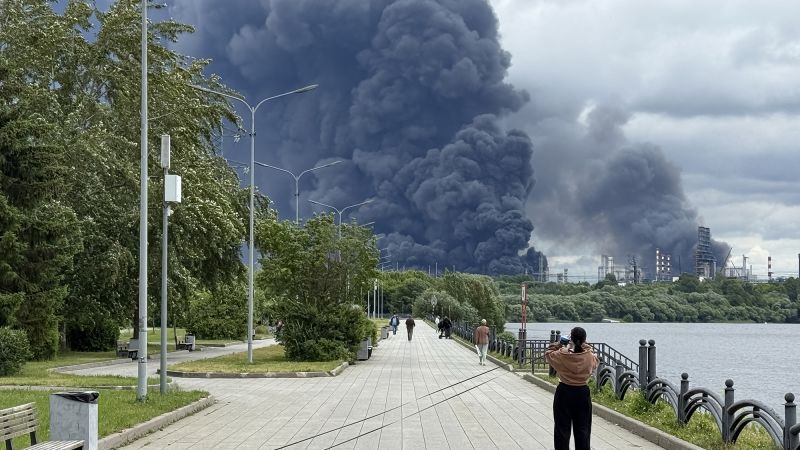
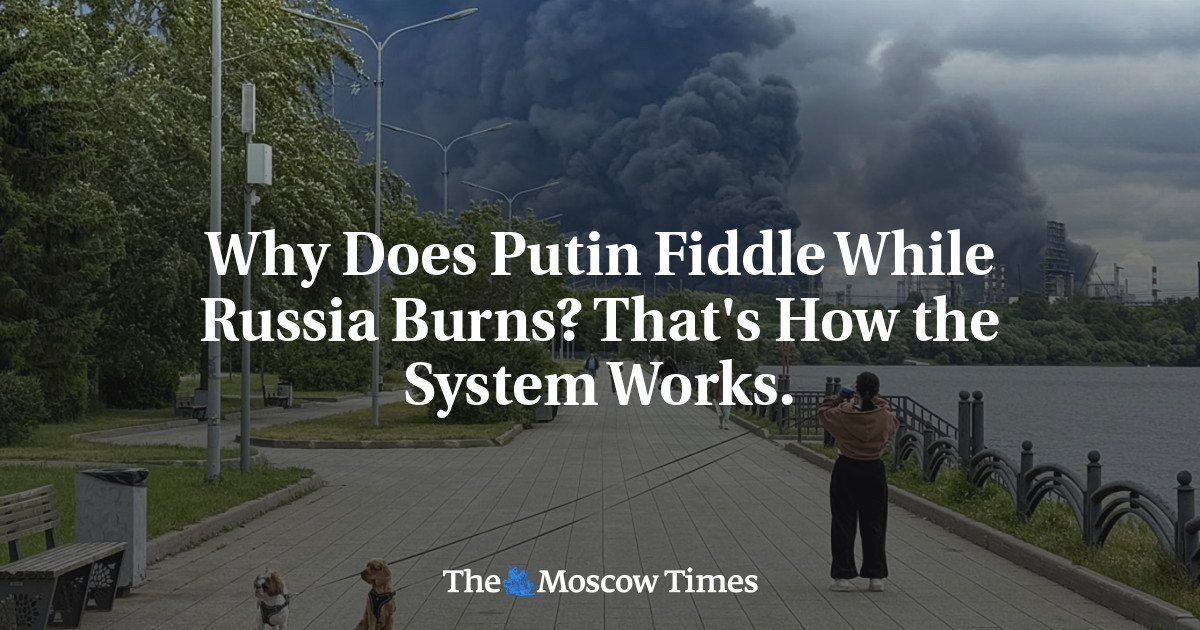
People walk in a park as black smoke rises from the area of the Russian oil producer Gazprom Neft's Moscow oil refinery on the south-eastern outskirts of Moscow on June 18, 2026.
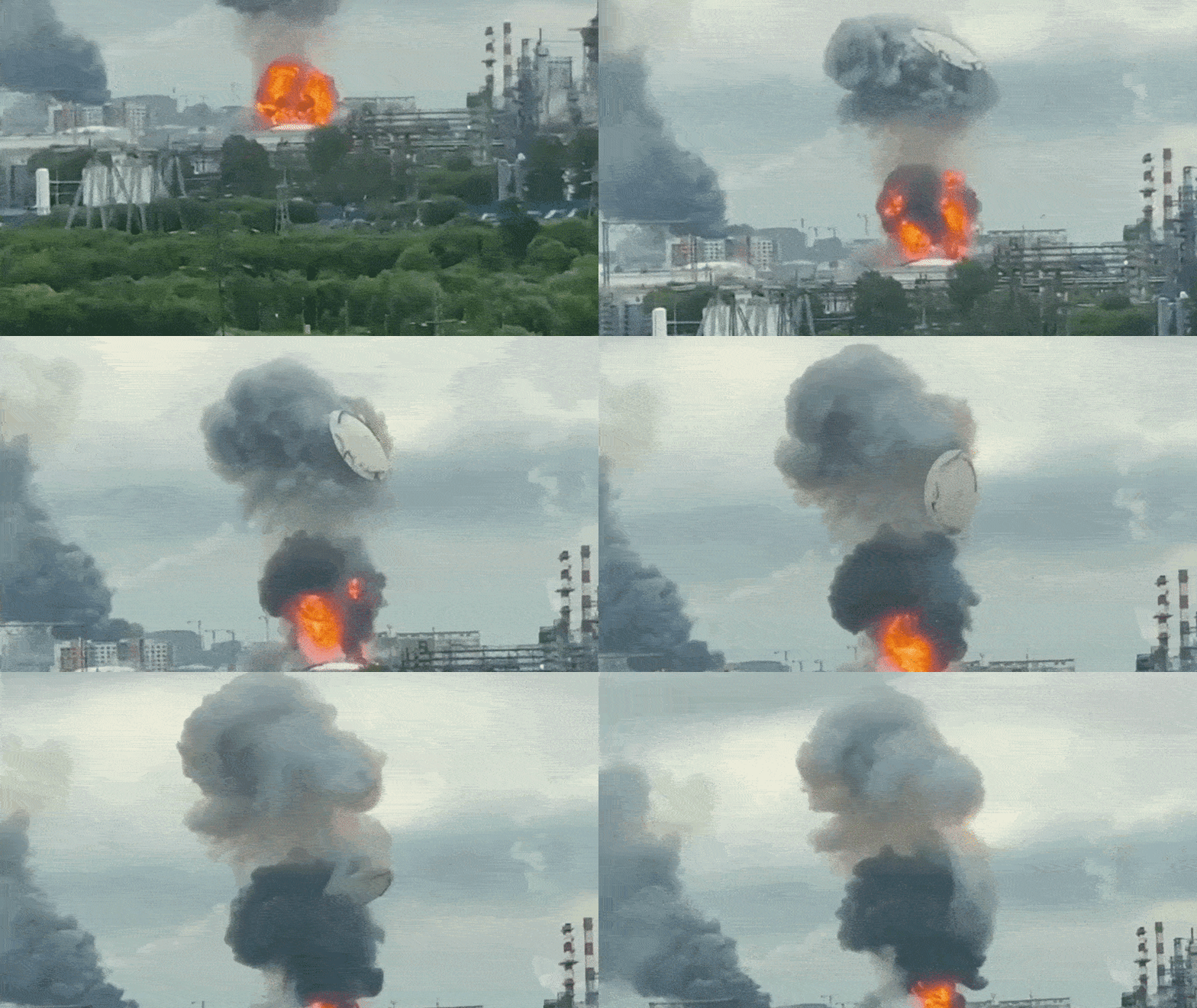
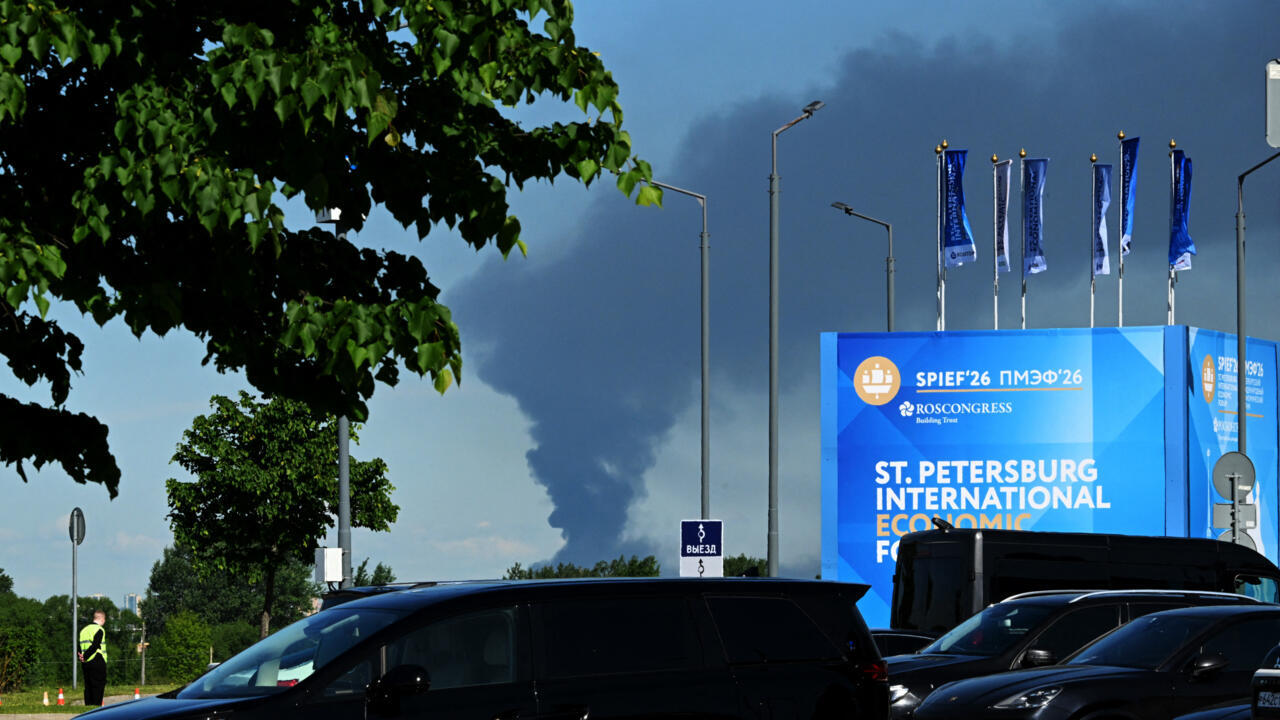
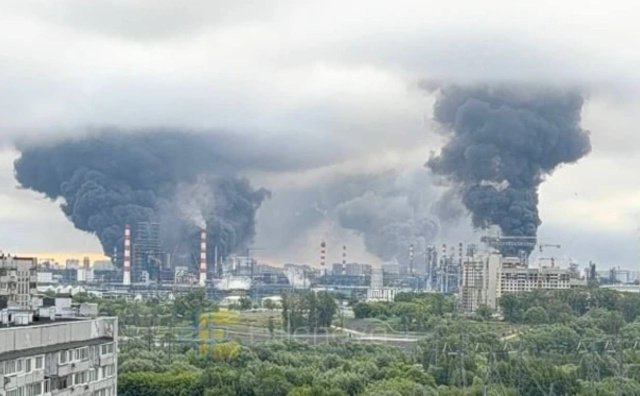
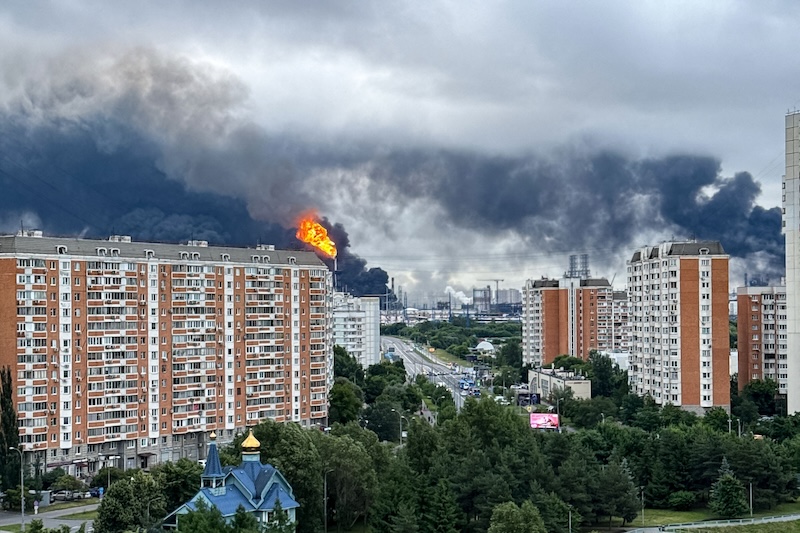
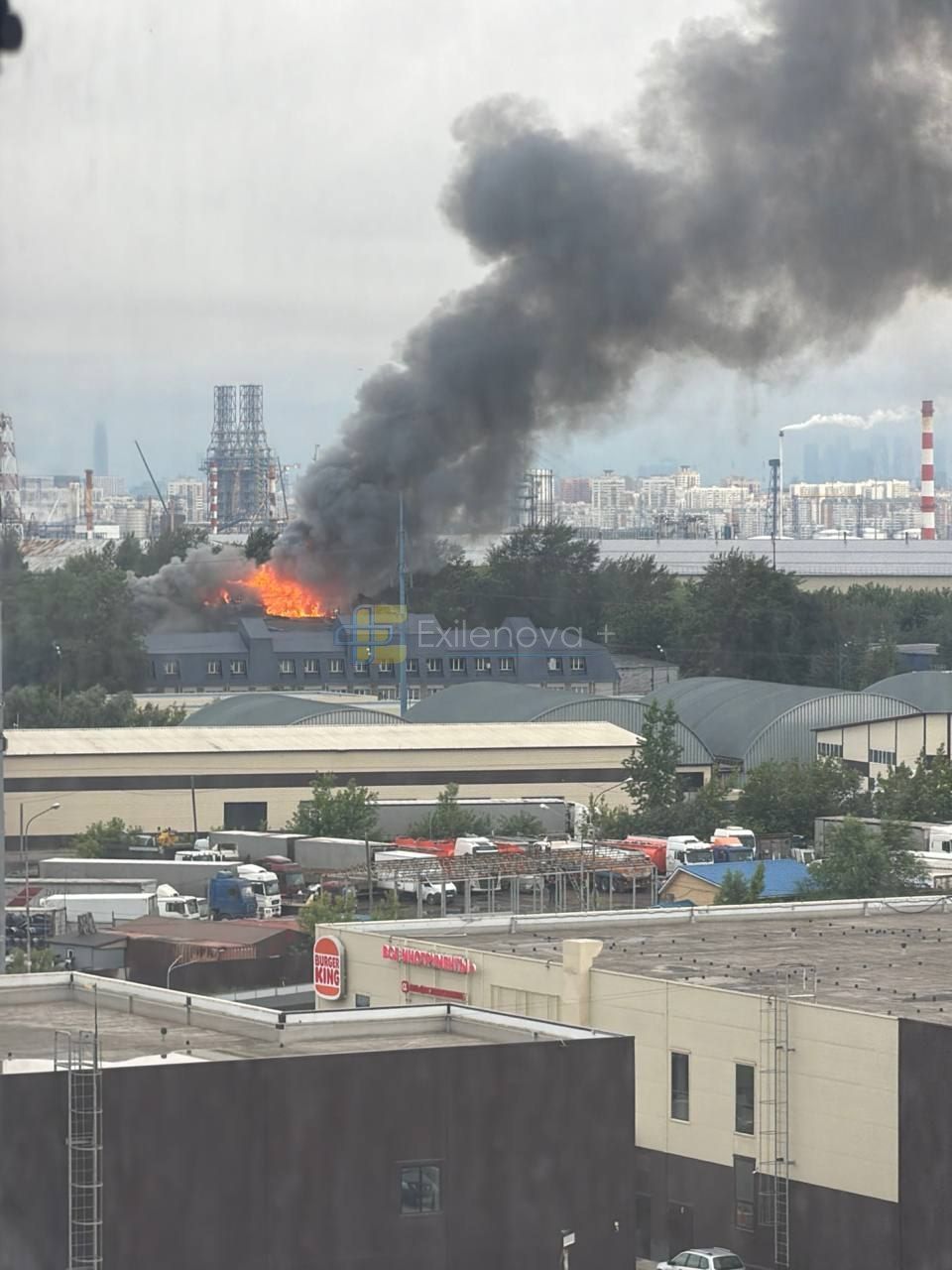
When Ukrainian drones struck targets in Moscow on June 16, 18 and 22, the attacks were notable not only because of the dramatic footage that they generated. Along with the attack on an oil terminal near St. Petersburg, they repeatedly exposed the Russian capital’s air defense as faulty, even as the Defense Ministry made the questionable claim that air defense systems shot down a thousand drones and the Kremlin’s spokesperson praised the response.
Military experts pointed out that defending against drones arriving from multiple directions requires extensive coordination across Russia's integrated air defense network, which was “not happening properly." Beyond the very likely military shortcomings, however (which this article will not to go into), the political response to the drone attacks also exposed the underlying contradictions in how Russian authorities are supposed to handle such crises.